


In a factory near Cairo, a man hunches over a bust of the ancient Egyptian queen Nefertiti, carefully dabbing with a paintbrush. Next door, two men inspect a life-size replica of the pharaoh Tutankhamun’s famed golden chariot.
These experts in the restoration of artefacts sometimes thousands of years old have turned their skills to creating new products for a government initiative to fill Egypt’s gift shops with locally made souvenirs.
The Ministry of Tourism and Antiquities oversees Konouz, a state-owned factory on a 10,000 sq m site set up at a cost of 100 million Egyptian pounds ($6.36m). The staff of about 150 includes restoration experts drawn from the ministry and Supreme Council of Antiquities, as well as fine art students in training.
“Why restoration experts? Because they have the know-how in both the technical aspect of the job and the artistic and cultural sides as well,” says Mohamed Noseir Ahmed, one of the factories head supervisors.
The factory currently has a range of about 70 replicas, including miniatures of King Tut’s funerary mask and a fibreglass model of Alexander the Great’s bust, and it has plans to expand.
The replicas are mainly for decorative purposes, so are made of lightweight materials and painted in vibrant colours, making them attractive additions to the coffee tables of the historically inclined.
While the bulk of the replicas produced are of artefacts from Ancient Egypt, the factory’s talented staff also explore other civilisations that have influenced Egypt’s long history, including Greco-Roman, Coptic and, of course, Islamic.
The project is part of an overhaul of Egypt’s tourism industry that includes the revamp of parts of historic Cairo, particularly Fatimid Cairo, and the opening of museums.
In April, a live-streamed all-singing, all-dancing parade of 22 mummies from their old home at the Egyptian Museum in Tahrir Square to the new National Museum of Egyptian Civilisation attracted millions of viewers from around the world. Now, the authorities are ready to cash in.
Riding the wave of interest, the first Konouz store opened at the museum in early April. Egyptian President Abdel Fattah El Sisi was presented with a replica of Tutankhamun on a skiff, a prominent piece from the boy king's treasures, made by Konouz, at the opening of the museum.
“We thought that with Covid-19 keeping foreign tourists away, there wouldn’t be much interest in our replicas, but we actually sold a fair amount of stuff at our store inside the National Museum of Egyptian Civilisation,” Mr Ahmed said.
“This proves that Egyptians, as well as foreigners, are definitely interested in buying these kinds of things. They just have to be of a good quality.”
The factory produces about 200 to 250 finished replicas each day, but its managers hope to push that number up to between 500 and 800 once tourism recovers from the pandemic.
All replicas made by Konouz bear a seal of approval from the Supreme Council of Antiquities as a sign of good quality. Buyers can scan a bar code on the product to find out more about the original artefact online.
One replica that has proved popular is a miniature sarcophagus, about 7 centimetres long, which when opened reveals a cartoonishly macabre mummy inside. The sarcophagus is available in several colours and sells for about 50 Egyptian pounds ($3).
As well as making scaled-down models that can be displayed in homes, the team at Konouz makes life-size replicas of large items costing up to 12,000 Egyptian pounds. They can be also be bought online.
Read More
Egypt royal mummies parade: national pride surges after historic procession
What did Ancient Egyptians eat? Meet the archaeologist studying food
“It was important to open an online store to sell our products. I am, personally, very proud of their quality and I think people will see right away that they are of superior quality to any other replicas sold in Egypt, or outside,” Mr Ahmed said proudly.
The replicas reflect any physical defects that the originals were found with. For example, the replica of a pair of slippers unearthed with King Tut’s treasures includes a visible crack in the wooden base. The crack is the result of the slippers being buried for many years, and is reproduced for greater authenticity.
“We want people to buy replicas that look as much like the originals they see displayed at a museum as possible,” Mr Ahmed said.
The factory employed only people with the skill to faithfully replicate even the damaged aspects of famous artefacts, he said.
At the core of Konouz’s philosophy is a nationalistic refusal to let Egypt’s cultural heritage be appropriated by other countries. The sentiment is shared by many of the factory’s employees, who seem motivated by the factory’s mission statement.
“We are Egyptian and ancient Egyptians are our ancestors. So I find it personally embarrassing when you see an ancient Egyptian artefact and it says ‘Made in China’ on the bottom,” said Hossam El Gawy, a sculptor with more than 30 years of experience.
“I believe we are responsible for paying tribute to our great heritage and I believe we can do a better job than anyone else.”
-
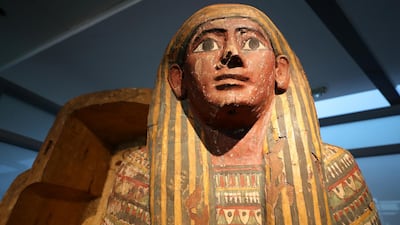
On the occasion of International Museum Day on May 18, two museums opened at Cairo International Airport, Egypt. Reuters -
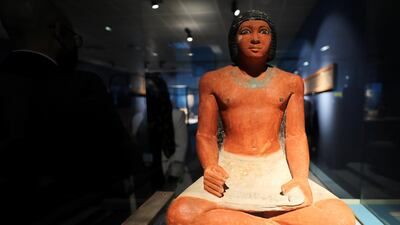
Located inside Terminals 2 and 3, the exhibitions will give travellers a “glimpse of Egypt’s treasures". Reuters -
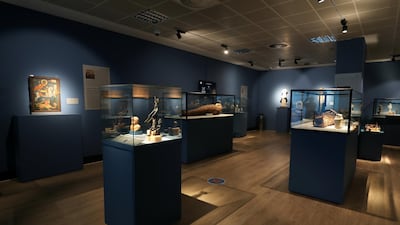
The artefacts represent Egypt's civilisational eras, including the Pharaonic, Greco-Roman, Coptic and Islamic periods. Reuters -
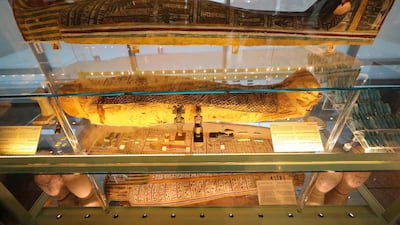
The museums are part of Egypt's efforts to boost the country’s tourism sector, which was hit hard by Covid-19. Reuters -
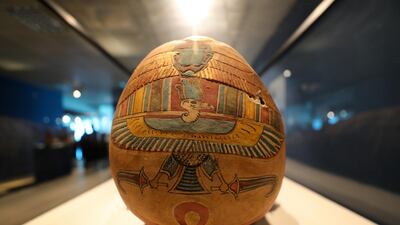
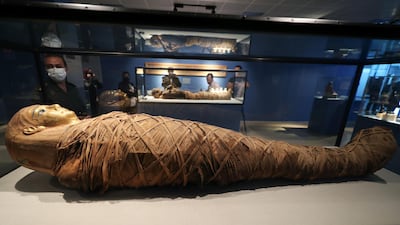
A sarcophagus is one of many fascinating artefacts on display. Reuters -
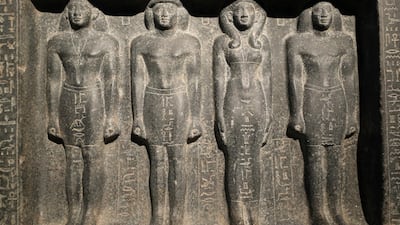
The collections were chosen by the Tourism Ministry's Supreme Committee for Museums. Reuters -
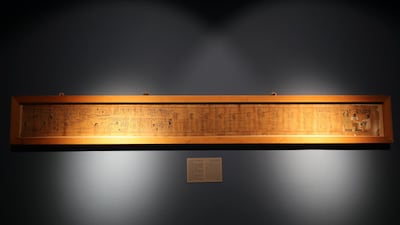
Most of the pieces on display were in storage at the Egyptian Museum, the Suez Museum and Alexandria’s Greco-Roman Museum, said Prof Moamen Othman, head of the ministry’s museums department. Reuters -

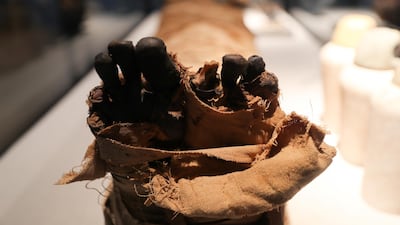
Visitors will be able to see this group of ancient canopic jars. Reuters -
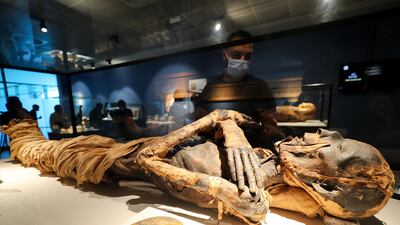
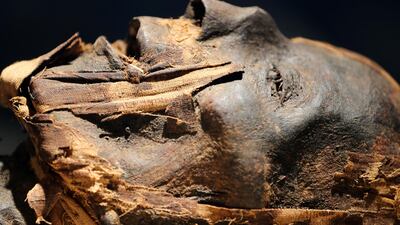
Among the museum’s most prominent exhibits are two well-preserved mummies. Reuters -
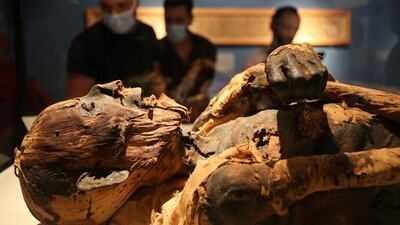
There is also a mummy in the Osiris position. Reuters -
Archaeologists at the museum will provide educational tours to international schools in the area. Reuters -
Students will then be given a chance to show what they have learned and become tour guides. Reuters -
The museum was inaugurated on Tuesday, attended by Egypt’s Civil Aviation Minister Mohamed Manar. Reuters



