Conservative cleric and head of Iran’s judiciary Ebrahim Raisi is due to become the country’s next president, after a landslide win in Friday's election.
Mr Raisi had received 17.8 million votes with 90 per cent of 28.6 million votes cast counted, the semi-official Fars news agency reported, citing the Interior Ministry.
Of the three other candidates, Mohsen Rezaei, a former commander of the Islamic Revolutionary Guard Corps, received 3.3m votes, followed by former central bank governor Abdolnasser Hemmati with 2.4m. Amirhossein Ghazizadeh Hashemi, first deputy speaker of the Iranian Parliament, received 1m votes.
"God willing, we will do our best so that the hope for the future now alive in people's hearts grows further," Mr Raisi said.
He said he wanted to strengthen public trust in the government for a "bright and pleasant life together".
Mr Raisi will succeed President Hassan Rouhani, a moderate who defeated him in the previous election but has now served the maximum of two consecutive four-year terms.
"I congratulate the people on their choice," Mr Rouhani said after the election result became clear.
Mr Raisi, 60, was the favourite going into election day with 63.7 per cent support, according to polls, and had the support of supreme leader Ayatollah Ali Khamenei and the backing of the powerful Guardian Council.
The turnout among the electorate of 59.3 million was a historic low – falling below 50 per cent for the first time since Iran became an Islamic republic in 1979.
Many Iranians sat out the election in protest against the narrow field and the seemingly predetermined outcome – a stark contrast to the 2017 election that gave Mr Rouhani a second term, when long lines lines formed at polling stations as 73 per cent of voters took part.
"We keep voting and there is no change. If we vote for a reformer, their hands are tied and they can't do anything, it all stays the same," Parisa, a student in Tehran, told The National on Friday "If we vote in a hardliner things get more repressive, but at least they are on the same page as Khamenei."
Mr Khamenei hailed the election as victory for Iran.
"The great winner of yesterday's elections is the Iranian nation because it has risen up once again in the face of the propaganda of the enemy's mercenary media," he said.
-
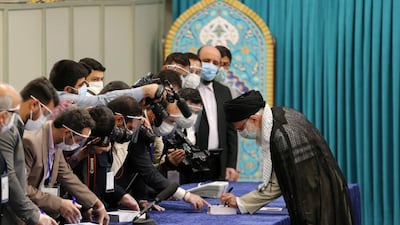
Iran's supreme leader Ayatollah Ali Khamenei is greeted by electoral workers as he arrives to cast his ballot in the Islamic republic's presidential election. AFP -
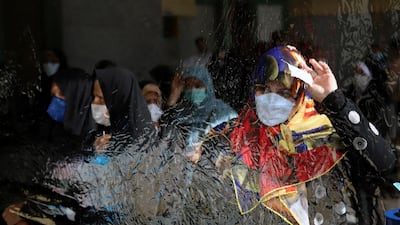
Iranians wait to vote at a polling station during presidential elections in Tehran. Reuters -
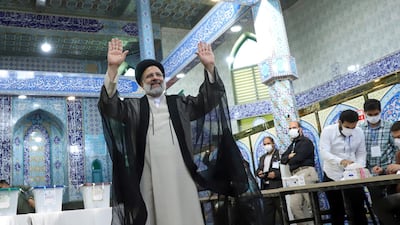
Presidential candidate Ebrahim Raisi gestures after he votes during presidential elections at a polling station in Tehran, Iran. Reuters -

Iranians wait in line to vote at a polling station during presidential elections in Tehran, Iran. Reuters -
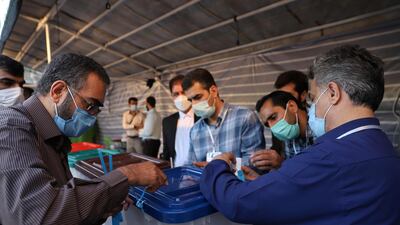
An Iranian man closes an empty ballot box before starting the vote at a polling station during presidential elections in Tehran, Iran. Reuters -
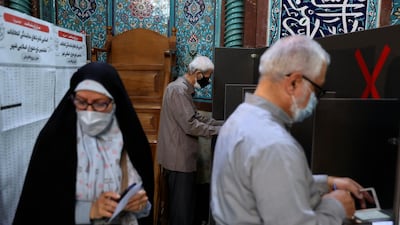
Voters fill out their ballot papers during the presidential elections at a polling station in Tehran, Iran. Reuters -
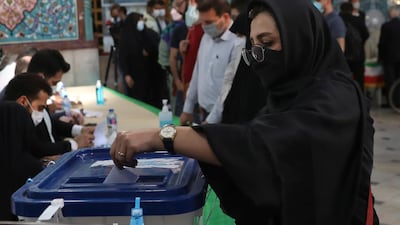
A voter casts her ballot for the presidential elections at a polling station in Tehran, Iran. AP Photo -
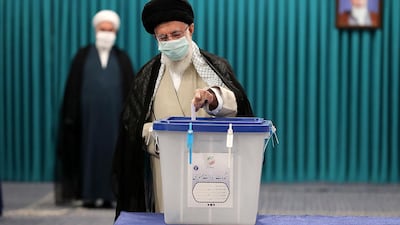
Iran's supreme leader Ayatollah Ali Khamenei casts his ballot for the presidential elections, in Tehran. AP Photo -
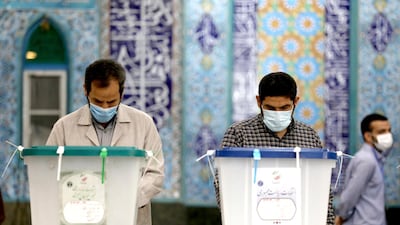
Iranian election officials prepare ballot boxes at a polling station in Tehran. AP Photo -
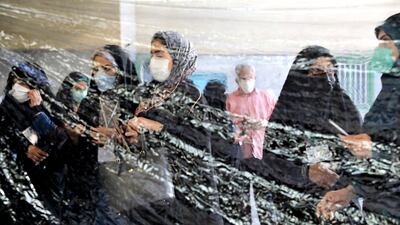
Iranians prepare for voting at a polling station in Tehran. AP Photo -
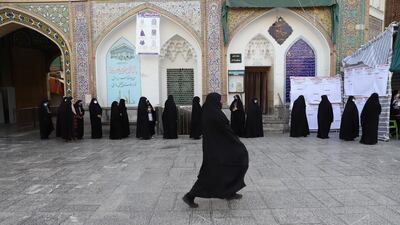
Iranians wait in line to vote at a polling station during presidential elections in Tehran. Reuters -
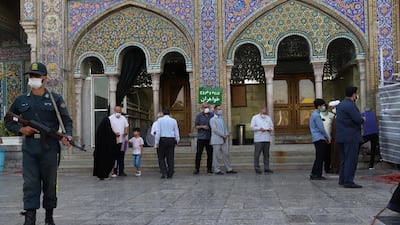
Iranians wait to vote at a polling station during presidential elections in the capital Tehran. Reuters -
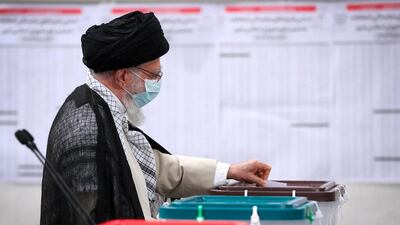
Iran's supreme leader Ayatollah Ali Khamenei casts his vote in the Iranian presidential election in Tehran. Reuters -
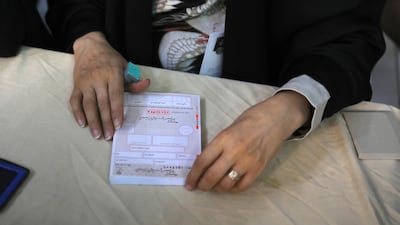
An electoral worker prepares ballot papers for the presidential elections at a polling station in Iran's capital city of Tehran. AP Photo -
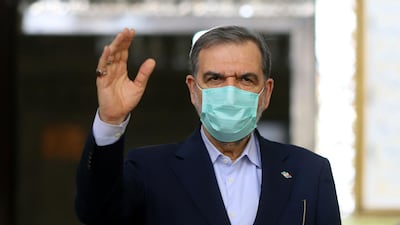
Presidential candidate Mohsen Rezaee greets people at a polling station in Tehran, Iran. Reuters -
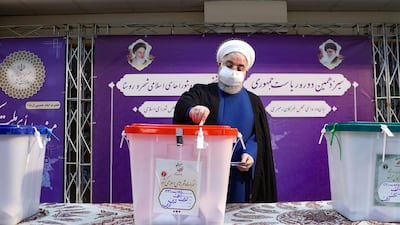
President Hassan Rouhani casts his ballot during the Iranian presidential election, at the interior ministry in the capital Tehran. AFP -
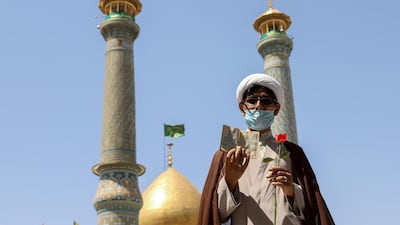
An Iranian cleric holds a flower and a document after casting his ballot during presidential elections in Tehran, Iran . Reuters -
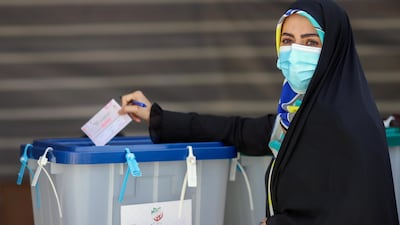
An Iranian woman casts her vote during presidential elections at a polling station in Tehran. Reuters -
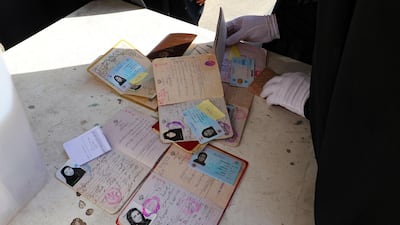
An election officer checks the identification documents of Iranian voters at a polling station in the capital Tehran during the country's presidential election. AFP -
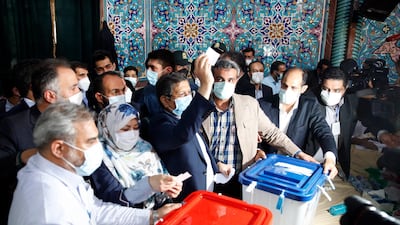
Iranian presidential candidate Abdolnasser Hemmati casts his vote at a polling station during the presidential election in Tehran. EPA -
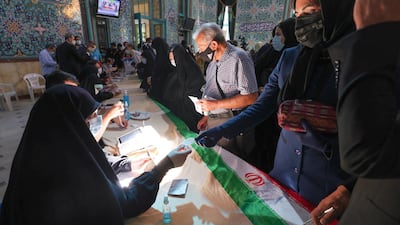
Iranians register to vote at a polling station in the Hosseinyeh Ershad mosque in the capital Tehran during the country's presidential election. AFP -
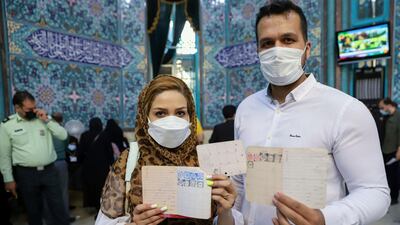
An Iranian couple hold documents after voting during presidential elections at a polling station in Tehran, Iran. Reuters -
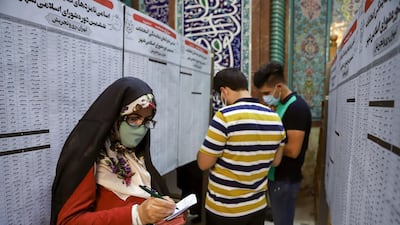
Iranians check the names of candidates during presidential elections at a polling station in Tehran, Iran. Reuters -

Presidential candidate Abdolnasser Hemmati and his wife hold documents before voting during Iran's presidential elections at a polling station in Tehran. Reuters -
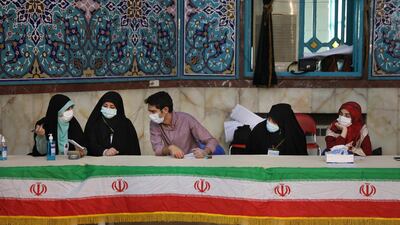
Electoral workers sit behind their desks decorated with the Iranian flag at a polling station during the presidential elections in Tehran, Iran. AP Photo -
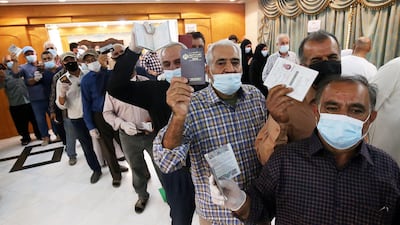
Iranians queue to vote in the the Islamic republic's presidential election at the Iranian embassy in Kuwait City. AFP -
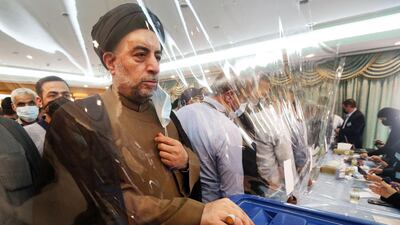
An Iranian cleric casts his vote for the the Islamic republic's presidential election at the Iranian embassy in Kuwait City. AFP -
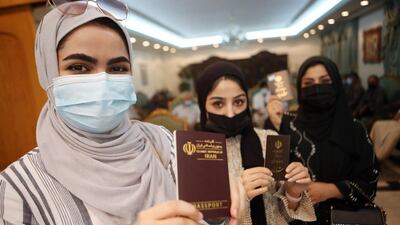
Iranians show their passports as they queue to vote in the the Islamic republic's presidential election at a polling station in Kuwait City. AFP -
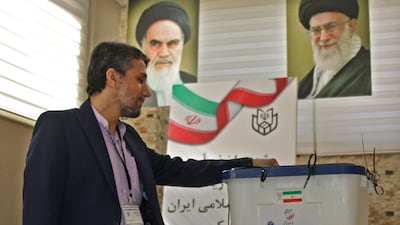
An Iranian voter casts his ballot for the presidential election at a polling station in the Hezbollah stronghold of Baalbeck, in Lebanon's eastern Bekaa valley. AFP -

Iranian women wait to vote during the presidential election in their country, at a polling station inside the Iranian embassy in the Iraqi capital Baghdad. AFP -
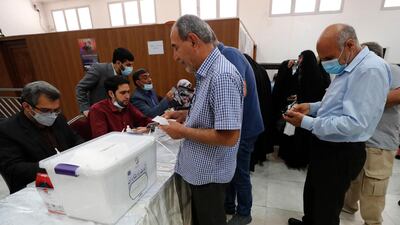
Iranian men register to vote during the presidential election in their country, at a polling station inside the Iranian embassy in the Iraqi capital Baghdad. AFP -
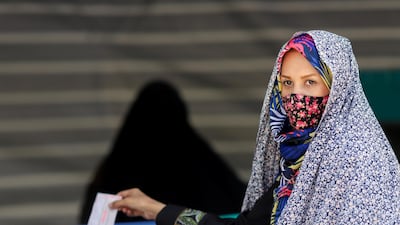
An Iranian woman casts her vote during presidential elections at a polling station in the capital Tehran. Reuters


Mr Raisi is expected to usher in hardline policies that will close Iran off from the world.
He has come down hard on thawing relations with the West and on the more open social policies of reformist and moderate politicians, like the outgoing president Mr Rouhani.
Mr Raisi will be the first Iranian president to have had sanctions imposed against him by the US government before entering office.
He was placed under sanctions for his involvement in the mass execution of political prisoners in 1988, as well as for his time as the head of Iran’s internationally criticised judiciary body.
He will take office in August, after Mr Rouhani's term ends.
Mr Raisi's election victory seemed assured even before counting of votes was completed, with all three of his rivals conceding.
Mr Hemmati, who was seen as Mr Raisi's main challenger, issued a letter congratulating him on Saturday morning.
"I hope your government, under the leadership of Supreme Leader Ayatollah Ali Khamenei, will bring comfort and prosperity to our nation," he said.
Mr Rezaei also congratulated Mr Raisi, while Mr Hashemi issued a message hailing him as "the nation’s chosen one", Fars reported.
Mr Raisi's election comes as Iran and world powers are in talks to revive the 2015 nuclear accord that lifted global sanctions on Tehran.
The deal is jeopardy after former US president Donald Trump withdrew from the accord in 2018 and imposed sanctions targeting Iran's economy, military and senior leaders. His successor Joe Biden has expressed willingness to return to the deal, leading to indirect negotiations with Tehran in Vienna.
Although he is hostile to the West and has criticised the accord, Mr Raisi has said he intends to preserve the deal, to which Britain, France, Germany, Russia and China are the other signatories.
The next president's other immediate challenges will be addressing an economic downturn that has led to spiralling inflation and job losses, and tackling the region's worst outbreak of the coronavirus pandemic.