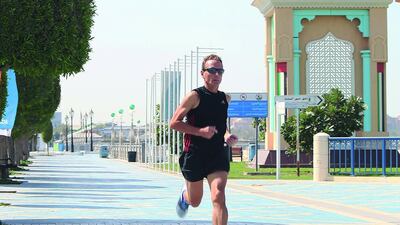

A new study led by the Centre for Nutraceuticals at the University of Westminster shows that pink drinks can help people to run faster and farther compared with clear drinks.
The researchers found that a pink drink can increase physical performance by 4.4 per cent and can also increase a feel-good effect, which can make exercise seem easier.
The study, published in the journal Frontiers in Nutrition, is the first investigation to assess the effect of drink colour on exercise performance and provides the potential to open a new avenue of future research in the field of sports drinks and exercise.
During the study, participants were asked to run on a treadmill for 30 minutes at a self-selected speed ensuring their rate of exertion remained consistent.
Throughout the exercise, they rinsed their mouths with either a pink artificially sweetened drink that was low in calories or a clear drink of similar content.
Both drinks were exactly the same and differed only in appearance – the researchers added food dye to the pink drink to change its colour.
The researchers chose pink because it is associated with perceived sweetness and therefore increases expectations of sugar and carbohydrate intake.
Previous studies showed that rinsing the mouth with carbohydrates can improve exercise performance by reducing the perceived intensity of the exercise, so the researchers wanted to assess whether rinsing with a pink drink that had no carbohydrate stimulus could elicit similar benefits through a potential placebo effect.
The results show that participants ran an average 212 metres farther with the pink drink, while their mean speed during the exercise test increased by 4.4 per cent.
Feelings of pleasure were also enhanced meaning participants found running more enjoyable.
Future exploratory research is necessary to find out whether the proposed placebo effect causes a similar activation to the reward areas of the brain that are commonly reported when rinsing the mouth with carbohydrates.
Dr Sanjoy Deb, corresponding author on the paper from the University of Westminster, said: "The influence of colour on athletic performance has received interest previously, from its effect on a sportsperson's kit to its impact on testosterone and muscular power.
"Similarly, the role of colour in gastronomy has received widespread interest, with research published on how visual cues or colour can affect subsequent flavour perception when eating and drinking.
"The findings from our study combine the art of gastronomy with performance nutrition, as adding a pink colourant to an artificially sweetened solution not only enhanced the perception of sweetness, but also enhanced feelings of pleasure, self-selected running speed and distance covered during a run."
More on diet and exercise
Running a 5K while fasting: how one US group raises money for charity
Why Ramadan is good for both body and mind
Mediterranean diet may prevent memory loss and dementia, study finds

