

The International Air Transport Association (Iata) is urging governments to avoid imposing quarantine measures when restarting air travel and proposed a slew of alternatives to reduce the risk of importing Covid-19.
The industry lobby group is recommending a multi-layered approach with a series of bio-safety measures instead of isolation, while warning that imposing quarantine measures on arrival deals a blow to the travel and tourism sector.
"Imposing quarantine measures on arriving travellers keeps countries in isolation and the travel and tourism sector in lockdown," Alexandre de Juniac, Iata’s director general, said Wednesday. "Fortunately, there are policy alternatives that can reduce the risk of importing Covid-19 infections while still allowing for the resumption of travel and tourism that are vital to jumpstarting national economies."
Iata's plea comes after people infected with coronavirus were allowed to board aircraft and travel to Hong Kong, including passengers on Emirates flights from Dubai. The imported infections highlight the risk of lifting restrictions even as the number of cases rises globally.
Carriers around the world, leaning on government rescue packages, are pushing for a return to the skies as they stand to lose a combined $84 billion (Dh308.5bn) this year.
Iata's alternatives to quarantine measures are aimed at preventing infected people from flying and preventing clusters from forming if an infected person does travel.
"We are proposing a framework with layers of protection to keep sick people from travelling and to mitigate the risk of transmission should a traveller discover they were infected after arrival," Mr de Juniac said.
To discourage symptomatic people from travelling, airlines are offering travelers flexibility in adjusting their bookings.
Iata also backs health screenings by governments in the form of health declarations. It recommends standarised, contactless electronic declarations through government web portals or government mobile applications.
The industry body also recommends Covid-19 testing for passengers from countries rated as "high-risk", where the rate of coronavirus infections is significantly higher.
Ideally, these tests should be taken before going to the departure airport to avoid congestion and risk of infection. The tests would need to be widely available, highly accurate with results delivered quickly, independently verifiable and mutually recognised by governments.
-
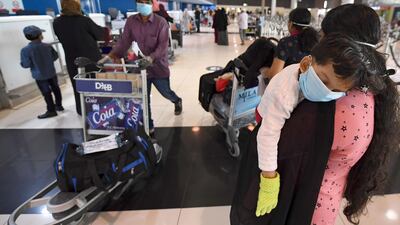
Nearly 400,000 Indians have left the UAE for India since repatriation flights started in May. AFP -
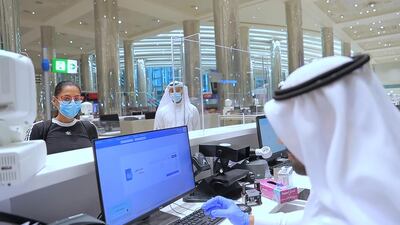
An immigration official checks documents of passenger at Dubai Airport. Wam -
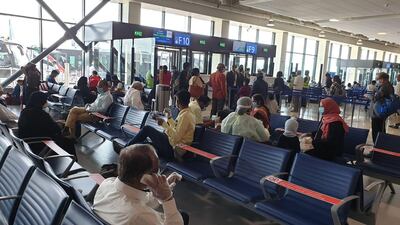
Passengers at Dubai International Airport wait for their flight to Calicut in Kerala. Courtesy: Indian Consulate -
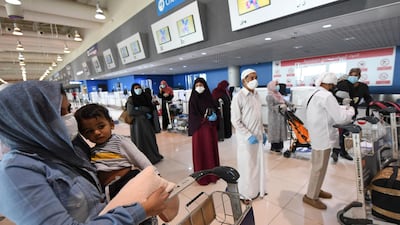
An Indian woman carries a child as she waits at the Dubai International Airport before leaving the country on a flight home on May 7. Karim Sahib / AFP -
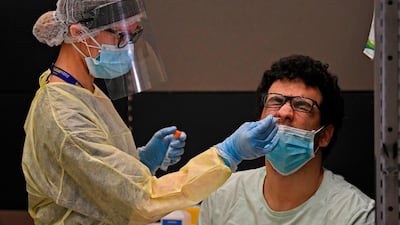
Health workers check passengers who arrived on an Emirates Airlines flight from London at Dubai International Airport amid the coronavirus Covid-19 pandemic. AFP -
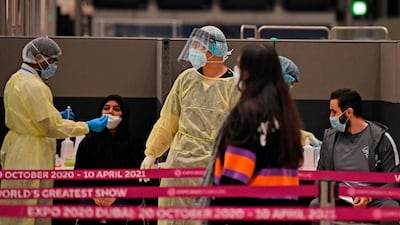
Health workers check passengers who arrived on an Emirates Airlines flight from London at Dubai International Airport amid the coronavirus pandemic. AFP -
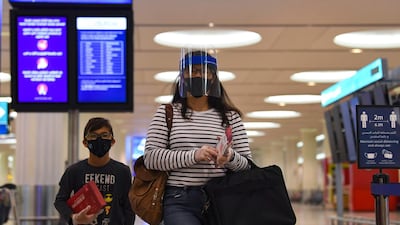
Passengers of an Emirates airlines flight, departing to the Australian city of Sydney, wear protective gear at Dubai International Airport on May 22. Karim Sahib / AFP -
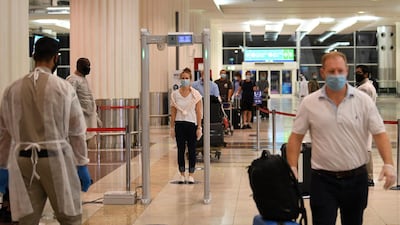
Passengers of an Emirates airlines flight line up to be checked by health workers at the Dubai International Airport. Karim Sahib / AFP -
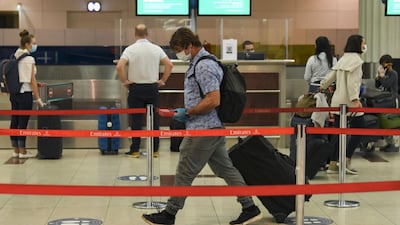
Travellers walk through Dubai International Airport to board a repatriation flight. Karim Sahib / AFP -
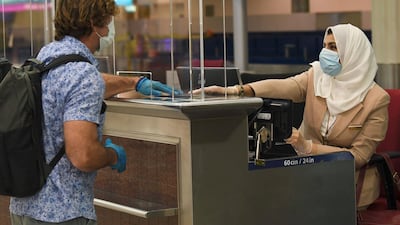
A passenger of an Emirates airlines flight checks in at Dubai International Airport. Karim Sahib / AFP


To mitigate risks when an infected person does travel, Iata backs guidelines by the International Civil Aviation Organisation (ICAO) that include wearing masks, sanitsation, health declarations and social distancing.
Contact tracing is a back-up measure to be able to rapidly identify and trace the contacts of anyone who is discovered to be infectious, according to James Wiltshire, Iata's assistant director of external affairs.
The lobby group acknowledged the hurdles of implementing the full set of measures but said governments have a common interest in finding solutions.
"Data transmission, required for health declarations, testing and tracing, raises privacy concerns," Mr de Juniac said. "And mutually recognised standards would be needed for testing."
Iata emphasised that quarantine measures deter people from travelling.
Countries that have put in place quarantine requirements have experienced similar drops in flights to countries with full travel bans, according to Iata's chief economist Brian Pearce.
Some 83 per cent of people would not even consider travelling if quarantine measures were imposed on them at their destination, according to an Iata survey.
The decline in bookings is similar in countries where arriving passengers are quarantined and countries with a full travel ban, Mr Pearce said.
Countries imposing quarantine saw arrivals decrease by more than 90 per cent—an outcome that is similar to countries that banned foreign arrivals, Iata said.
"Safely restarting the economy is a priority. That includes travel and tourism. Quarantine measures may play a role in keeping people safe, but they will also keep many unemployed," Mr de Juniac said.
There are economic incentives to make the alternative measures work, as travel and tourism accounts for 10.3 per cent of global GDP and 300 million jobs globally (direct, indirect and induced economic impact), according to the World Travel and Tourism Council.
Governments must protect their citizens from the "terrible risks" of both the virus and joblessness with balanced protection, Mr de Juniac said.

