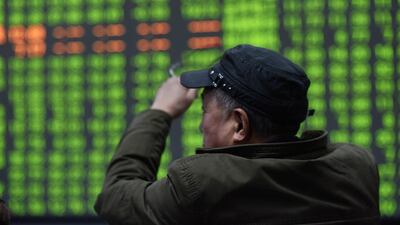
You might think that investing was a loser’s game in 2020, but the year has thrown up a surprising number of winners.
China's stock market, US technology giants and cryptocurrency Bitcoin have all flown this year, while the gold price hit a record high in August.
There were plenty of losers, too, as oil and banking stocks fell, and the UK trailed badly. However, even these underperformers showed signs of recovery as vaccine hopes grew.
Investors are backing stock markets to recover next year as the pandemic recedes, but it will be a long and bumpy road. So will this year’s winners prove to be next year’s losers?
2021 likely winners
Emerging markets
The great irony of 2020 is that the pandemic first struck in China, but the country’s stock market has been the best performer of the year, with share prices up a third. Asia-Pacific is close behind.
Asia is bouncing back strongly from the pandemic, says Chetan Sehgal, lead portfolio manager at Templeton Emerging Markets Investment Trust.
Samsung, Baidu, Tencent and Alibaba should do well as Asian growth is driven by technology, especially in “e-commerce, internet services, artificial intelligence, robotics, high performance computing and cloud computing”, adds Mr Sehgal.
Emerging Asia boasts a growing middle class who are keen to buy better-quality goods. “They want to upgrade their consumption patterns and buy a better watch, go to a bigger cinema screen and drive a better car.”
Verdict: As the US, Europe and UK struggle, Asia is the one to back.
Property
Commercial property had a tough 2020, as the trend for working and shopping from home destroyed demand for office space and shopping centres.
The MSCI World Real Estate Index fell by 6.42 per cent in the year to November 30, although it has picked up lately on vaccine hopes.
Property may recover further as people return to working from offices, says Faisal Al Omran, co-founder and managing partner at Neo Capital.
“We don’t believe in full-time work from home.”
Low returns on cash and bonds, combined with a red-hot equity market, will encourage more investors to try property for steady returns, Mr Al Omran says.
Verdict: It's a big contrarian call. Shops and offices have fallen out of favour, so approach with caution.
Oil
A barrel of Brent crude at the start of the year was trading at around $65 but dipped below $20 in April at the height of the pandemic. The oil price even turned negative in the US, as producers paid people to take deliveries off their hands, but has revived in recent months.
Brent now trades at around $50, while Goldman Sachs forecasts it will hit $65 next year.
Norbert Rücker, head of economics and next generation research at Julius Baer, also expects price growth as demand outstrips supply again. “Vaccine news has brightened growth and oil demand prospects.”
“Risk assets” such as oil are ending the year in a jubilant mood as confidence returns, says Fawad Razaqzada, market analyst at ThinkMarkets. “I expect that trend to continue, unless something fundamentally changes.”
Oil companies still face challenges as they transition to a low-carbon economy, says Romain Boscher, global chief investment officer for equities at Fidelity International.
Verdict: If the pandemic eases and the world gets moving again, the oil price rally could accelerate.
2021’s likely losers
US tech titans
The US did it again in 2020. The S&P 500 index has climbed another 15 per cent this year, as tech giants such as Amazon, Apple, Microsoft, Netflix, Tesla and Google-owner Alphabet powered on.
Andrew McCaffery, global chief investment officer of asset management at Fidelity International, warns the sector is looking expensive. “Valuations of some US mega caps appear to be detached from reality, with some stocks trading at over 100 times earnings,” he says.
Any correction could have an outsized impact on the wider market given that tech giants now account for more than a fifth of the S&P 500 index, he adds.
Verdict: The tech titans look vulnerable to a crash. Some will see any dip as a long-term buying opportunity.

Green energy
Clean energy stocks have enjoyed a dizzying rally in recent months, but Mr Rücker fears recent enthusiasm has been overdone. “Growth prospects are solid and the theme is popular among investors. However, today’s valuations imply too much optimism, while massive inflows of capital risk are overwhelming businesses,” he says.
Investors expect unreasonably high growth rates, particularly for wind turbine makers and solar module suppliers, Mr Rücker warns.
Verdict: Green energy has been highly cyclical and the sector looks expensive after recent outperformance.
Bitcoin
Bitcoin has roughly tripled this year to hit an all-time high of more than $23,000, and some claim this is only the start.
Where the crazy crypto goes next is anybody’s guess, but Simon Peters, an analyst at multi-asset investment platform eToro, reckons it could hit $70,000 to $90,000 by next Christmas.
However, it might fall back to $13,000 to $14,000 first, he adds. As ever, investors will need strong stomachs.
Verdict: The last time Bitcoin hit $20,000 in December 2017, it crashed in January. Approach with caution.
Gold and silver
The gold price flew in the first half of the year, as investors fled to the traditional safe haven during the worst of the pandemic.
In August, gold hit an all-time high of $2,084 an ounce. It has since plunged to $1,878 as investors look forward to a brighter 2021.
Gold still trades around 27 per cent higher than a year ago, while silver is up more than 50 per cent.
They could struggle next year if the recovery drives up bond yields on government bonds, as many anticipate, says Carsten Menke, head of next generation research at Julius Baer.
Gold does not pay any interest, so this will make holding the precious metal relatively less attractive.
Mr Menke says demand for gold as a safe haven should also fade as the pandemic eases. “We still do not see a revival of this year’s rally.”
Verdict: If investor confidence continues to recover, gold could lose its shine.

Cash
Cash has been a loser ever since interest rates were cut almost to zero after the financial crisis in March 2009, and this year things got even worse as rates turned negative in many countries.
Verdict: 2021 looks like another tough year for cash.
Wild card
The UK
Who would be crazy enough to invest in the UK right now, given Brexit, the mutant Covid-19 strain and Prime Minister Boris Johnson’s erratic performance?
The UK stock market underperformed again in 2020 after suffering a bigger hit from the pandemic than any other developed economy, while being torn in two over Brexit.
London’s benchmark FTSE 100 Index looks set to end the year about 12 per cent lower, in contrast to the US S&P 500, which will rise around 15 per cent.
However, the UK has made a fast start on its vaccine programme, and soon Brexit should be settled either way.
There is so much bad news about the UK that investors risk missing a golden opportunity, says Stephen Thomas, associate dean of MBA Programmes at City, University of London’s Business School (formerly Cass). “The smallest hint of a turnaround will see investors flock to UK shares, which are relatively cheap. The sky is darkest just before dawn.”
There is another reason for the FTSE 100’s underperformance. It has plenty of exposure to banking and oil stocks, which have been hard hit this year. “If the UK comes back into favour in 2021, the speed of the recovery may surprise investors,” says Mr Thomas.
Verdict: The UK is a major gamble, but its current woes could be a great chance to get back into this overlooked market.

