
The UAE is exploring additional measures to boost foreign investment by building on a “well-established regulatory framework” it already provides to external investors, the Minister of Industry and Advanced Technology said.
“As we continue to diversify our economy, there are many new opportunities through many various sectors that we want to build on," Dr Sultan Al Jaber, who is also group chief executive of the Abu Dhabi National Oil Company, said at the Bloomberg New Economy Forum on Tuesday.
"And we think that international investors will always be very interested in exploring these new opportunities here in the UAE like biotech, healthcare, agriculture, food security, tourism, financial businesses that we are establishing here in the UAE.”
The UAE has made a number of reforms in recent years to encourage foreign investment. In July last year, it allowed full foreign ownership in 122 economic activities.
Last month, the emirate of Abu Dhabi said it would issue foreign direct investment licences allowing 100 per cent foreign ownership of businesses with capital of Dh2 million ($544,588) within the designated activities.
The UAE continues to capitalise on its credibility and its “very strong, robust, historic track record as a trusted and a genuine partner” to global investors, Dr Al Jaber said.
The expansion of the UAE’s downstream operations, through the creation of a new petrochemicals hub at Ruwais, and the development of a manufacturing ecosystem “will provide excellent partnership opportunities for many international investors around the world”, he added.
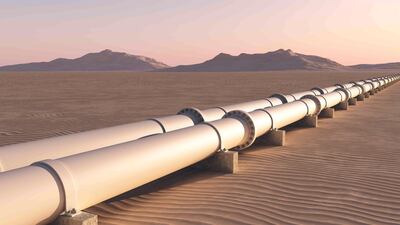
Despite a global pandemic, Adnoc has continued to attract FDI this year, agreeing a $20.7 billion deal in June to sell part of its gas pipeline network to a group of global asset managers including Brookfield Asset Management. That agreement was followed by a $5.5bn transaction in September to unlock capital from non-core property assets with US-based Apollo Global Management.
Speaking on the same panel, Brookfield Asset Management’s chief executive Bruce Flatt said the most important consideration when investing in a country is not the return it can earn, but the “respect of capital”.
“I put it down to the most basic or simple analysis. When things get tough, do people decide to take the easy route or the tough route? And the tough route is, continuing to pay your bills, work through the issues and deal with foreigners like they were your own money,” Mr Flatt said.
“When we look at a country, that's probably the most paramount thing to look at is respect of capital. And we don't invest where respect of capital does not exist.”
Brookfield, one of the world’s biggest money managers with $575bn of assets under management as of September 30, has been in the UAE for 15 years and has been treated “extremely well”, he said. “And we've never had an issue with any contract.”
Rania Al Mashat, Egypt’s Minister of International Cooperation, who also took part in the event, said one of the benefits of the agreement the country entered into with the International Monetary Fund in 2016 is that it provided stability in policymaking.
“Predictable policy is extremely important for investors. It's extremely important for citizens,” she said.
“The other is that through these programmes, you have transparent macroeconomic frameworks, and you are very clear about the agenda that you have set forward.”
Egypt has experienced a period of rapid growth since implementing the IMF programme, and although its economy will slow this year as a result of the damage caused by the Covid-19 pandemic, it is the the only country in the Middle East and North Africa whose economy is expected to grow this year.
The IMF expects gross domestic product growth of 3.5 per cent for Egypt this year, down from 5.6 per cent in 2019. FDI inflows into Egypt increased by 11 per cent to $19bn last year, making it the largest recipient of foreign investment into Africa, according to the United Nations Conference on Trade and Development.
Egypt introduced fiscal and capital buffers to protect its economy and to avoid capital flight, but the signing of a standby agreement with the IMF in June showed "very clearly what is it that the government is continuing to do” in terms of ongoing reforms, Ms Al-Manshat said.
The Arab world’s third-largest economy has also continued to deliver on major projects with “no interruption”, she added.
“We have a portfolio of $25bn and just in 2020 that went up by around $.7.5bn. And that is across sectors, whether it's health, whether it's electricity, transportation [or] small and medium enterprises,” she said.

