Saudi Arabia’s decision not to award government contracts to companies with regional headquarters outside the kingdom is in line with its broader economic agenda of creating employment and developing a knowledge-based economy.
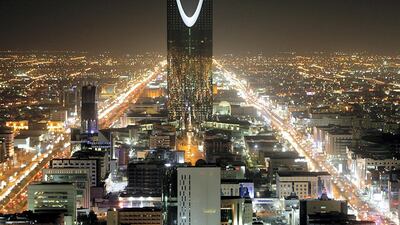
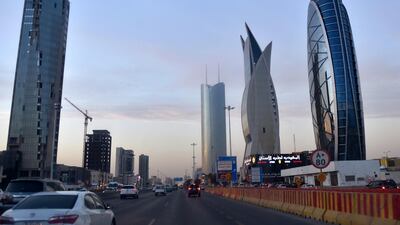
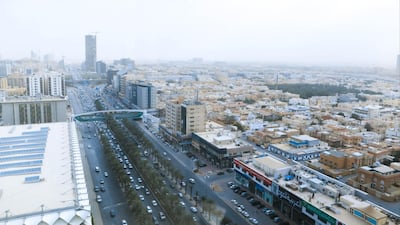
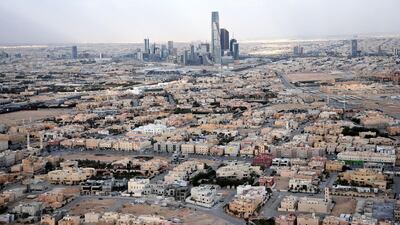
The measures will also help the Arab world’s largest economy achieve its goal of turning the capital, Riyadh, into one of the top 10 city-economies in the world, economists and market analysts said.
“It is a way of ... trying to boost employment as well as knowledge transfer,” said Salah Shamma, head of investment for Mena equities at Franklin Templeton.
“They are asking these corporates to come, relocate and set up their headquarters, and that obviously comes with additional employment.”
The kingdom said on Monday that the move would be effective from January 2024.
It's a way of ... trying to boost employment as well as knowledge transfer
"The cessation [of contracts] will include agencies, institutions and funds owned by the government," state-run Saudi Press Agency reported, quoting an official source.
“The cessation [of contracts] will include agencies, institutions and funds owned by the government,” state-run Saudi Press Agency reported, quoting an official source.
The move is being taken “to incentivise the localisation of businesses by foreign companies that deal with the kingdom’s government”, SPA said.
Saudi Crown Prince Mohammed Bin Salman told the Future Investment Initiative last month that the government intends to “make Riyadh one of the 10 largest city-economies in the world” and double the size of its population from 7.5 million by 2030.
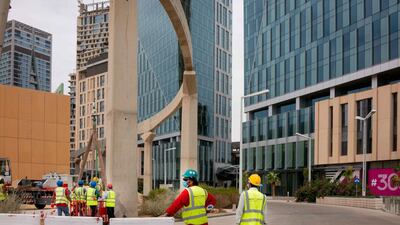
The kingdom is investing $220 billion in Riyadh’s transformation and expects to attract a similar investment from the private sector, Fahd Al-Rasheed, president of the Royal Commission for Riyadh City, told Reuters on January 28.
“We have seen local sourcing drives in Saudi Arabia before, but this seems different,” said Scott Livermore, chief economist and managing director at Oxford Economics.
“It appears less about Saudisation and more about accelerating [economic] growth, particularly in Riyadh, even if expat-driven.”
As part of its reform agenda, the kingdom has opened up several sectors of its economy. It is offering privatisation and investment opportunities with government entities in sectors such as mining, industry, health care and education.
However, international companies that want to participate “will have to make a choice” as of 2024 or they will not win government contracts, Finance Minister Mohammed Al-Jadaan told Reuters in an interview on Monday.
“Saudi Arabia has the largest economy and population in the region while our share of regional headquarters is negligible, less than 5 per cent currently,” he said.
The size of the kingdom’s economy and the volume of business on offer will ultimately lure more international companies, said Hettish Karmani, head of research at Oman-based Ubhar Capital.
The kingdom is a “regional powerhouse for trade and finance and, in one way or another, most companies extract their revenue out of Saudi Arabia”, said Mr Karmani.
“Many might shift to the kingdom in the coming period as it has lately changed a lot of policies”, making it more investor-friendly, he said.
The kingdom is competing with regional business and financial centres such as the UAE and Bahrain. Both Gulf countries have housed the regional headquarters of many multinational companies and financial institutions for decades.
The UAE, the second-largest Arab economy, is currently the top financial centre within the Gulf. Its two international financial centres host the regional offices of international banks, insurance companies, asset managers and many others.
The country also has a more advanced physical and social infrastructure and is ranked as the most business-friendly locations in the region.
Saudi Arabia faces an uphill battle in drawing businesses away from such established jurisdictions, analysts said.
“Its [Saudi Arabia’s] business environment and attractiveness to expats, compared with the UAE and Bahrain, is still relatively weak despite significant recent improvements, and this is likely to weigh on the pull of Riyadh,” said Mr Livermore.
Tax holidays may prove helpful in attracting companies to Riyadh, Mr Karmani said. However, to compete with established jurisdictions, Saudi Arabia will have to do more.
The intention of the government seems to be that most of the goods and services should be delivered from within Saudi Arabia.
The kingdom will have to take steps to ensure “swift regulatory approvals, business incentives [and] a liberal visa regime” to draw multinational companies, said M R Raghu, executive vice president at Kuwaiti asset management company Markaz.
It remains unclear what constitutes regional headquarters, and more information is needed to “make an informed decision”, an executive at a digital automation company said.
Many international companies have different management structures, with some already classifying Saudi Arabia as a separate operation from other Gulf countries, he said.
For instance, UK lender Standard Chartered has a regional centre in Dubai but its Middle East chief executive is based in Riyadh, where it has held a full banking licence since 2019.
"We believe that this enables us to further unlock exciting opportunities in the kingdom and contribute to Saudi Vision 2030," a spokesman for the lender told The National.
Some companies including US contractor Bechtel, Big Four accountancy firms Deloitte and PwC, the world's biggest oilfield services company Schlumberger, German engineering business Bosch and soft drinks company PepsiCo are already moving their regional offices to Riyadh. In total, 24 companies signed agreements with the Royal Commission for Riyadh City this month.
“Riyadh is undergoing a remarkable transformation to reinforce its position as one of the world’s major global centres for business, tourism and quality of life," a Deloitte spokeswoman said.
“Deloitte has been operating in Saudi Arabia since 1950 and we are honoured to be a strategic partner for the city on its journey to achieve its ambition under Vision 2030.”
Others are currently keeping a watching brief.
“With further information on the new regulations planned to be issued this year, we will be monitoring this closely to evaluate our approach,” Franklin Templeton said.
“We need to see ... rules related to the order and see how they further entice businesses who want to enter the region with Saudi Arabia as their base or who might be thinking of shifting [from within the region],” said Faisal Hasan, a UAE-based independent market analyst and former head of research at Kuwait’s Kamco Invest.
“But the intention of the government seems to be that most goods and services should be delivered from within Saudi Arabia.”
Swiss lender Credit Suisse, which opened a branch in Riyadh last month to serve affluent clients, declined to comment.
British lender HSBC, Deutsche Bank and JP Morgan also declined to comment on potential moves. BNP Paribas did not respond to The National's request for a comment.

French business
France has organised a delegation of leading businesses to travel to Syria. The group was led by French shipping giant CMA CGM, which struck a 30-year contract in May with the Syrian government to develop and run Latakia port. Also present were water and waste management company Suez, defence multinational Thales, and Ellipse Group, which is currently looking into rehabilitating Syrian hospitals.
Ten tax points to be aware of in 2026
1. Domestic VAT refund amendments: request your refund within five years
If a business does not apply for the refund on time, they lose their credit.
2. E-invoicing in the UAE
Businesses should continue preparing for the implementation of e-invoicing in the UAE, with 2026 a preparation and transition period ahead of phased mandatory adoption.
3. More tax audits
Tax authorities are increasingly using data already available across multiple filings to identify audit risks.
4. More beneficial VAT and excise tax penalty regime
Tax disputes are expected to become more frequent and more structured, with clearer administrative objection and appeal processes. The UAE has adopted a new penalty regime for VAT and excise disputes, which now mirrors the penalty regime for corporate tax.
5. Greater emphasis on statutory audit
There is a greater need for the accuracy of financial statements. The International Financial Reporting Standards standards need to be strictly adhered to and, as a result, the quality of the audits will need to increase.
6. Further transfer pricing enforcement
Transfer pricing enforcement, which refers to the practice of establishing prices for internal transactions between related entities, is expected to broaden in scope. The UAE will shortly open the possibility to negotiate advance pricing agreements, or essentially rulings for transfer pricing purposes.
7. Limited time periods for audits
Recent amendments also introduce a default five-year limitation period for tax audits and assessments, subject to specific statutory exceptions. While the standard audit and assessment period is five years, this may be extended to up to 15 years in cases involving fraud or tax evasion.
8. Pillar 2 implementation
Many multinational groups will begin to feel the practical effect of the Domestic Minimum Top-Up Tax (DMTT), the UAE's implementation of the OECD’s global minimum tax under Pillar 2. While the rules apply for financial years starting on or after January 1, 2025, it is 2026 that marks the transition to an operational phase.
9. Reduced compliance obligations for imported goods and services
Businesses that apply the reverse-charge mechanism for VAT purposes in the UAE may benefit from reduced compliance obligations.
10. Substance and CbC reporting focus
Tax authorities are expected to continue strengthening the enforcement of economic substance and Country-by-Country (CbC) reporting frameworks. In the UAE, these regimes are increasingly being used as risk-assessment tools, providing tax authorities with a comprehensive view of multinational groups’ global footprints and enabling them to assess whether profits are aligned with real economic activity.
Contributed by Thomas Vanhee and Hend Rashwan, Aurifer
Founders: Abdulmajeed Alsukhan, Turki Bin Zarah and Abdulmohsen Albabtain.
Based: Riyadh
Offices: UAE, Vietnam and Germany
Founded: September, 2020
Number of employees: 70
Sector: FinTech, online payment solutions
Funding to date: $116m in two funding rounds
Investors: Checkout.com, Impact46, Vision Ventures, Wealth Well, Seedra, Khwarizmi, Hala Ventures, Nama Ventures and family offices
The%20specs
%3Cp%3E%3Cstrong%3EEngine%3A%3C%2Fstrong%3E%206.4-litre%20V8%0D%3Cbr%3E%3Cstrong%3ETransmission%3A%20%3C%2Fstrong%3E8-speed%20auto%0D%3Cbr%3E%3Cstrong%3EPower%3A%20%3C%2Fstrong%3E470bhp%0D%3Cbr%3E%3Cstrong%3ETorque%3A%20%3C%2Fstrong%3E637Nm%0D%3Cbr%3E%3Cstrong%3EPrice%3A%20%3C%2Fstrong%3EDh375%2C900%20(estimate)%0D%3Cbr%3E%3Cstrong%3EOn%20sale%3A%3C%2Fstrong%3E%20now%3C%2Fp%3E%0A
LIGUE 1 FIXTURES
All times UAE ( 4 GMT)
Friday
Nice v Angers (9pm)
Lille v Monaco (10.45pm)
Saturday
Montpellier v Paris Saint-Germain (7pm)
Bordeaux v Guingamp (10pm)
Caen v Amiens (10pm)
Lyon v Dijon (10pm)
Metz v Troyes (10pm)
Sunday
Saint-Etienne v Rennes (5pm)
Strasbourg v Nantes (7pm)
Marseille v Toulouse (11pm)
Dr Afridi's warning signs of digital addiction
Spending an excessive amount of time on the phone.
Neglecting personal, social, or academic responsibilities.
Losing interest in other activities or hobbies that were once enjoyed.
Having withdrawal symptoms like feeling anxious, restless, or upset when the technology is not available.
Experiencing sleep disturbances or changes in sleep patterns.
What are the guidelines?
Under 18 months: Avoid screen time altogether, except for video chatting with family.
Aged 18-24 months: If screens are introduced, it should be high-quality content watched with a caregiver to help the child understand what they are seeing.
Aged 2-5 years: Limit to one-hour per day of high-quality programming, with co-viewing whenever possible.
Aged 6-12 years: Set consistent limits on screen time to ensure it does not interfere with sleep, physical activity, or social interactions.
Teenagers: Encourage a balanced approach – screens should not replace sleep, exercise, or face-to-face socialisation.
Source: American Paediatric Association
Asian Cup 2019
Quarter-final
UAE v Australia, Friday, 8pm, Hazza bin Zayed Stadium, Al Ain
SQUADS
UAE
Mohammed Naveed (captain), Mohamed Usman (vice-captain), Ashfaq Ahmed, Chirag Suri, Shaiman Anwar, Mohammed Boota, Ghulam Shabber, Imran Haider, Tahir Mughal, Amir Hayat, Zahoor Khan, Qadeer Ahmed, Fahad Nawaz, Abdul Shakoor, Sultan Ahmed, CP Rizwan
Nepal
Paras Khadka (captain), Gyanendra Malla, Dipendra Singh Airee, Pradeep Airee, Binod Bhandari, Avinash Bohara, Sundeep Jora, Sompal Kami, Karan KC, Rohit Paudel, Sandeep Lamichhane, Lalit Rajbanshi, Basant Regmi, Pawan Sarraf, Bhim Sharki, Aarif Sheikh
'The Coddling of the American Mind: How Good Intentions and Bad Ideas are Setting up a Generation for Failure'
Greg Lukianoff and Jonathan Haidt, Penguin Randomhouse
UAE currency: the story behind the money in your pockets
The Bio
Amal likes watching Japanese animation movies and Manga - her favourite is The Ancient Magus Bride
She is the eldest of 11 children, and has four brothers and six sisters.
Her dream is to meet with all of her friends online from around the world who supported her work throughout the years
Her favourite meal is pizza and stuffed vine leaves
She ams to improve her English and learn Japanese, which many animated programmes originate in
The five pillars of Islam
Who has lived at The Bishops Avenue?
- George Sainsbury of the supermarket dynasty, sugar magnate William Park Lyle and actress Dame Gracie Fields were residents in the 1930s when the street was only known as ‘Millionaires’ Row’.
- Then came the international super rich, including the last king of Greece, Constantine II, the Sultan of Brunei and Indian steel magnate Lakshmi Mittal who was at one point ranked the third richest person in the world.
- Turkish tycoon Halis Torprak sold his mansion for £50m in 2008 after spending just two days there. The House of Saud sold 10 properties on the road in 2013 for almost £80m.
- Other residents have included Iraqi businessman Nemir Kirdar, singer Ariana Grande, holiday camp impresario Sir Billy Butlin, businessman Asil Nadir, Paul McCartney’s former wife Heather Mills.
Hunting park to luxury living
- Land was originally the Bishop of London's hunting park, hence the name
- The road was laid out in the mid 19th Century, meandering through woodland and farmland
- Its earliest houses at the turn of the 20th Century were substantial detached properties with extensive grounds
The%20specs
%3Cp%3E%3Cstrong%3EEngine%3A%20%3C%2Fstrong%3E3.5-litre%20twin-turbo%20V6%20%0D%3Cbr%3E%3Cstrong%3EPower%3A%20%3C%2Fstrong%3E456hp%20at%205%2C000rpm%0D%3Cbr%3E%3Cstrong%3ETorque%3A%20%3C%2Fstrong%3E691Nm%20at%203%2C500rpm%0D%3Cbr%3E%3Cstrong%3ETransmission%3A%20%3C%2Fstrong%3E10-speed%20auto%20%0D%3Cbr%3E%3Cstrong%3EFuel%20consumption%3A%20%3C%2Fstrong%3E14.6L%2F100km%0D%3Cbr%3E%3Cstrong%3EPrice%3A%20%3C%2Fstrong%3Efrom%20Dh349%2C545%0D%3Cbr%3E%3Cstrong%3EOn%20sale%3A%20%3C%2Fstrong%3Enow%3C%2Fp%3E%0A
UAE Premiership
Results
Dubai Exiles 24-28 Jebel Ali Dragons
Abu Dhabi Harlequins 43-27 Dubai Hurricanes
Fixture
Friday, March 29, Abu Dhabi Harlequins v Jebel Ali Dragons, The Sevens, Dubai
MATCH INFO
Euro 2020 qualifier
Fixture: Liechtenstein v Italy, Tuesday, 10.45pm (UAE)
TV: Match is shown on BeIN Sports
Key facilities
- Olympic-size swimming pool with a split bulkhead for multi-use configurations, including water polo and 50m/25m training lanes
- Premier League-standard football pitch
- 400m Olympic running track
- NBA-spec basketball court with auditorium
- 600-seat auditorium
- Spaces for historical and cultural exploration
- An elevated football field that doubles as a helipad
- Specialist robotics and science laboratories
- AR and VR-enabled learning centres
- Disruption Lab and Research Centre for developing entrepreneurial skills
UAE SQUAD
Goalkeepers: Ali Khaseif, Fahad Al Dhanhani, Mohammed Al Shamsi, Adel Al Hosani
Defenders: Bandar Al Ahbabi, Shaheen Abdulrahman, Walid Abbas, Mahmoud Khamis, Mohammed Barghash, Khalifa Al Hammadi, Hassan Al Mahrami, Yousef Jaber, Salem Rashid, Mohammed Al Attas, Alhassan Saleh
Midfielders: Ali Salmeen, Abdullah Ramadan, Abdullah Al Naqbi, Majed Hassan, Yahya Nader, Ahmed Barman, Abdullah Hamad, Khalfan Mubarak, Khalil Al Hammadi, Tahnoun Al Zaabi, Harib Abdallah, Mohammed Jumah, Yahya Al Ghassani
Forwards: Fabio De Lima, Caio Canedo, Ali Saleh, Ali Mabkhout, Sebastian Tagliabue, Zayed Al Ameri
'The worst thing you can eat'
Trans fat is typically found in fried and baked goods, but you may be consuming more than you think.
Powdered coffee creamer, microwave popcorn and virtually anything processed with a crust is likely to contain it, as this guide from Mayo Clinic outlines:
Baked goods - Most cakes, cookies, pie crusts and crackers contain shortening, which is usually made from partially hydrogenated vegetable oil. Ready-made frosting is another source of trans fat.
Snacks - Potato, corn and tortilla chips often contain trans fat. And while popcorn can be a healthy snack, many types of packaged or microwave popcorn use trans fat to help cook or flavour the popcorn.
Fried food - Foods that require deep frying — french fries, doughnuts and fried chicken — can contain trans fat from the oil used in the cooking process.
Refrigerator dough - Products such as canned biscuits and cinnamon rolls often contain trans fat, as do frozen pizza crusts.
Creamer and margarine - Nondairy coffee creamer and stick margarines also may contain partially hydrogenated vegetable oils.
Results
2pm: Maiden (TB) Dh60,000 (Dirt) 1,200m, Winner: Mouheeb, Tom Marquand (jockey), Nicholas Bachalard (trainer)
2.30pm: Handicap (TB) Dh68,000 (D) 1,200m, Winner: Honourable Justice, Royston Ffrench, Salem bin Ghadayer
3pm: Handicap (TB) Dh84,000 (D) 1,200m, Winner: Dahawi, Antonio Fresu, Musabah Al Muhairi
3.30pm: Conditions (TB) Dh100,000 (D) 1,200m, Winner: Dark Silver, Fernando Jara, Ahmad bin Harmash
4pm: Maiden (TB) Dh60,000 (D) 1,600m, Winner: Dark Of Night. Antonio Fresu, Al Muhairi.
4.30pm: Handicap (TB) Dh68,000 (D) 1,600m, Winner: Habah, Pat Dobbs, Doug Watson
Water waste
In the UAE’s arid climate, small shrubs, bushes and flower beds usually require about six litres of water per square metre, daily. That increases to 12 litres per square metre a day for small trees, and 300 litres for palm trees.
Horticulturists suggest the best time for watering is before 8am or after 6pm, when water won't be dried up by the sun.
A global report published by the Water Resources Institute in August, ranked the UAE 10th out of 164 nations where water supplies are most stretched.
The Emirates is the world’s third largest per capita water consumer after the US and Canada.
The specs
Engine: 3.8-litre twin-turbo V8
Power: 611bhp
Torque: 620Nm
Transmission: seven-speed automatic
Price: upon application
On sale: now
Tom Fletcher on 'soft power'
SPECS
Engine: 4-litre V8 twin-turbo
Power: 630hp
Torque: 850Nm
Transmission: 8-speed Tiptronic automatic
Price: From Dh599,000
On sale: Now
Mina Cup winners
Under 12 – Minerva Academy
Under 14 – Unam Pumas
Under 16 – Fursan Hispania
Under 18 – Madenat
Mercer, the investment consulting arm of US services company Marsh & McLennan, expects its wealth division to at least double its assets under management (AUM) in the Middle East as wealth in the region continues to grow despite economic headwinds, a company official said.
Mercer Wealth, which globally has $160 billion in AUM, plans to boost its AUM in the region to $2-$3bn in the next 2-3 years from the present $1bn, said Yasir AbuShaban, a Dubai-based principal with Mercer Wealth.
“Within the next two to three years, we are looking at reaching $2 to $3 billion as a conservative estimate and we do see an opportunity to do so,” said Mr AbuShaban.
Mercer does not directly make investments, but allocates clients’ money they have discretion to, to professional asset managers. They also provide advice to clients.
“We have buying power. We can negotiate on their (client’s) behalf with asset managers to provide them lower fees than they otherwise would have to get on their own,” he added.
Mercer Wealth’s clients include sovereign wealth funds, family offices, and insurance companies among others.
From its office in Dubai, Mercer also looks after Africa, India and Turkey, where they also see opportunity for growth.
Wealth creation in Middle East and Africa (MEA) grew 8.5 per cent to $8.1 trillion last year from $7.5tn in 2015, higher than last year’s global average of 6 per cent and the second-highest growth in a region after Asia-Pacific which grew 9.9 per cent, according to consultancy Boston Consulting Group (BCG). In the region, where wealth grew just 1.9 per cent in 2015 compared with 2014, a pickup in oil prices has helped in wealth generation.
BCG is forecasting MEA wealth will rise to $12tn by 2021, growing at an annual average of 8 per cent.
Drivers of wealth generation in the region will be split evenly between new wealth creation and growth of performance of existing assets, according to BCG.
Another general trend in the region is clients’ looking for a comprehensive approach to investing, according to Mr AbuShaban.
“Institutional investors or some of the families are seeing a slowdown in the available capital they have to invest and in that sense they are looking at optimizing the way they manage their portfolios and making sure they are not investing haphazardly and different parts of their investment are working together,” said Mr AbuShaban.
Some clients also have a higher appetite for risk, given the low interest-rate environment that does not provide enough yield for some institutional investors. These clients are keen to invest in illiquid assets, such as private equity and infrastructure.
“What we have seen is a desire for higher returns in what has been a low-return environment specifically in various fixed income or bonds,” he said.
“In this environment, we have seen a de facto increase in the risk that clients are taking in things like illiquid investments, private equity investments, infrastructure and private debt, those kind of investments were higher illiquidity results in incrementally higher returns.”
The Abu Dhabi Investment Authority, one of the largest sovereign wealth funds, said in its 2016 report that has gradually increased its exposure in direct private equity and private credit transactions, mainly in Asian markets and especially in China and India. The authority’s private equity department focused on structured equities owing to “their defensive characteristics.”
Dhadak
Director: Shashank Khaitan
Starring: Janhvi Kapoor, Ishaan Khattar, Ashutosh Rana
Stars: 3
Farage on Muslim Brotherhood
Nigel Farage told Reform's annual conference that the party will proscribe the Muslim Brotherhood if he becomes Prime Minister.
"We will stop dangerous organisations with links to terrorism operating in our country," he said. "Quite why we've been so gutless about this – both Labour and Conservative – I don't know.
“All across the Middle East, countries have banned and proscribed the Muslim Brotherhood as a dangerous organisation. We will do the very same.”
It is 10 years since a ground-breaking report into the Muslim Brotherhood by Sir John Jenkins.
Among the former diplomat's findings was an assessment that “the use of extreme violence in the pursuit of the perfect Islamic society” has “never been institutionally disowned” by the movement.
The prime minister at the time, David Cameron, who commissioned the report, said membership or association with the Muslim Brotherhood was a "possible indicator of extremism" but it would not be banned.
Game Changer
Director: Shankar
Stars: Ram Charan, Kiara Advani, Anjali, S J Suryah, Jayaram
Rating: 2/5
The%20specs
%3Cp%3E%3Cstrong%3EEngine%3A%20%3C%2Fstrong%3E2.0-litre%204-cyl%20turbo%3Cbr%3E%3Cstrong%3EPower%3A%20%3C%2Fstrong%3E190hp%20at%205%2C600rpm%3Cbr%3E%3Cstrong%3ETorque%3A%20%3C%2Fstrong%3E320Nm%20at%201%2C500-4%2C000rpm%3Cbr%3E%3Cstrong%3ETransmission%3A%20%3C%2Fstrong%3E7-speed%20dual-clutch%20auto%3Cbr%3E%3Cstrong%3EFuel%20consumption%3A%20%3C%2Fstrong%3E10.9L%2F100km%3Cbr%3E%3Cstrong%3EPrice%3A%20%3C%2Fstrong%3EFrom%20Dh119%2C900%3Cbr%3E%3Cstrong%3EOn%20sale%3A%20%3C%2Fstrong%3ENow%3C%2Fp%3E%0A