

Oman is said to be weighing up plans to introduce income tax on high earners in 2022 as part of the finance ministry's 2020-2024 economic scheme and efforts to reduce the fiscal deficit.
The finance ministry is evaluating the plans for a personal income tax as part of its 2020-2024 Mid-Term Fiscal Plan, according to the Oman Daily Observer, and the Times of Oman. Plans for an income tax on high earners were also mentioned in a bond prospectus published by the ministry last month, when the sultanate raised $2 billion in external financing.
"The government recognises the need to strengthen the Sultanate’s revenue-raising framework by decreasing its reliance on hydrocarbon revenues," it said in its bond prospectus.
It aims to do so through by "strengthening tax administration and collection efficiency, introducing value added tax in line with the GCC VAT Treaty at a standard rate of 5 per cent, enhancing the returns from state-owned enterprises [and] introducing income tax for high earners."
A statement on the official Oman News Agency website said the latest fiscal plan was put together "in response to the current circumstances dictated by the slump in oil prices and coronavirus pandemic, both of which wreaked havoc on the global economy, causing record decline on demand for energy, which, accordingly, impacted various economic sectors."
-

A traditional boat is moored next to a modern ship in the port of Mutrah in the Omani capital Muscat. AFP -

A view of the Al-Alam palace in the Omani capital Muscat. AFP -

A view of the Mutrah castle in the Omani capital Muscat. AFP -

A partial view of the seaside corniche in the Omani capital Muscat. AFP -

A view of the area of Haramil in the Omani capital Muscat. AFP -

A vendor wearing a face mask against the coronavirus sits in front of his shop at the Mutrah Souq in the Omani capital Muscat. AFP -

A vendor wearing a face mask against the coronavirus sells dates at the Mutrah Souq in the Omani capital Muscat. AFP -
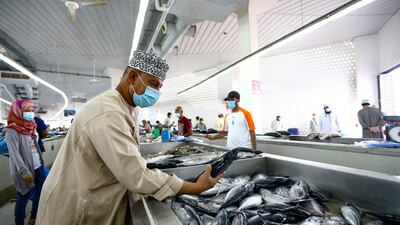
A vendor wearing a face mask against the coronavirus sells fresh fish at the Mutrah Souq in the Omani capital Muscat. AFP -

A vendor wearing a face mask against the coronavirus sells fresh fish at the Mutrah Souq in the Omani capital Muscat. AFP -
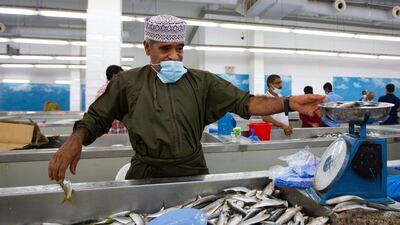
A vendor wearing a face mask against the coronavirus sells fresh fish at the Mutrah Souq (Mutah market) in the Omani capital Muscat. AFP -

A vendor wearing a face mask against the coronavirus carries fresh fish to be sold at the Mutrah Souq in the Omani capital Muscat. AFP


If a tax on income is introduced, the sultanate would be the first GCC country to do so. Last month, a Royal Decree paved the way for the introduction of a 5 per cent VAT in April of next year.
All six GCC states agreed to introduce VAT in 2016. Saudi Arabia and the UAE brought in VAT in 2018 and Bahrain followed suit last year. In July, Saudi Arabia increased VAT to 15 per cent.
Oman has the highest breakeven oil price of GCC nations, according to the International Monetary Fund. The sultanate's economy is projected to shrink 10 per cent this year and 0.5 per cent in 2021, the Washington-based lender said last month.
"It is no surprise to see Oman, given it has the most acute fiscal deficits, adopt income tax first,” said Hasnain Malik, an emerging and frontier markets analyst at Tellimer Research.
According to the fund's estimates, the sultanate is set to run a budget deficit of 18.3 per cent this year, declining to 16.3 per cent in 2021. The Institute of International Finance forecasts a narrower 2020 deficit than the IMF at 13.4 per cent, citing slightly higher oil price and production assumptions.
Pointing to the reorganisation or merger of several government departments and a 10 per cent reduction in spending on wages, defence and transfers to public companies, the IIF said Oman was making "good progress ... in fiscal adjustment and in structural reform implementation".

