Faisal Al Bannai, chief executive of Edge. The company will collaborate with Israel to develop an advanced counter unmanned aircraft system. Saher Mousa / Edge

Idex 2021: UAE's Edge eyes 15% revenue growth in 2021 and new export markets, CEO says


  • English
  • Arabic

UAE defence conglomerate Edge plans to boost revenue by more than 15 per cent this year with a fresh product line-up and expansion into new export markets, its chief executive said.

The company, which recorded sales of $5 billion last year, will target markets in Asia, Africa, Eastern Europe and south America, Faisal al-Bannai, Edge group chief executive and managing director, told The National on Thursday.

A product mix including missile technology and loitering ammunition will help drive its revenue targets in 2021.
"Between 2021 and 2023, we see healthy growth due to a line-up of products that we've announced," Mr Al Bannai said on the sidelines of the International Defence Exhibition and Conference (Idex). "We're going to have healthy growth of above 15 per cent in 2021."

Abu Dhabi-based Edge, through its Halcon unit, will supply the UAE's first locally manufactured air defence missile system to Germany's Rheinmetall. The move is part of a push by the Gulf country to develop a domestic defence industry to produce military equipment locally, reduce reliance on imports and create jobs.

Edge's electronic warfare products – such as a jammer for improvised explosive devices and GPS spoofers – will be a major driver of sales growth this year, Mr Al Bannai said. The company is also marketing upgraded armoured vehicles by its Nimr unit while new boats by its subsidiary Abu Dhabi Ship Building can cater to countries with large coastal areas to protect, he said.

Edge specialises in building advanced technology for weapons systems, cyber protection and electronic warfare with the 25 companies under its umbrella. This includes developing drones, UAVs and smart defence equipment.

Its advanced technologies "can compete very strongly with players that are out there in the market," he said.

In 2021 and 2022, Edge aims to expand its presence in international markets.

"Our core today is serving our armed forces but we’ve been engaging with various markets and clients that are buying some of our solutions," Mr Al Bannai said. "During this year and the next year we will be expanding our footprint."

To that end, Edge is "focused on parts of Asia, we are focused on various parts of Africa and Eastern Europe countries – and there is a big opportunity there – and some opportunities in south America."

Small arms maker Caracal, part of the Edge group, already exports its products to Indonesia, India and South Korea with plans for new global markets.

  • Sheikh Hamdan visits Idex on the penultimate day of the event
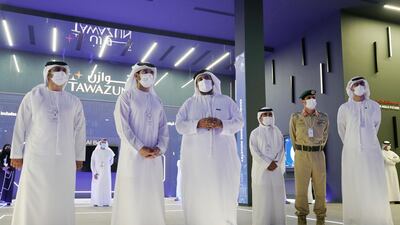
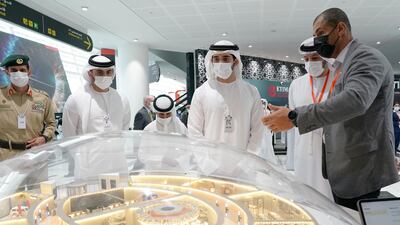
    Sheikh Hamdan visits Idex on the penultimate day of the event
  • Sheikh Hamdan visits IDEX.
    Sheikh Hamdan visits IDEX.
  • Sheikh Hamdan visits IDEX.
    Sheikh Hamdan visits IDEX.
  • Sheikh Hamdan visits IDEX.
    Sheikh Hamdan visits IDEX.
  • Sheikh Hamdan visits IDEX.
    Sheikh Hamdan visits IDEX.
  • Sheikh Hamdan visits IDEX.
    Sheikh Hamdan visits IDEX.

Following the normalisation of ties between the UAE and Israel last year through the Abraham Accords, Edge is in talks to explore opportunities in advanced technologies with the country.

"We have various discussions with companies in Israel ... and we have a number of cooperations with them and at the right time we will make few announcements in this regard," he said.

Edge also expects to be part of the supply chain for Lockheed Martin's F-35 military jets when the US sale of the planes to the UAE is completed.

"Whether the F-35 or any other deals happen, I am sure as the key local industry, we will be involved in various parts of the ecosystem," Mr Al Bannai said.

The UAE ambassador to Washington Yousef Al Otaiba said earlier he is confident the sale of F-35 jets would go through after a review by President Joe Biden's administration of some pending arms sales to US allies.

Asked if there are any plans to float the company, Mr Al Bannai said Edge is not focused on an initial public offering (IPO).

"The focus is to build the right capability and build our sovereignty in the country and build a company that can compete at the international stage," he said.

For its pipeline for new products, Edge will continue to expand its portfolio of products in the categories of electronic warfare, missiles and autonomous capabilities, he said.

The conglomerate has plans for drone manufacturing platforms and has ambitions beyond local production of parts.

"As Edge, we are not in the business of assembly of other people’s products. We are not in the 'just let’s put parts together and be a back office warehouse'. We are our own OEM and that means we are developing our products for our solutions," Mr Al Bannai said. "We can team up with someone where we integrate our products and their products but definitely we are not in the assembly of other people’s products. That is in my mind a lower category of provider in that regard."

To achieve these ambitions as a manufacturer, Edge says it is well-positioned to attract highly-skilled talent thanks to its investments in technology, a roadmap for growth, openness to ideas "pushing the limit in advanced technology" and being in a country that has the infrastructure to attract expats, he said.

COMPANY%20PROFILE
%3Cp%3E%3Cstrong%3EName%3A%3C%2Fstrong%3E%20SupplyVan%3Cbr%3E%3Cstrong%3EBased%3A%3C%2Fstrong%3E%20Dubai%2C%20UAE%3Cbr%3E%3Cstrong%3ELaunch%20year%3A%3C%2Fstrong%3E%202017%3Cbr%3E%3Cstrong%3ENumber%20of%20employees%3A%3C%2Fstrong%3E%2029%3Cbr%3E%3Cstrong%3ESector%3A%3C%2Fstrong%3E%20MRO%20and%20e-commerce%3Cbr%3E%3Cstrong%3EFunding%3A%3C%2Fstrong%3E%20Seed%3C%2Fp%3E%0A
SPECS
%3Cp%3E%3Cstrong%3EEngine%3A%3C%2Fstrong%3E%202-litre%204-cylinder%20turbo%20and%203.6-litre%20V6%0D%3Cbr%3E%3Cstrong%3ETransmission%3A%20%3C%2Fstrong%3ESeven-speed%20automatic%0D%3Cbr%3E%3Cstrong%3EPower%3A%3C%2Fstrong%3E%20235hp%20and%20310hp%0D%3Cbr%3E%3Cstrong%3ETorque%3A%20%3C%2Fstrong%3E258Nm%20and%20271Nm%0D%3Cbr%3E%3Cstrong%3EPrice%3A%3C%2Fstrong%3E%20From%20Dh185%2C100%0D%3Cbr%3E%3C%2Fp%3E%0A
DAY%20ONE%20RESULT
%3Cp%3E%3Cbr%3E1.%20Charlotte%20Kool%20(NED)%20%E2%80%93%20Team%20DSM%3A%202hrs%2C%2047min%2C%2014sec%3Cbr%3E2.%20Lorena%20Wiebes%20(NED)%20%E2%80%93%20Team%20SD%20Worx%3A%20%2B4%20secs%3Cbr%3E3.%20Chiara%20Consonni%20(ITA)%20%E2%80%93%20UAE%20Team%20ADQ%3A%20%2B5%20secs%3C%2Fp%3E%0A

Mercer, the investment consulting arm of US services company Marsh & McLennan, expects its wealth division to at least double its assets under management (AUM) in the Middle East as wealth in the region continues to grow despite economic headwinds, a company official said.

Mercer Wealth, which globally has $160 billion in AUM, plans to boost its AUM in the region to $2-$3bn in the next 2-3 years from the present $1bn, said Yasir AbuShaban, a Dubai-based principal with Mercer Wealth.

Within the next two to three years, we are looking at reaching $2 to $3 billion as a conservative estimate and we do see an opportunity to do so,” said Mr AbuShaban.

Mercer does not directly make investments, but allocates clients’ money they have discretion to, to professional asset managers. They also provide advice to clients.

“We have buying power. We can negotiate on their (client’s) behalf with asset managers to provide them lower fees than they otherwise would have to get on their own,” he added.

Mercer Wealth’s clients include sovereign wealth funds, family offices, and insurance companies among others.

From its office in Dubai, Mercer also looks after Africa, India and Turkey, where they also see opportunity for growth.

Wealth creation in Middle East and Africa (MEA) grew 8.5 per cent to $8.1 trillion last year from $7.5tn in 2015, higher than last year’s global average of 6 per cent and the second-highest growth in a region after Asia-Pacific which grew 9.9 per cent, according to consultancy Boston Consulting Group (BCG). In the region, where wealth grew just 1.9 per cent in 2015 compared with 2014, a pickup in oil prices has helped in wealth generation.

BCG is forecasting MEA wealth will rise to $12tn by 2021, growing at an annual average of 8 per cent.

Drivers of wealth generation in the region will be split evenly between new wealth creation and growth of performance of existing assets, according to BCG.

Another general trend in the region is clients’ looking for a comprehensive approach to investing, according to Mr AbuShaban.

“Institutional investors or some of the families are seeing a slowdown in the available capital they have to invest and in that sense they are looking at optimizing the way they manage their portfolios and making sure they are not investing haphazardly and different parts of their investment are working together,” said Mr AbuShaban.

Some clients also have a higher appetite for risk, given the low interest-rate environment that does not provide enough yield for some institutional investors. These clients are keen to invest in illiquid assets, such as private equity and infrastructure.

“What we have seen is a desire for higher returns in what has been a low-return environment specifically in various fixed income or bonds,” he said.

“In this environment, we have seen a de facto increase in the risk that clients are taking in things like illiquid investments, private equity investments, infrastructure and private debt, those kind of investments were higher illiquidity results in incrementally higher returns.”

The Abu Dhabi Investment Authority, one of the largest sovereign wealth funds, said in its 2016 report that has gradually increased its exposure in direct private equity and private credit transactions, mainly in Asian markets and especially in China and India. The authority’s private equity department focused on structured equities owing to “their defensive characteristics.”

COMPANY PROFILE
Name: Kumulus Water
 
Started: 2021
 
Founders: Iheb Triki and Mohamed Ali Abid
 
Based: Tunisia 
 
Sector: Water technology 
 
Number of staff: 22 
 
Investment raised: $4 million 
The Lowdown

Kesari

Rating: 2.5/5 stars
Produced by: Dharma Productions, Azure Entertainment
Directed by: Anubhav Singh
Cast: Akshay Kumar, Parineeti Chopra


Pieces of Her

Stars: Toni Collette, Bella Heathcote, David Wenham, Omari Hardwick   

Director: Minkie Spiro

Rating:2/5


Company: Instabug

Founded: 2013

Based: Egypt, Cairo

Sector: IT

Employees: 100

Stage: Series A

Investors: Flat6Labs, Accel, Y Combinator and angel investors

The%20new%20Turing%20Test
%3Cp%3EThe%20Coffee%20Test%3C%2Fp%3E%0A%3Cp%3E%3Cem%3EA%20machine%20is%20required%20to%20enter%20an%20average%20American%20home%20and%20figure%20out%20how%20to%20make%20coffee%3A%20find%20the%20coffee%20machine%2C%20find%20the%20coffee%2C%20add%20water%2C%20find%20a%20mug%20and%20brew%20the%20coffee%20by%20pushing%20the%20proper%20buttons.%3C%2Fem%3E%3C%2Fp%3E%0A%3Cp%3EProposed%20by%20Steve%20Wozniak%2C%20Apple%20co-founder%3C%2Fp%3E%0A
How do Sim card scams work?

Sim swap frauds are a form of identity theft.

They involve criminals conning mobile phone operators into issuing them with replacement Sim cards by claiming to be the victim, often pretending their phone has been lost or stolen in order to secure a new Sim.

They use the victim's personal details - obtained through criminal methods - to convince such companies of their identity.

The criminal can then access any online service that requires security codes to be sent to a user's mobile phone, such as banking services.