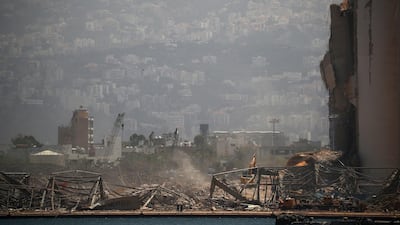
Lebanese director Nadine Labaki teamed up with actress Cate Blanchett to create a video highlighting the tragedies of the August 4 Beirut blast. Getty Images

Why Nadine Labaki believes Beirut blast marks the ‘birth’ of a new world: ‘There’s a revolution inside us’


  • English
  • Arabic

When Nadine Labaki speaks, you could almost imagine her on a podium.

“There are alternative systems of living and thinking and outside conspiracy theories of this virus being man-made,” she tells The National in an exclusive interview. “I believe nature is giving us a deadline because we need to change our ways.”

She moves seamlessly from environmental concerns to global calamity: “We cannot continue being oblivious of the mass destruction of our planet. Our current crisis is an alarm signal. We need to find sustainable ways of living and more equal distributions of wealth. How is it that people are still hungry in 2021? Where is art, music, public speaking and agriculture today?”

Lebanese filmmaker and actress Labaki is an idealist who takes an active part in advocating for change.

She is a high-profile supporter for the United Nations High Commissioner for Refugees, and her own political participation, though discreet, can be traced back to 2015, when she worked on the Beirut Madinati campaign for a group that ran for the 2016 municipal elections. It arose in response to the government’s ineptitude around the country’s garbage crisis.

Labaki is now starring in Mounia Akl's soon-to-be-released Costa Brava Lebanon, which draws from that juncture through the story of a couple who leave Beirut's polluted streets, only for a landfill site to be built outside their peaceful mountain home as a solution for the rubbish building up inside the Lebanese capital.

Labaki was also recently announced as part of the cast for the Arabic adaptation of the Italian film Perfect Strangers, which takes place during Lebanon's coronavirus-inflicted revolution.

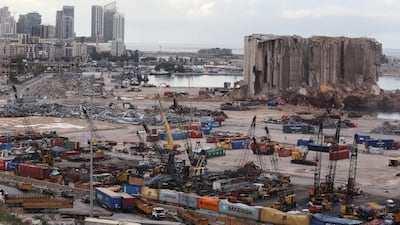
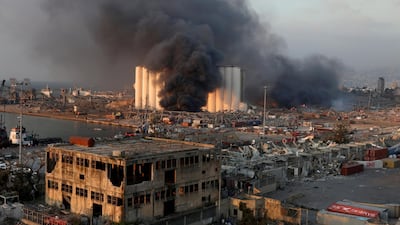
Labaki doesn’t stress on these acting gigs so much, though, nor on what her next film might be. At the moment, she is preoccupied with the bigger picture, in particular, the explosion at the Port of Beirut on August 4.

In a non-commercial vignette released on her Instagram feed on November, we hear Australian actress Cate Blanchett’s composed voice speaking about the blast.

“This is not another day in the Middle East,” Blanchett says. Labaki contacted the UNHCR goodwill ambassador through the organisation to ask her to partake in the video, which urges viewers to look again, in a rejection against the normalisation of terror and suffering in the region.

I truly believe that this is the death of a certain kind of world and the birth of a new one that we need to build together

“We are so used to having catastrophes, to being a complicated region,” Labaki says. “How can we get out of this? How can we project the immensity of what happened to the world? It could have happened anywhere.

“People won’t be able to rebuild their lives until they understand why the disaster occurred, and I don’t think we can do it on our own. We need to involve the international community.”

As a filmmaker, too, Labaki is concerned with projecting harsh societal issues to the world. She is highly sensitive to mediated images that sit between fiction and reality, and in her last film, Capernaum, created a narrative that had a real impact on the protagonist's life – Syrian-born refugee Zain Al Rafeea, who achieved asylum with his family in Norway.

Putting paid to the debate whether cinema reflects real life, Capernaum, which is grounded in lived experiences of social injustice, can be seen as an example of an ever-­evolving script that extends beyond the film's duration.

“Although I didn’t plan for things to happen the way they did, when I saw Zain for the first time, I knew our collaboration would lead somewhere else,” Labaki says. “I felt in my heart that there would be a before and after, that his destiny could not be on the streets, unable to write his name, read a road sign or reach his full potential.”

Labaki is not unique in using untrained actors in her films, and she cites the profoundly evocative Turtles Can Fly by pioneering Kurdish-Iranian director Bahman Ghobadi. Seeing his film represented a radical turning point in her filmmaking practice, at a time when she was writing Caramel. She remembers the feeling it gave her when she left the Rotterdam screening.

I truly believe that this culture of belonging to a group is absurd. We all belong to humanity

“I was destroyed. I kept shaking for a week – it was a wake-up call. I could feel the truth in everything that the children in the film experienced. I really understood the power of cinema then, especially in the Arab world where making each film is like going to war – it was a moment I couldn’t turn back from.”

There is a utopic sense of imagination that underpins Labaki’s thought process, if Zain suing his parents for bringing him into the world as an allegory for an abusive social system is any proof. In a way, the lawsuit in the film represents her sense of society’s culpability for the marginalisation and dehumanisation of the stateless and homeless. “We are wired for empathy, so art humanises the major issues,” she says.

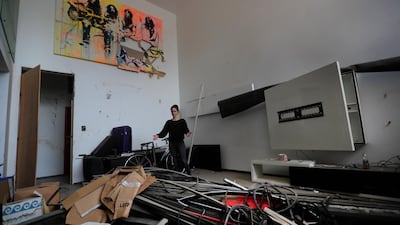
Although it’s been a paralysing year for Labaki since the onset of Lebanon’s economic crisis, she hasn’t given up. “I truly believe that this is the death of a certain kind of world and the birth of a new one that we need to build together. Artists have a big role to play,” she says.

Nadine Labaki, right, with her husband Lebanese composer Khaled Mouzannar, during the Lebanese protests. Ammar Abd Rabbo

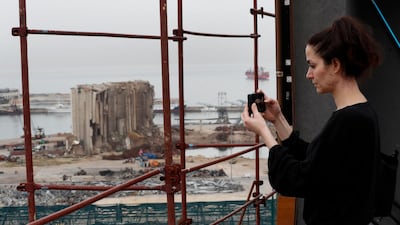
When the Chilean rescue team was excavating a collapsed building in search for a potential survivor a month after the Beirut port explosion, Labaki stayed on-site to document it for three days. “I couldn’t leave. I was hanging on to the hope that someone was still alive there,” she says. “Although I don’t know if something will come out of it, I think I knew it was a historical moment.”

Labaki’s filmmaking embeds within it an act of witnessing. “It’s like a magnifying glass,” she says. “Cinema relays the big picture, but also the small struggles of someone you can identify with. It’s not entirely a make-believe world when you leave the theatre having witnessed the embodiment of real struggles in communities. It’s another form of reality.”

I don't think anyone who has been in the government for the past 30 or 40 years can still be governing us

Her films are also firmly rooted in Lebanon’s present and yet, as visual representations, they move beyond it. She says that her frames of reference are borderless. “I truly believe that this culture of belonging to a group is absurd. We all belong to humanity. We all come into the world in the same way and breathe the same air. In Lebanon, the sense of belonging to a certain group – whether religious or political – is even more exaggerated. But I haven’t become cynical yet,” she says.

Her faith, she says, is in the actions of Lebanon’s youth, who are forging the way for a better life in the country. “They are what makes me still believe in this country, even if people aren’t on the streets demonstrating right now. There’s a revolution inside us. It’s a new awakening. A culture of accountability has been born with the October 2019 uprisings. I don’t think anyone who has been in the government for the past 30 or 40 years can still be governing us – they have failed on every level.

“We need real visionaries, people with know-how, initiatives and programmes, and who have been working in the shadows for such a long time. I’m still hopeful for the next elections.”


Family reunited

Nazanin Zaghari-Ratcliffe was born and raised in Tehran and studied English literature before working as a translator in the relief effort for the Japanese International Co-operation Agency in 2003.

She moved to the International Federation of Red Cross and Red Crescent Societies before moving to the World Health Organisation as a communications officer.

She came to the UK in 2007 after securing a scholarship at London Metropolitan University to study a master's in communication management and met her future husband through mutual friends a month later.

The couple were married in August 2009 in Winchester and their daughter was born in June 2014.

She was held in her native country a year later.

Tips to keep your car cool
  • Place a sun reflector in your windshield when not driving
  • Park in shaded or covered areas
  • Add tint to windows
  • Wrap your car to change the exterior colour
  • Pick light interiors - choose colours such as beige and cream for seats and dashboard furniture
  • Avoid leather interiors as these absorb more heat
UAE currency: the story behind the money in your pockets
Visit Abu Dhabi culinary team's top Emirati restaurants in Abu Dhabi

Yadoo’s House Restaurant & Cafe

For the karak and Yoodo's house platter with includes eggs, balaleet, khamir and chebab bread.

Golden Dallah

For the cappuccino, luqaimat and aseeda.

Al Mrzab Restaurant

For the shrimp murabian and Kuwaiti options including Kuwaiti machboos with kebab and spicy sauce.

Al Derwaza

For the fish hubul, regag bread, biryani and special seafood soup. 

War 2

Director: Ayan Mukerji

Stars: Hrithik Roshan, NTR, Kiara Advani, Ashutosh Rana

Rating: 2/5

The five pillars of Islam

1. Fasting

2. Prayer

3. Hajj

4. Shahada

5. Zakat 

The Old Slave and the Mastiff

Patrick Chamoiseau

Translated from the French and Creole by Linda Coverdale

SPEC%20SHEET
%3Cp%3E%3Cstrong%3EProcessor%3A%3C%2Fstrong%3E%20Apple%20M2%2C%208-core%20CPU%2C%20up%20to%2010-core%20CPU%2C%2016-core%20Neural%20Engine%3C%2Fp%3E%0A%3Cp%3E%3Cstrong%3EDisplay%3A%3C%2Fstrong%3E%2013.6-inch%20Liquid%20Retina%2C%202560%20x%201664%2C%20224ppi%2C%20500%20nits%2C%20True%20Tone%2C%20wide%20colour%3C%2Fp%3E%0A%3Cp%3E%3Cstrong%3EMemory%3A%3C%2Fstrong%3E%208%2F16%2F24GB%3C%2Fp%3E%0A%3Cp%3E%3Cstrong%3EStorage%3A%3C%2Fstrong%3E%20256%2F512GB%20%2F%201%2F2TB%3C%2Fp%3E%0A%3Cp%3E%3Cstrong%3EI%2FO%3A%3C%2Fstrong%3E%20Thunderbolt%203%20(2)%2C%203.5mm%20audio%2C%20Touch%20ID%3C%2Fp%3E%0A%3Cp%3E%3Cstrong%3EConnectivity%3A%3C%2Fstrong%3E%20Wi-Fi%206%2C%20Bluetooth%205.0%3C%2Fp%3E%0A%3Cp%3E%3Cstrong%3EBattery%3A%3C%2Fstrong%3E%2052.6Wh%20lithium-polymer%2C%20up%20to%2018%20hours%2C%20MagSafe%20charging%3C%2Fp%3E%0A%3Cp%3E%3Cstrong%3ECamera%3A%3C%2Fstrong%3E%201080p%20FaceTime%20HD%3C%2Fp%3E%0A%3Cp%3E%3Cstrong%3EVideo%3A%3C%2Fstrong%3E%20Support%20for%20Apple%20ProRes%2C%20HDR%20with%20Dolby%20Vision%2C%20HDR10%3C%2Fp%3E%0A%3Cp%3E%3Cstrong%3EAudio%3A%3C%2Fstrong%3E%204-speaker%20system%2C%20wide%20stereo%2C%20support%20for%20Dolby%20Atmos%2C%20Spatial%20Audio%20and%20dynamic%20head%20tracking%20(with%20AirPods)%3C%2Fp%3E%0A%3Cp%3E%3Cstrong%3EColours%3A%3C%2Fstrong%3E%20Silver%2C%20space%20grey%2C%20starlight%2C%20midnight%3C%2Fp%3E%0A%3Cp%3E%3Cstrong%3EIn%20the%20box%3A%3C%2Fstrong%3E%20MacBook%20Air%2C%2030W%20or%2035W%20dual-port%20power%20adapter%2C%20USB-C-to-MagSafe%20cable%3C%2Fp%3E%0A%3Cp%3E%3Cstrong%3EPrice%3A%3C%2Fstrong%3E%20From%20Dh4%2C999%3C%2Fp%3E%0A
The alternatives

• Founded in 2014, Telr is a payment aggregator and gateway with an office in Silicon Oasis. It’s e-commerce entry plan costs Dh349 monthly (plus VAT). QR codes direct customers to an online payment page and merchants can generate payments through messaging apps.

• Business Bay’s Pallapay claims 40,000-plus active merchants who can invoice customers and receive payment by card. Fees range from 1.99 per cent plus Dh1 per transaction depending on payment method and location, such as online or via UAE mobile.

• Tap started in May 2013 in Kuwait, allowing Middle East businesses to bill, accept, receive and make payments online “easier, faster and smoother” via goSell and goCollect. It supports more than 10,000 merchants. Monthly fees range from US$65-100, plus card charges of 2.75-3.75 per cent and Dh1.2 per sale.

2checkout’s “all-in-one payment gateway and merchant account” accepts payments in 200-plus markets for 2.4-3.9 per cent, plus a Dh1.2-Dh1.8 currency conversion charge. The US provider processes online shop and mobile transactions and has 17,000-plus active digital commerce users.

• PayPal is probably the best-known online goods payment method - usually used for eBay purchases -  but can be used to receive funds, providing everyone’s signed up. Costs from 2.9 per cent plus Dh1.2 per transaction.

All%20We%20Imagine%20as%20Light
%3Cp%3E%3Cstrong%3EDirector%3A%20%3C%2Fstrong%3EPayal%20Kapadia%3C%2Fp%3E%0A%3Cp%3E%3Cstrong%3EStarring%3A%3C%2Fstrong%3E%20Kani%20Kusruti%2C%20Divya%20Prabha%2C%20Chhaya%20Kadam%3C%2Fp%3E%0A%3Cp%3E%3Cstrong%3ERating%3A%3C%2Fstrong%3E%204%2F5%3C%2Fp%3E%0A
Suggested picnic spots

Abu Dhabi
Umm Al Emarat Park
Yas Gateway Park
Delma Park
Al Bateen beach
Saadiyaat beach
The Corniche
Zayed Sports City
 
Dubai
Kite Beach
Zabeel Park
Al Nahda Pond Park
Mushrif Park
Safa Park
Al Mamzar Beach Park
Al Qudrah Lakes 

Ovo's tips to find extra heat
  • Open your curtains when it’s sunny 
  • Keep your oven open after cooking  
  • Have a cuddle with pets and loved ones to help stay cosy 
  • Eat ginger but avoid chilli as it makes you sweat 
  • Put on extra layers  
  • Do a few star jumps  
  • Avoid alcohol   
CONFIRMED%20LINE-UP
%3Cp%3E%0DElena%20Rybakina%20(Kazakhstan)%20%20%0D%3Cbr%3EOns%20Jabeur%20(Tunisia)%20%20%0D%3Cbr%3EMaria%20Sakkari%20(Greece)%20%20%0D%3Cbr%3EBarbora%20Krej%C4%8D%C3%ADkov%C3%A1%20(Czech%20Republic)%20%20%0D%3Cbr%3EBeatriz%20Haddad%20Maia%20(Brazil)%20%20%0D%3Cbr%3EJe%C4%BCena%20Ostapenko%20(Latvia)%20%20%0D%3Cbr%3ELiudmila%20Samsonova%20%20%0D%3Cbr%3EDaria%20Kasatkina%E2%80%AF%20%0D%3Cbr%3EVeronika%20Kudermetova%E2%80%AF%20%0D%3Cbr%3ECaroline%20Garcia%20(France)%E2%80%AF%20%0D%3Cbr%3EMagda%20Linette%20(Poland)%E2%80%AF%20%0D%3Cbr%3ESorana%20C%C3%AErstea%20(Romania)%E2%80%AF%20%0D%3Cbr%3EAnastasia%20Potapova%E2%80%AF%20%0D%3Cbr%3EAnhelina%20Kalinina%20(Ukraine)%E2%80%AF%E2%80%AF%20%0D%3Cbr%3EJasmine%20Paolini%20(Italy)%E2%80%AF%20%0D%3Cbr%3EEmma%20Navarro%20(USA)%E2%80%AF%20%0D%3Cbr%3ELesia%20Tsurenko%20(Ukraine)%3Cbr%3ENaomi%20Osaka%20(Japan)%20-%20wildcard%3Cbr%3EEmma%20Raducanu%20(Great%20Britain)%20-%20wildcard%3C%2Fp%3E%0A
Confirmed%20bouts%20(more%20to%20be%20added)
%3Cp%3ECory%20Sandhagen%20v%20Umar%20Nurmagomedov%0D%3Cbr%3ENick%20Diaz%20v%20Vicente%20Luque%0D%3Cbr%3EMichael%20Chiesa%20v%20Tony%20Ferguson%0D%3Cbr%3EDeiveson%20Figueiredo%20v%20Marlon%20Vera%0D%3Cbr%3EMackenzie%20Dern%20v%20Loopy%20Godinez%0D%3Cbr%3E%3C%2Fp%3E%0A%3Cp%3ETickets%20for%20the%20August%203%20Fight%20Night%2C%20held%20in%20partnership%20with%20the%20Department%20of%20Culture%20and%20Tourism%20Abu%20Dhabi%2C%20went%20on%20sale%20earlier%20this%20month%2C%20through%20www.etihadarena.ae%20and%20www.ticketmaster.ae.%0D%3Cbr%3E%3C%2Fp%3E%0A
What is graphene?

Graphene is extracted from graphite and is made up of pure carbon.

It is 200 times more resistant than steel and five times lighter than aluminum.

It conducts electricity better than any other material at room temperature.

It is thought that graphene could boost the useful life of batteries by 10 per cent.

Graphene can also detect cancer cells in the early stages of the disease.

The material was first discovered when Andre Geim and Konstantin Novoselov were 'playing' with graphite at the University of Manchester in 2004.

Red flags
  • Promises of high, fixed or 'guaranteed' returns.
  • Unregulated structured products or complex investments often used to bypass traditional safeguards.
  • Lack of clear information, vague language, no access to audited financials.
  • Overseas companies targeting investors in other jurisdictions - this can make legal recovery difficult.
  • Hard-selling tactics - creating urgency, offering 'exclusive' deals.

Courtesy: Carol Glynn, founder of Conscious Finance Coaching