


For more than a thousand years, the Tuareg have been a people of the deserts rather than of nations.
Their home is the Sahara, an expanse of sand so vast that the Tuareg refer to it in the plural, calling it Tinariwen.
They can be found in significant numbers in at least seven countries, including Niger, Algeria, Mali, Burkina Faso and Libya, where they have developed a distinctive culture, including languages and music, that is unmistakably their own.
This week, an exhibition opens in London at the Royal Geographical Society, entitled The Tuareg or Kel Tamasheq, and a history of the Sahara.
It is a celebration of a way of life that seems to face constant challenges, especially in Mali where the Tuareg became embroiled in a conflict with extremists and the Mali government, and most recently, in Libya's civil war.
Included in the London exhibition are photographs by Edmond and Suzanne Bernus, respectively a geographer and anthropologist, whose involvement with the Tuareg goes back to the 1950s.
Algerian-born photographer Jean-Marc Darou has a connection with the region that dates back to the 1970s, while the exhibition's curator, Henrietta Butler, is a British photographer who first visited the Tuareg in 2001.
Over the 50-year span of the exhibition's images, the lives of the estimated 1.2 million Tuareg have changed in many ways, Butler says.
Drought, poverty and conflict have meant the herds of animals that once defined their way of life "are numbered in handfuls rather than hundreds".
In Algeria, the Tuareg have increasingly abandoned their nomadic ways "and there has been almost non-stop trouble for over 50 years in Mali".
The conflict in many lands inhabited by the Tuareg has also driven away tourists, one of the mainstays of their income.
"It has hit them very hard," says Butler. "They are not getting the support they once did."
"We tend to see these people as exotic and to be marvelled at, but from their point of view, this is a way of life – and they would like to hang on to it."
• The Tuareg or Kel Tamasheq, and a history of the Sahara runs from June 2 to June 20 at the Royal Geographical Society London. For more details, visit www.tuaregtime.co.uk
-

-
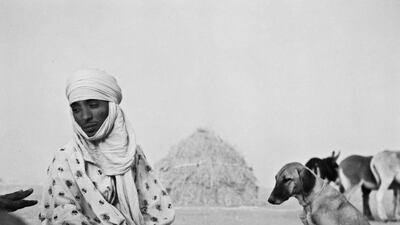
Man and his dog in 1967. ©Bernus / The Bernus Estate -
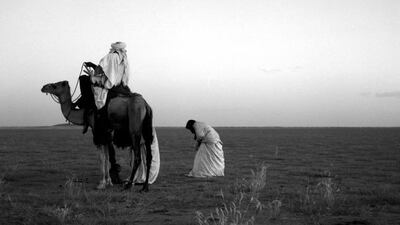
Navigating the desert. ©Bernus / The Bernus Estate -
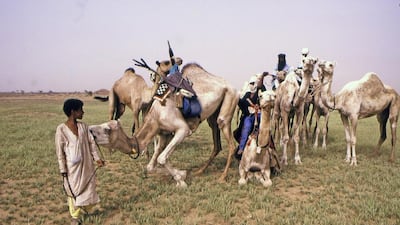
In Gall Nomads. Jean Marc Durou -
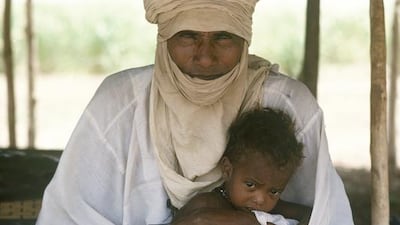
Father and child. Jean Marc Durou -
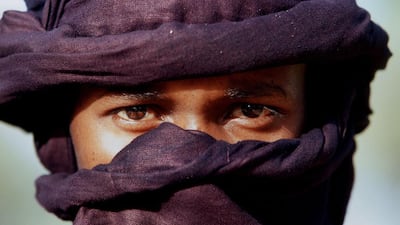
Touareg man in traditional indigo turban, Niger. Henrietta Butler -
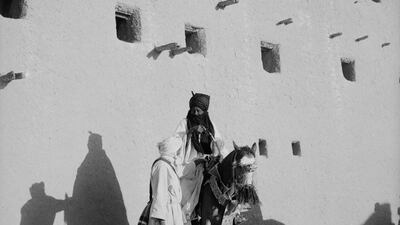
The Sultan of Agadez, in the courtyard of the Mosque, Agadez, December 1972. Courtesy Royal Geographical Society -
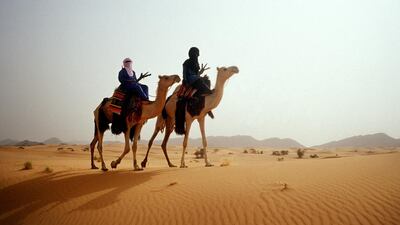
A father and son leave the campsite in the early morning to go and look for the rest of the herd. The Touareg actually follow the camels, as the camels move looking for fresh pasture. Henrietta Butler
Nomads’ way of life fast disappearing - in pictures
Most popular today

