A version of this article first appeared on April 7, 2021
An enormous space telescope has given astronomers a peek into the early cosmos, capturing light of galaxies that formed not long after the birth of the universe.
The James Webb Space Telescope (JWST), the world's most advanced space observatory, was in development for nearly two decades and is expected to create an astronomical revolution.
The $10 billion “time machine” will help astronomers to study what the universe looked like millions of years ago.
It is much more advanced than the Hubble Space Telescope because of its breakthrough technology, design and its planned location in space.
Hubble made countless discoveries after it was launched in 1990 and provided millions of images of planets, galaxies, nebulas and stars.
The JWST is equipped with sensitive cameras and spectrographs that can capture light directed into them by its huge golden mirror.
It has been developed by Nasa with its partners, the European Space Agency and the Canadian Space Agency.
The National looks at five facts that make the James Webb Space Telescope extra special.
1. It is ‘time travelling’ into the past
The telescope will show us what the universe was like 100 million to 250 million years after its birth. In the Big Bang theory, it is believed the universe came into existence 13.8 billion years ago.
The first image from the telescope, released on July 12, shows the galaxy cluster SMACS 0723, with light that has been travelling for more than 13 billion years.
Hubble has captured this area before, but observations by James Webb show the galaxy cluster in incredible detail.
Nasa has said it wants to look back even further, about 13.5 billion years in the past to make new discoveries.
The telescope will detect infrared light, allowing it to capture an object’s heat source.
The space observatory’s cameras are so sensitive they could spot the heat signature of a bumblebee.
2. Honeycomb mirrors
A telescope’s mirror helps reflect light into its cameras. The better the mirror, the more the observatory will capture.
JWST has 18 primary hexagonal mirrors that together form a honeycomb shape. In total, it measures 6.5 metres in diameter.
The mirror is six times bigger in area than Hubble’s and is 100 times more powerful.
To help reflect infrared light more efficiently, the mirror is covered with a thin coating of gold.
3. Unique orbit
JWST is placed much further out in space and in a different orbit than Hubble, allowing it to see greater distances.
Instead of an orbit around the Earth, the telescope orbits the Sun. It is in line with Earth, but 1.5 million kilometres from the planet and four times farther away than the Moon. This position in space is called a Lagrange point.
The mirror is kept at a temperature of minus 233°C to shield it from the Sun. It has a five-layer sunshield that is the size of a tennis court and which weakens the heat from the host star by more than a million times.
4. Hunt for life
One of the main objectives of the telescope is to study the atmospheres of exoplanets — planets outside the Solar System.
It will look for oxygen present in the atmospheres of planets in distant galaxies.
5. How it launched into space
The school bus-sized telescope, which measures 21 metres by 14.6 metres, had to fold up to fit into the launch rocket.
JWST launched aboard the Ariane 5 rocket, near French Guiana in South America, on Christmas Day, 2021.
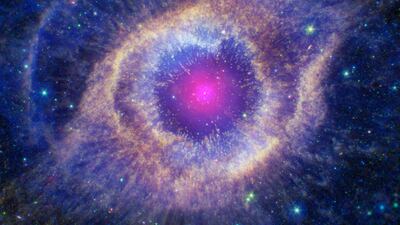
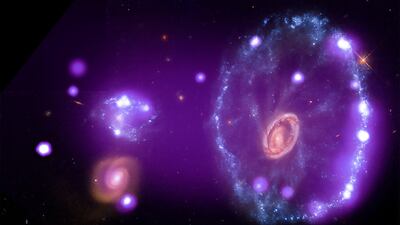
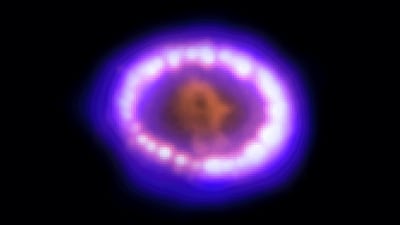
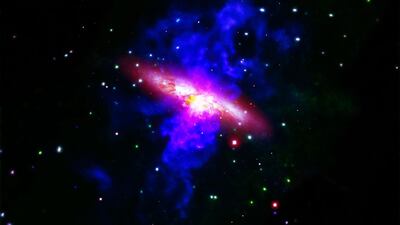
The wonders of space — in pictures
F1 The Movie
Starring: Brad Pitt, Damson Idris, Kerry Condon, Javier Bardem
Director: Joseph Kosinski
Rating: 4/5
Milestones on the road to union
1970
October 26: Bahrain withdraws from a proposal to create a federation of nine with the seven Trucial States and Qatar.
December: Ahmed Al Suwaidi visits New York to discuss potential UN membership.
1971
March 1: Alex Douglas Hume, Conservative foreign secretary confirms that Britain will leave the Gulf and “strongly supports” the creation of a Union of Arab Emirates.
July 12: Historic meeting at which Sheikh Zayed and Sheikh Rashid make a binding agreement to create what will become the UAE.
July 18: It is announced that the UAE will be formed from six emirates, with a proposed constitution signed. RAK is not yet part of the agreement.
August 6: The fifth anniversary of Sheikh Zayed becoming Ruler of Abu Dhabi, with official celebrations deferred until later in the year.
August 15: Bahrain becomes independent.
September 3: Qatar becomes independent.
November 23-25: Meeting with Sheikh Zayed and Sheikh Rashid and senior British officials to fix December 2 as date of creation of the UAE.
November 29: At 5.30pm Iranian forces seize the Greater and Lesser Tunbs by force.
November 30: Despite a power sharing agreement, Tehran takes full control of Abu Musa.
November 31: UK officials visit all six participating Emirates to formally end the Trucial States treaties
December 2: 11am, Dubai. New Supreme Council formally elects Sheikh Zayed as President. Treaty of Friendship signed with the UK. 11.30am. Flag raising ceremony at Union House and Al Manhal Palace in Abu Dhabi witnessed by Sheikh Khalifa, then Crown Prince of Abu Dhabi.
December 6: Arab League formally admits the UAE. The first British Ambassador presents his credentials to Sheikh Zayed.
December 9: UAE joins the United Nations.
In numbers: China in Dubai
The number of Chinese people living in Dubai: An estimated 200,000
Number of Chinese people in International City: Almost 50,000
Daily visitors to Dragon Mart in 2018/19: 120,000
Daily visitors to Dragon Mart in 2010: 20,000
Percentage increase in visitors in eight years: 500 per cent
Company%20profile
%3Cp%3E%3Cstrong%3EName%3A%3C%2Fstrong%3E%20JustClean%3Cbr%3E%3Cbr%3E%3Cstrong%3EBased%3A%20%3C%2Fstrong%3EDubai%20with%20offices%20in%20other%20GCC%20countries%3Cbr%3E%3Cbr%3E%3Cstrong%3ELaunch%20year%3A%3C%2Fstrong%3E%202016%3Cbr%3E%3Cbr%3E%3Cstrong%3ENumber%20of%20employees%3A%3C%2Fstrong%3E%20160%2B%20with%2021%20nationalities%20in%20eight%20cities%3Cbr%3E%3Cstrong%3E%3Cbr%3ESector%3A%3C%2Fstrong%3E%20online%20laundry%20and%20cleaning%20services%3Cbr%3E%3Cbr%3E%3Cstrong%3EFunding%3A%20%3C%2Fstrong%3E%2430m%20from%20Kuwait-based%20Faith%20Capital%20Holding%20and%20Gulf%20Investment%20Corporation%3C%2Fp%3E%0A
The Africa Institute 101
Housed on the same site as the original Africa Hall, which first hosted an Arab-African Symposium in 1976, the newly renovated building will be home to a think tank and postgraduate studies hub (it will offer master’s and PhD programmes). The centre will focus on both the historical and contemporary links between Africa and the Gulf, and will serve as a meeting place for conferences, symposia, lectures, film screenings, plays, musical performances and more. In fact, today it is hosting a symposium – 5-plus-1: Rethinking Abstraction that will look at the six decades of Frank Bowling’s career, as well as those of his contemporaries that invested social, cultural and personal meaning into abstraction.
What%20is%20Dungeons%20%26%20Dragons%3F%20
%3Cp%3EDungeons%20%26amp%3B%20Dragons%20began%20as%20an%20interactive%20game%20which%20would%20be%20set%20up%20on%20a%20table%20in%201974.%20One%20player%20takes%20on%20the%20role%20of%20dungeon%20master%2C%20who%20directs%20the%20game%2C%20while%20the%20other%20players%20each%20portray%20a%20character%2C%20determining%20its%20species%2C%20occupation%20and%20moral%20and%20ethical%20outlook.%20They%20can%20choose%20the%20character%E2%80%99s%20abilities%2C%20such%20as%20strength%2C%20constitution%2C%20dexterity%2C%20intelligence%2C%20wisdom%20and%20charisma.%20In%20layman%E2%80%99s%20terms%2C%20the%20winner%20is%20the%20one%20who%20amasses%20the%20highest%20score.%3C%2Fp%3E%0A
The specs
Engine: Dual 180kW and 300kW front and rear motors
Power: 480kW
Torque: 850Nm
Transmission: Single-speed automatic
Price: From Dh359,900 ($98,000)
On sale: Now
What can victims do?
Always use only regulated platforms
Stop all transactions and communication on suspicion
Save all evidence (screenshots, chat logs, transaction IDs)
Report to local authorities
Warn others to prevent further harm
Courtesy: Crystal Intelligence
Types of policy
Term life insurance: this is the cheapest and most-popular form of life cover. You pay a regular monthly premium for a pre-agreed period, typically anything between five and 25 years, or possibly longer. If you die within that time, the policy will pay a cash lump sum, which is typically tax-free even outside the UAE. If you die after the policy ends, you do not get anything in return. There is no cash-in value at any time. Once you stop paying premiums, cover stops.
Whole-of-life insurance: as its name suggests, this type of life cover is designed to run for the rest of your life. You pay regular monthly premiums and in return, get a guaranteed cash lump sum whenever you die. As a result, premiums are typically much higher than one term life insurance, although they do not usually increase with age. In some cases, you have to keep up premiums for as long as you live, although there may be a cut-off period, say, at age 80 but it can go as high as 95. There are penalties if you don’t last the course and you may get a lot less than you paid in.
Critical illness cover: this pays a cash lump sum if you suffer from a serious illness such as cancer, heart disease or stroke. Some policies cover as many as 50 different illnesses, although cancer triggers by far the most claims. The payout is designed to cover major financial responsibilities such as a mortgage or children’s education fees if you fall ill and are unable to work. It is cost effective to combine it with life insurance, with the policy paying out once if you either die or suffer a serious illness.
Income protection: this pays a replacement income if you fall ill and are unable to continue working. On the best policies, this will continue either until you recover, or reach retirement age. Unlike critical illness cover, policies will typically pay out for stress and musculoskeletal problems such as back trouble.
TOURNAMENT INFO
Fixtures
Sunday January 5 - Oman v UAE
Monday January 6 - UAE v Namibia
Wednesday January 8 - Oman v Namibia
Thursday January 9 - Oman v UAE
Saturday January 11 - UAE v Namibia
Sunday January 12 – Oman v Namibia
UAE squad
Ahmed Raza (captain), Rohan Mustafa, Mohammed Usman, CP Rizwan, Waheed Ahmed, Zawar Farid, Darius D’Silva, Karthik Meiyappan, Jonathan Figy, Vriitya Aravind, Zahoor Khan, Junaid Siddique, Basil Hameed, Chirag Suri