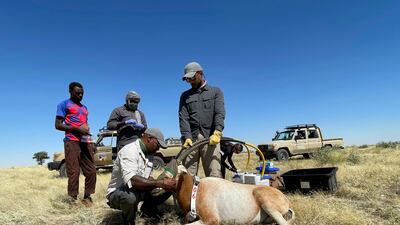
Environment Agency Abu Dhabi has attached tracking collars to 18 scimitar-horned oryxes, enabling conservationists to monitor their behaviour more closely. Photo: Environment Agency Abu Dhabi

Abu Dhabi sends critically endangered animals to Chad


Sarah Forster
  • English
  • Arabic

Environment Agency Abu Dhabi has completed its mission to relocate 25 scimitar-horned oryxes and 25 addax antelopes to Chad.

It plans to send another 25 oryxes in February and all of the animals will be released into the wild.

The programme is part of one of the world’s largest reintroduction programmes.

Launched in 2014, it is intended to create a self-sustaining herd of more than 500 scimitar-horned oryxes in the Ouadi Rimé-Ouadi Achim Wildlife Reserve, which occupies 77,950 square kilometres.

The EAD plans to send another 25 oryxes in February and all of the animals will be released into the wild. Photo: Environment Agency – Abu Dhabi

In 2000, the species was declared extinct in the wild by the International Union for the Conservation of Nature.

The first ones to be relocated were released into the wild in 2016 and have adapted well to their surroundings.

In 2017, another heard of 75 scimitar-horned oryxes arrived in an operation led by Chad’s Ministry of Environment and Fisheries and the Sahara Conservation Fund.

This year, 60 new calves have been born, bringing the number in the wild to about 400.

This particular breed of oryx can survive for months or even years without drinking water. A grazing animal, it derives most of its daily moisture intake from plants.

The second phase of the programme concerns the critically endangered addax.

This arid-land antelope is very well adapted to living in the Sahara, and rarely needs to drink water to survive. But its impressive horns, meat and hide are attractive to poachers, and the animal’s population has plummeted during the past century.

The first group, of 15 animals, was reintroduced in 2019, followed by 25 in 2020. Fifteen calves were born this year.

It was the late Sheikh Zayed, the Founding Father, who first noticed the rapid decline of scimitar-horned oryxes in the wild during the 1960s. Photo: Environment Agency – Abu Dhabi

“We will always continue the legacy of the late Sheikh Zayed, who pioneered the SHO reintroduction programme, the first of its kind anywhere in the world,” said Dr Shaikha Al Dhaheri, secretary general of Environment Agency Abu Dhabi.

“It is saddening to see species becoming extinct and we at EAD [the agency] will do everything in our capacity to reverse this.”

Environment Agency Abu Dhabi has darted 18 wild scimitar-horned oryxes and fitted them with satellite tracking collars. This has enabled the agency to monitor the species behaviour, including reproduction.

“Next month, we will be releasing both scimitar-horned oryxes and addaxes in Chad in collaboration with our partners, who are truly invested in ensuring the project’s success, and we are on track to establish a herd of 500 of the oryxes in the wild.

“Our efforts will continue next year, and we are expecting the birth of more calves, which will help to increase herd sizes and curb the rapid decline of these species.”

Sheikh Zayed, the Founding Father, first noticed the rapid decline of scimitar-horned oryxes in the wild during the 1960s.

He ordered the creation of a captive breeding programme, to be piloted in the UAE. The animals were housed on Sir Bani Yas Island, where their number eventually exceeded 1,000.

Their conservation is supported by several prominent global partners, including Chad’s Ministry of Environment, the EU, the Sahara Conservation Fund, the Zoological Society of London, the Smithsonian Conservation Biology Institute, Marwell Wildlife, Royal Zoological Society of Scotland, Saint Louis Zoo WildCare Institute and Fossil Rim Wildlife Centre.

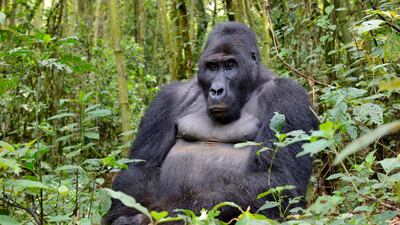
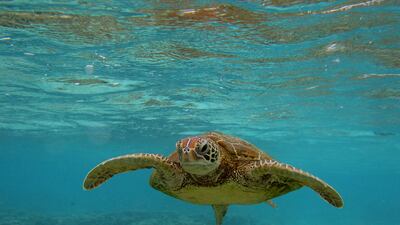
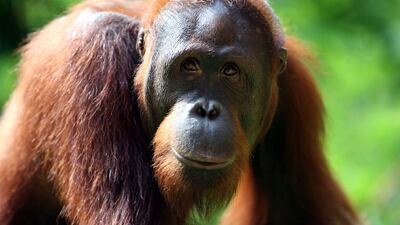
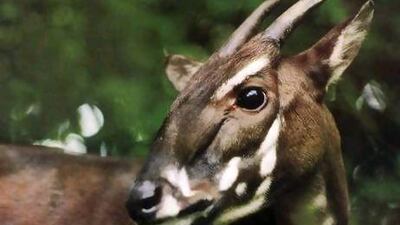
Critically endangered species: in pictures

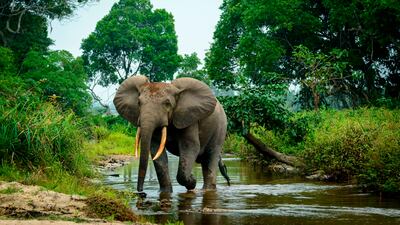
  • Here are 10 species from around the world that the WWF lists as 'critically endangered'. African forest elephant. Getty Images
    Here are 10 species from around the world that the WWF lists as 'critically endangered'. African forest elephant. Getty Images
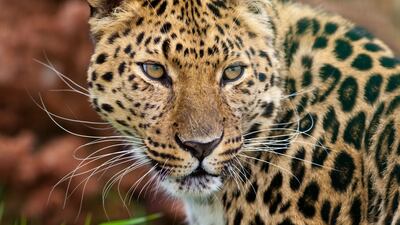
  • Amur leopard. Alamy
    Amur leopard. Alamy
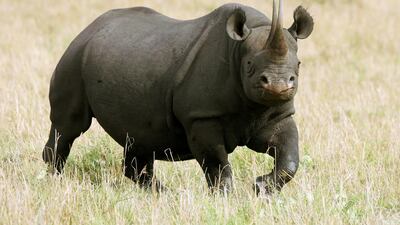
  • Black rhino. Getty Images
    Black rhino. Getty Images
  • Bornean orangutan. Getty Images
    Bornean orangutan. Getty Images
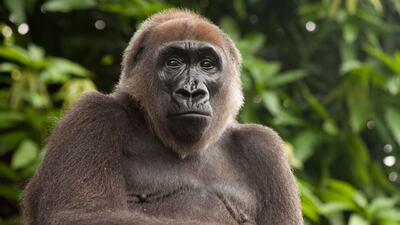
  • Cross river gorilla. Alamy
    Cross river gorilla. Alamy
  • Eastern lowland gorilla. Alamy
    Eastern lowland gorilla. Alamy
  • Hawksbill turtle. Getty Images
    Hawksbill turtle. Getty Images
  • Javan rhino. Alamy
    Javan rhino. Alamy
  • Orangutan. Getty Images
    Orangutan. Getty Images
  • Saola. Handout
    Saola. Handout
The burning issue

The internal combustion engine is facing a watershed moment – major manufacturer Volvo is to stop producing petroleum-powered vehicles by 2021 and countries in Europe, including the UK, have vowed to ban their sale before 2040. The National takes a look at the story of one of the most successful technologies of the last 100 years and how it has impacted life in the UAE. 

Read part four: an affection for classic cars lives on

Read part three: the age of the electric vehicle begins

Read part one: how cars came to the UAE


Trump v Khan

2016: Feud begins after Khan criticised Trump’s proposed Muslim travel ban to US

2017: Trump criticises Khan’s ‘no reason to be alarmed’ response to London Bridge terror attacks

2019: Trump calls Khan a “stone cold loser” before first state visit

2019: Trump tweets about “Khan’s Londonistan”, calling him “a national disgrace”

2022:  Khan’s office attributes rise in Islamophobic abuse against the major to hostility stoked during Trump’s presidency

July 2025 During a golfing trip to Scotland, Trump calls Khan “a nasty person”

Sept 2025 Trump blames Khan for London’s “stabbings and the dirt and the filth”.

Dec 2025 Trump suggests migrants got Khan elected, calls him a “horrible, vicious, disgusting mayor”

Timeline

2012-2015

The company offers payments/bribes to win key contracts in the Middle East

May 2017

The UK SFO officially opens investigation into Petrofac’s use of agents, corruption, and potential bribery to secure contracts

September 2021

Petrofac pleads guilty to seven counts of failing to prevent bribery under the UK Bribery Act

October 2021

Court fines Petrofac £77 million for bribery. Former executive receives a two-year suspended sentence 

December 2024

Petrofac enters into comprehensive restructuring to strengthen the financial position of the group

May 2025

The High Court of England and Wales approves the company’s restructuring plan

July 2025

The Court of Appeal issues a judgment challenging parts of the restructuring plan

August 2025

Petrofac issues a business update to execute the restructuring and confirms it will appeal the Court of Appeal decision

October 2025

Petrofac loses a major TenneT offshore wind contract worth €13 billion. Holding company files for administration in the UK. Petrofac delisted from the London Stock Exchange

November 2025

180 Petrofac employees laid off in the UAE

The%20specs
%3Cp%3E%3Cstrong%3EEngine%3A%3C%2Fstrong%3E%201.8-litre%204-cyl%20turbo%0D%3Cbr%3E%3Cstrong%3EPower%3A%20%3C%2Fstrong%3E190hp%20at%205%2C200rpm%0D%3Cbr%3E%3Cstrong%3ETorque%3A%3C%2Fstrong%3E%20320Nm%20from%201%2C800-5%2C000rpm%0D%3Cbr%3E%3Cstrong%3ETransmission%3A%20%3C%2Fstrong%3ESeven-speed%20dual-clutch%20auto%0D%3Cbr%3E%3Cstrong%3EFuel%20consumption%3A%3C%2Fstrong%3E%206.7L%2F100km%0D%3Cbr%3E%3Cstrong%3EPrice%3A%3C%2Fstrong%3E%20From%20Dh111%2C195%0D%3Cbr%3E%3Cstrong%3EOn%20sale%3A%20%3C%2Fstrong%3ENow%3C%2Fp%3E%0A
Jetour T1 specs

Engine: 2-litre turbocharged

Power: 254hp

Torque: 390Nm

Price: From Dh126,000

Available: Now

Profile of Whizkey

Date founded: 04 November 2017

Founders: Abdulaziz AlBlooshi and Harsh Hirani

Based: Dubai, UAE

Number of employees: 10

Sector: AI, software

Cashflow: Dh2.5 Million  

Funding stage: Series A

FA CUP FINAL

Chelsea 1
Hazard (22' pen)

Manchester United 0

Man of the match: Eden Hazard (Chelsea)

Red Sparrow

Dir: Francis Lawrence

Starring: Jennifer Lawrence, Joel Egerton, Charlotte Rampling, Jeremy Irons

Three stars

LOVE%20AGAIN
%3Cp%3EDirector%3A%20Jim%20Strouse%3C%2Fp%3E%0A%3Cp%3EStars%3A%20Priyanka%20Chopra%20Jonas%2C%20Sam%20Heughan%2C%20Celine%20Dion%3C%2Fp%3E%0A%3Cp%3ERating%3A%202%2F5%3C%2Fp%3E%0A
Updated: December 22, 2021, 4:21 AM