• A worker cleans and sterilizes the Kaaba, following the outbreak of the coronavirus disease, ahead of the holy fasting month of Ramadan, in the Grand mosque in the holy city of Mecca, Saudi Arabia April 21, 2020. Reuters
    A worker cleans and sterilizes the Kaaba, following the outbreak of the coronavirus disease, ahead of the holy fasting month of Ramadan, in the Grand mosque in the holy city of Mecca, Saudi Arabia April 21, 2020. Reuters
  • Workers clean and sterilise the roof of Kaaba, following the outbreak of the coronavirus disease, ahead of the holy fasting month of Ramadan, in the Grand mosque in the holy city of Mecca, Saudi Arabia April 21, 2020. Reuters
    Workers clean and sterilise the roof of Kaaba, following the outbreak of the coronavirus disease, ahead of the holy fasting month of Ramadan, in the Grand mosque in the holy city of Mecca, Saudi Arabia April 21, 2020. Reuters
  • A mosque is closed in a bid to slow the spread of COVID-19 in the Saudi capital Riyadh on April 13, 2020, ahead of the holy Muslim fasting month of Ramadan. AFP
    A mosque is closed in a bid to slow the spread of COVID-19 in the Saudi capital Riyadh on April 13, 2020, ahead of the holy Muslim fasting month of Ramadan. AFP
  • Imam Mohammed, muezzin of the Jaffali mosque in Saudi Arabia's Red Sea coastal city of Jeddah, announces the prayer call at the mosque which is closed due to a government decree as part of efforts to combat the COVID-19 coronavirus pandemic, during the Muslim holy month of Ramadan on April 28, 2020. AFP
    Imam Mohammed, muezzin of the Jaffali mosque in Saudi Arabia's Red Sea coastal city of Jeddah, announces the prayer call at the mosque which is closed due to a government decree as part of efforts to combat the COVID-19 coronavirus pandemic, during the Muslim holy month of Ramadan on April 28, 2020. AFP
  • An aerial view shows the Grand Mosque and its surrounding, deserted on the first day of the Muslim fasting month of Ramadan, in the Saudi holy city of Mecca, on April 24, 2020, during the novel coronavirus pandemic crisis. AFP
    An aerial view shows the Grand Mosque and its surrounding, deserted on the first day of the Muslim fasting month of Ramadan, in the Saudi holy city of Mecca, on April 24, 2020, during the novel coronavirus pandemic crisis. AFP
  • A Saudi seller pours dates into a box at his shop, during the 24-hours lockdown to counter the coronavirus disease outbreak, ahead of the holy fasting month of Ramadan, in Riyadh, Saudi Arabia April 20, 2020. Reuters
    A Saudi seller pours dates into a box at his shop, during the 24-hours lockdown to counter the coronavirus disease outbreak, ahead of the holy fasting month of Ramadan, in Riyadh, Saudi Arabia April 20, 2020. Reuters
  • A worker wearing a protective face mask and gloves fries traditional Ramadan sweets following the outbreak of the coronavirus disease, during the holy month of Ramadan in Riyadh, Saudi Arabia April 30, 2020. Reuters
    A worker wearing a protective face mask and gloves fries traditional Ramadan sweets following the outbreak of the coronavirus disease, during the holy month of Ramadan in Riyadh, Saudi Arabia April 30, 2020. Reuters
  • Muslim worshippers perform the "Tarawih" nightly prayer during the holy month of Ramadan, while keeping their distance amid the COVID-19 pandemic, at the Grand Mosque, Islam's holiest site, in the Saudi city of Mecca, late on May 8, 2020. AFP
    Muslim worshippers perform the "Tarawih" nightly prayer during the holy month of Ramadan, while keeping their distance amid the COVID-19 pandemic, at the Grand Mosque, Islam's holiest site, in the Saudi city of Mecca, late on May 8, 2020. AFP
  • A Saudi security guard stands guard as worshippers perform Isha prayer next to the Kaaba in Mecca's Grand Mosque, Islam's holiest site on April 27, 2020. AFP
    A Saudi security guard stands guard as worshippers perform Isha prayer next to the Kaaba in Mecca's Grand Mosque, Islam's holiest site on April 27, 2020. AFP
  • Muslim worshippers perform the "Tarawih" nightly prayer during the holy month of Ramadan, while keeping their distance amid the COVID-19 pandemic, at the Grand Mosque, Islam's holiest site, in the Saudi city of Mecca, late on May 8, 2020. AFP
    Muslim worshippers perform the "Tarawih" nightly prayer during the holy month of Ramadan, while keeping their distance amid the COVID-19 pandemic, at the Grand Mosque, Islam's holiest site, in the Saudi city of Mecca, late on May 8, 2020. AFP
  • Kitchen staff wear protective face masks and gloves, following the outbreak of the coronavirus disease, as they prepare Ramadan meal orders for takeaway and delivery at a restaurant in Riyadh, Saudi Arabia, April 26, 2020. Reuters
    Kitchen staff wear protective face masks and gloves, following the outbreak of the coronavirus disease, as they prepare Ramadan meal orders for takeaway and delivery at a restaurant in Riyadh, Saudi Arabia, April 26, 2020. Reuters
  • Workers pass through a self-sterilisation gate set up at an entrance of the Kaaba and the Grand Mosque, as a preventive measure amid the the COVID-19 pandemic during the Muslim month of Ramadan in the Saudi holy city of Mecca, on May 8, 2020. AFP
    Workers pass through a self-sterilisation gate set up at an entrance of the Kaaba and the Grand Mosque, as a preventive measure amid the the COVID-19 pandemic during the Muslim month of Ramadan in the Saudi holy city of Mecca, on May 8, 2020. AFP
  • Men passing through a self-sterilisation gate set up at an entrance of Kaaba and the Grand Mosque as a protective measure against the COVID-19 coronavirus during the holy fasting month of Ramadan in the Saudi holy city of Mecca, May 7, 2020. AFP
    Men passing through a self-sterilisation gate set up at an entrance of Kaaba and the Grand Mosque as a protective measure against the COVID-19 coronavirus during the holy fasting month of Ramadan in the Saudi holy city of Mecca, May 7, 2020. AFP

Ramadan 2022 in Saudi Arabia: dates, working hours, prayers and all you need to know


  • English
  • Arabic

Saudi Arabia has eased Covid-19 restrictions for Ramadan this year, allowing worshippers to return to mosques at full capacity without any social-distancing measures after two years.

Here is everything you need to know about Ramadan 2022 in Saudi Arabia.

What is Ramadan?

Ramadan is the ninth and holiest month in the Hijri calendar. It is also believed to be the month the Quran was revealed to the Prophet Mohammed.

Muslims fast from sunrise to sunset every day of the month, which typically lasts either 29 or 30 days.

Ramadan is also a religious period for Muslims during which they try to strengthen their faith through prayer and increased recitation of the Quran.

When does Ramadan begin?

The International Astronomy Centre expects Ramadan to begin on April 2, but this could change according to the sighting of the Moon.

Every year, a Moon-sighting committee – a group of astronomers, court officials and advisers from the country's Islamic authority – typically convenes after maghrib, or sunset, prayers on the 29th day of the Islamic month of Shaban to look for the new crescent moon. If spotted, Ramadan begins the following day.

Otherwise, Shaban will last 30 days and Ramadan will begin thereafter.

What are the rules at the holy cities of Makkah and Madinah?

Saudi Arabia has eased Covid-19 restrictions and is no longer limiting number of pilgrims or shortening prayer times at the two grand mosques unlike last year.

Last year, taraweeh prayers were reduced from 20 rakaat to 10, limiting the nightly Ramadan prayer to 30 minutes, in addition to maintaining restrictions on the number of worshippers in the holy mosques in Makkah and Madinah. This year, prayers will return to full length.

This year, pilgrims do not require permits to pray inside the two grand mosques and can easily book an Umrah slot through Eatmarna app. International pilgrims can book their Umrah slot online even before entering the kingdom.

Saudi Arabia is now open to unvaccinated travellers, which includes pilgrims who are not infected with Covid-19.

Social distancing is no longer mandatory inside any mosques in the kingdom, however wearing of masks will be required for all visitors.

The practice of communal iftar tables and performing itikaaf, a spiritual practice in which Muslims spend long hours at mosques, at the grand mosques in Makkah and Madinah will not be suspended for the whole month. The charity-led iftar tables had been banned for two years due to the Covid-19 pandemic.

Pilgrims can bring in "dry food" to break their fasts and are also welcome to join iftar spreads, which are hugely popular at mosques around the world and free of charge.

Only those with a valid permit for performing Umrah or prayer at the Grand Mosque – issued through the government’s Eatmarna application – will be allowed to perform Umrah. The ministry has also banned the live transmission of prayers from mosques on all types of media during Ramadan.

Last week, the government announced Ramadan plans for the Grand Mosque in Makkah and the Prophet’s Mosque in Madinah that include the use of artificial intelligence in apps. It also said robots would be used to serve Zamzam water and sterilise the grounds of the mosques. Up to 12,000 workers will be available to help pilgrims during Ramadan.

The King Fahd Expansion, Third Saudi Expansion and all courtyards at the Grand Mosque will be open for worshippers, with no social-distancing measures in place.

Will other mosques be open?

Mosques across the kingdom will follow Covid-19 safety procedures and health protocols and will remain open over the holy month. Mosques can now host iftar spreads only if they have a permit for it.

The ministry has issued circulars to help prepare mosques for the holy month, including bans on collecting financial donations for iftar meals. Those who wish to host an iftar at mosques must submit an application to the authorities.

Saudi Arabia has announced restrictions on volume levels for loudspeakers at mosques during Ramadan. Speakers must not exceed a third of their full volume, the Ministry of Islamic Affairs said.

Officials have asked mosque staff to ensure they abide by circulars that limit the use of external loudspeakers for the first (adhan) and second (iqamah) calls to prayer.

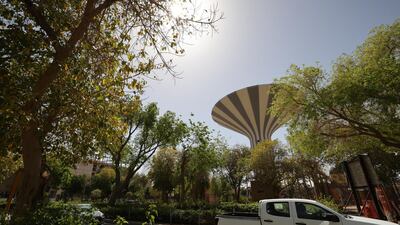
  • Saudi Crown Prince Mohammed bin Salman has announced the Saudi Arabia Green Initiative. AFP
    Saudi Crown Prince Mohammed bin Salman has announced the Saudi Arabia Green Initiative. AFP
  • Saudi Arabia will work to restore, conserve, and sustainably manage a billion hectares of land by 2040. AFP
    Saudi Arabia will work to restore, conserve, and sustainably manage a billion hectares of land by 2040. AFP
  • The Saudi Green Initiative aims to plant 10 billion trees in Saudi Arabia and 50 billion across the Middle East. AFP
    The Saudi Green Initiative aims to plant 10 billion trees in Saudi Arabia and 50 billion across the Middle East. AFP
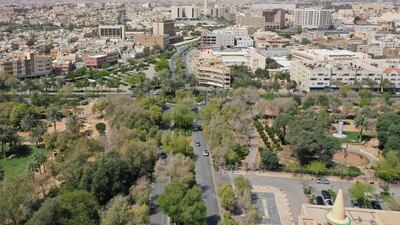
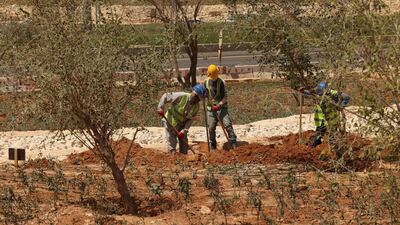
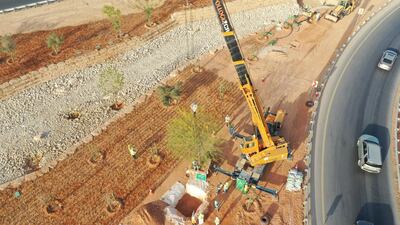
  • Workers plant trees next to a highway in Saudi Arabia's capital Riyadh. AFP
    Workers plant trees next to a highway in Saudi Arabia's capital Riyadh. AFP
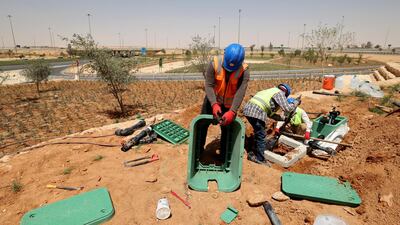
  • Workers use a crane to plant trees in a park project by the roadside in Riyadh. AFP
    Workers use a crane to plant trees in a park project by the roadside in Riyadh. AFP
  • The green initiative also aims to cut carbon dioxide emissions in the Middle East by 60 per cent. AFP
    The green initiative also aims to cut carbon dioxide emissions in the Middle East by 60 per cent. AFP
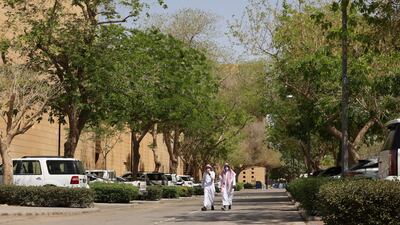
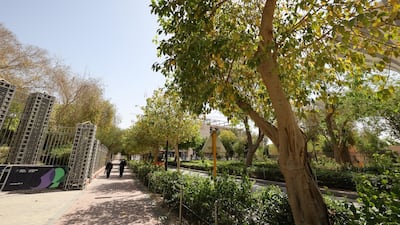
  • People walk on a tree-lined pavement in Riyadh. AFP
    People walk on a tree-lined pavement in Riyadh. AFP
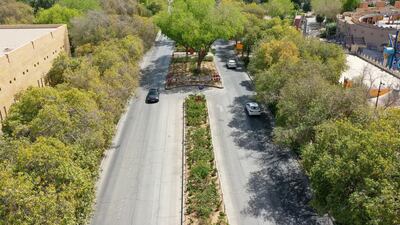
  • Cars drive on a tree-lined road in Saudi Arabia's capital Riyadh. AFP
    Cars drive on a tree-lined road in Saudi Arabia's capital Riyadh. AFP

Will restaurants be open for Ramadan? Will they still deliver?

All restaurants will be open at full capacity and will deliver during the holy month.

Supermarkets, pharmacies and businesses will remain open during the day and restaurants will open for delivery only at a later time – usually from 4pm to 2am.

Malls will be open throughout the kingdom, while malls in some cities are to remain open around the clock during Ramadan.

What happens if I accidentally eat or drink in public?

It is widely understood that eating and drinking in public places is not acceptable, though it is no longer a punishable offence. Some people might need to because of a medical condition.

In offices and workplaces, people must refrain from eating or drinking in front of their fasting colleagues. Typically, workplaces provide a cordoned-off area in which non-fasting staff can eat.

What are the working hours during Ramadan?

According to new directives from the Ministry of Human Resources, the official number of working hours for private companies will not exceed six a day, generally from 9am to 2pm. The public sector will work five hours a day, typically from 10am to 3pm.

What are school hours during Ramadan?

School and university hours will be reduced for Ramadan. International and Saudi schools will remain open during the month, up until the last week of Ramadan. They will be on holiday the following week for Eid as well. Schools will open from 9am to 3pm and each lesson will last a maximum of 35 minutes.


Visa changes give families fresh hope

Foreign workers can sponsor family members based solely on their income

Male residents employed in the UAE can sponsor immediate family members, such as wife and children, subject to conditions that include a minimum salary of Dh 4,000 or Dh 3,000 plus accommodation.

Attested original marriage certificate, birth certificate of the child, ejari or rental contract, labour contract, salary certificate must be submitted to the government authorised typing centre to complete the sponsorship process

In Abu Dhabi, a woman can sponsor her husband and children if she holds a residence permit stating she is an engineer, teacher, doctor, nurse or any profession related to the medical sector and her monthly salary is at least Dh 10,000 or Dh 8,000 plus accommodation.

In Dubai, if a woman is not employed in the above categories she can get approval to sponsor her family if her monthly salary is more than Dh 10,000 and with a special permission from the Department of Naturalization and Residency Dubai.

To sponsor parents, a worker should earn Dh20,000 or Dh19,000 a month, plus a two-bedroom accommodation


COMPANY%20PROFILE
%3Cp%3E%3Cstrong%3ECompany%20name%3A%3C%2Fstrong%3E%203S%20Money%3Cbr%3E%3Cstrong%3EStarted%3A%3C%2Fstrong%3E%202018%3Cbr%3E%3Cstrong%3EBased%3A%3C%2Fstrong%3E%20London%3Cbr%3E%3Cstrong%3EFounders%3A%3C%2Fstrong%3E%20Ivan%20Zhiznevsky%2C%20Eugene%20Dugaev%20and%20Andrei%20Dikouchine%3Cbr%3E%3Cstrong%3ESector%3A%3C%2Fstrong%3E%20FinTech%3Cbr%3E%3Cstrong%3EInvestment%20stage%3A%3C%2Fstrong%3E%20%245.6%20million%20raised%20in%20total%3C%2Fp%3E%0A
Company Profile

Company name: Fine Diner

Started: March, 2020

Co-founders: Sami Elayan, Saed Elayan and Zaid Azzouka

Based: Dubai

Industry: Technology and food delivery

Initial investment: Dh75,000

Investor: Dtec Startupbootcamp

Future plan: Looking to raise $400,000

Total sales: Over 1,000 deliveries in three months

How to apply for a drone permit
  • Individuals must register on UAE Drone app or website using their UAE Pass
  • Add all their personal details, including name, nationality, passport number, Emiratis ID, email and phone number
  • Upload the training certificate from a centre accredited by the GCAA
  • Submit their request
What are the regulations?
  • Fly it within visual line of sight
  • Never over populated areas
  • Ensure maximum flying height of 400 feet (122 metres) above ground level is not crossed
  • Users must avoid flying over restricted areas listed on the UAE Drone app
  • Only fly the drone during the day, and never at night
  • Should have a live feed of the drone flight
  • Drones must weigh 5 kg or less
Juvenile arthritis

Along with doctors, families and teachers can help pick up cases of arthritis in children.
Most types of childhood arthritis are known as juvenile idiopathic arthritis. JIA causes pain and inflammation in one or more joints for at least six weeks.
Dr Betina Rogalski said "The younger the child the more difficult it into pick up the symptoms. If the child is small, it may just be a bit grumpy or pull its leg a way or not feel like walking,” she said.
According to The National Institute of Arthritis and Musculoskeletal and Skin Diseases in US, the most common symptoms of juvenile arthritis are joint swelling, pain, and stiffness that doesn’t go away. Usually it affects the knees, hands, and feet, and it’s worse in the morning or after a nap.
Limping in the morning because of a stiff knee, excessive clumsiness, having a high fever and skin rash are other symptoms. Children may also have swelling in lymph nodes in the neck and other parts of the body.
Arthritis in children can cause eye inflammation and growth problems and can cause bones and joints to grow unevenly.
In the UK, about 15,000 children and young people are affected by arthritis.

MATCH INFO

What: 2006 World Cup quarter-final
When: July 1
Where: Gelsenkirchen Stadium, Gelsenkirchen, Germany

Result:
England 0 Portugal 0
(Portugal win 3-1 on penalties)

Company profile

Name: Fruitful Day

Founders: Marie-Christine Luijckx, Lyla Dalal AlRawi, Lindsey Fournie

Based: Dubai, UAE

Founded: 2015

Number of employees: 30

Sector: F&B

Funding so far: Dh3 million

Future funding plans: None at present

Future markets: Saudi Arabia, potentially Kuwait and other GCC countries