A new proposal in the US for wide-ranging sanctions in the Middle East is intended to target Iran's actions against American interests. AP

What is the end game driving US sanctions?


  • English
  • Arabic

Last week, a group of conservative Republican members of the US House of Representatives released a report on the country's foreign policy, replete with recommendations. In the section on the Middle East, for the first time proposals were presented to sanction countries such as Lebanon and Iraq, neither of which is an enemy of the US, as part of a campaign to contain Iran regionally.

The report, prepared by members of the Republican Study Commission (RSC), still faces obstacles before becoming policy. Republicans are a minority in the House, and therefore have a limited ability to transform their recommendations into legislation, particularly in a polarised election year. There is also resistance from within the Trump administration to a certain number of the proposals.

However, it is also notable that the recommendations made it this far into an official Republican document. Even if they are not implemented now, they are a guidepost for what conservative Republicans may push for in the future. To understand precisely what is happening, one has to go back to the Obama years.

Former US President Barack Obama was a key architect behind the international nuclear deal with Iran known as the JCPOA. AFP

The conservative critique of former US president Barack Obama is that he sought to use the Joint Comprehensive Plan of Action – the international nuclear deal with Iran – as a means of recognising Tehran’s stake in the region. For Mr Obama, if a modus vivendi could be established between the major states of the Middle East, this would create the stability needed to allow the United States to withdraw from the region.

Mr Obama made his intentions clear in the much-publicised interview he gave to the journalist Jeffrey Goldberg of The Atlantic in April 2016. The president declared: "The competition between the Saudis and the Iranians – which has helped to feed proxy wars and chaos in Syria and Iraq and Yemen – requires us to say to our friends as well as to the Iranians that they need to find an effective way to share the neighbourhood and institute some sort of cold peace."

The Israelis quickly sensed that the US president was realigning his country’s approach to the Middle East in a radical way. By recognising Iran’s interests as legitimate, by using the nuclear deal as a mechanism that would encourage Iran to define a new regional role for itself, Mr Obama was saying – without saying it – that Israel and its security were no longer a primary concern in Washington.

Worse, from the Israeli perspective, the JCPOA only shuttered Iran’s nuclear programme for a specific period of time. After that, Tehran would be able to resume enrichment of uranium and, ultimately, build nuclear weapons with the money that would come with economic normalisation. This would also end Israel’s monopoly over nuclear arms in the Middle East.

The RSC recommends that the US sanction Iraq, one of its formal allies in the fight against extremist terror in the Middle East. Reuters

From that moment on, Israel and its allies in Washington were focused on two things: pushing for a US withdrawal from JCPOA, and widening American actions against Iran’s allies – principally in Iraq, Lebanon, and Yemen – so as to break the Islamic Republic’s regional networks. In that way, even if a Democratic administration returned to office, it would find it almost impossible to revive Mr Obama’s policy.

As one reads the sections on the Middle East in the RSC report, it would be fair to suspect that they were written by think tankers helping to drive the Israeli effort to overturn the JCPOA and target countries perceived as being controlled by Iran. Some of these individuals are even quoted by name.

That Israel’s interpretation of regional events has such high standing in Donald Trump’s Washington is why the RSC report must be taken seriously. After all, foes of the JCPOA managed to persuade Mr Trump to drop the nuclear deal. Yet even Democrats opposed to the president could, potentially, rally to efforts aimed at containing Iran’s proxies. The threat posed to Israel by Hezbollah’s missiles is not something over which Republicans and Democrats are likely to disagree.

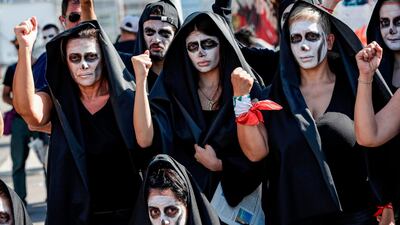
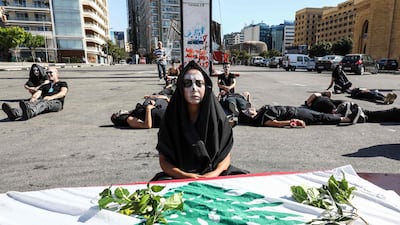
  • Lebanese anti-government protesters take part in a symbolic funeral for the country in the capital Beirut on June 13, 2020, the third consecutive day of demonstrations over a deepening economic crisis. AFP
    Lebanese anti-government protesters take part in a symbolic funeral for the country in the capital Beirut on June 13, 2020, the third consecutive day of demonstrations over a deepening economic crisis. AFP
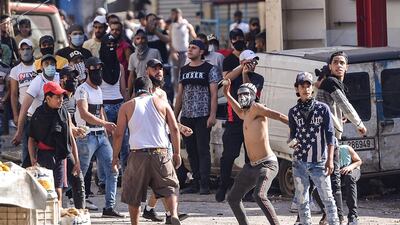
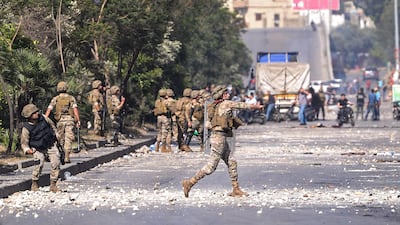
  • Lebanese anti-government protesters throw rocks at soldiers amid clashes in the Bab al-Tabbaneh neighbourhood in the northern port city of Tripoli on the third consecutive day of demonstrations against deepening economic crisis. AFP
    Lebanese anti-government protesters throw rocks at soldiers amid clashes in the Bab al-Tabbaneh neighbourhood in the northern port city of Tripoli on the third consecutive day of demonstrations against deepening economic crisis. AFP
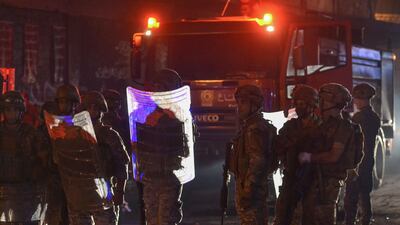
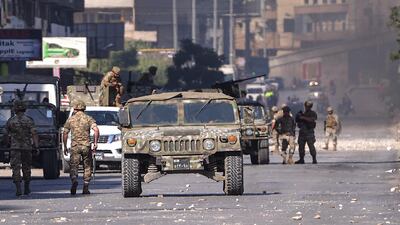
  • Lebanese soldiers deploy by a civil defence firefighting truck during clashes with anti-government protesters in the northern port city of Tripoli amid fresh demonstrations over a spiralling economic crisis. AFP
    Lebanese soldiers deploy by a civil defence firefighting truck during clashes with anti-government protesters in the northern port city of Tripoli amid fresh demonstrations over a spiralling economic crisis. AFP
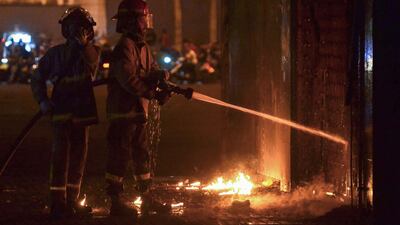
  • Lebanese civil defence firefighters extinguish flames in a shop as anti-government protesters and security forces clash in the northern port city of Tripoli amid fresh demonstrations over a spiralling economic crisis. AFP
    Lebanese civil defence firefighters extinguish flames in a shop as anti-government protesters and security forces clash in the northern port city of Tripoli amid fresh demonstrations over a spiralling economic crisis. AFP
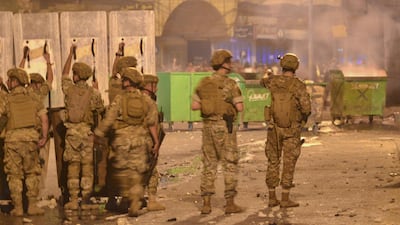
  • Lebanese soldiers with riot gear react during clashes with anti-government protesters in the northern port city of Tripoli amid fresh demonstrations over a spiralling economic crisis. AFP
    Lebanese soldiers with riot gear react during clashes with anti-government protesters in the northern port city of Tripoli amid fresh demonstrations over a spiralling economic crisis. AFP
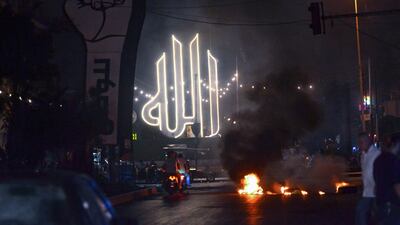
  • Lebanese anti-government protesters block a road with burning tyres in the northern port city of Tripoli amid fresh protests over a spiralling economic crisis. AFP
    Lebanese anti-government protesters block a road with burning tyres in the northern port city of Tripoli amid fresh protests over a spiralling economic crisis. AFP
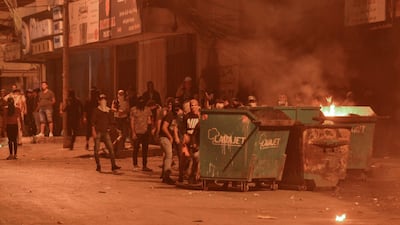
  • Lebanese anti-government protesters clash with security forces in the northern port city of Tripoli amid fresh protests over a spiralling economic crisis. AFP
    Lebanese anti-government protesters clash with security forces in the northern port city of Tripoli amid fresh protests over a spiralling economic crisis. AFP
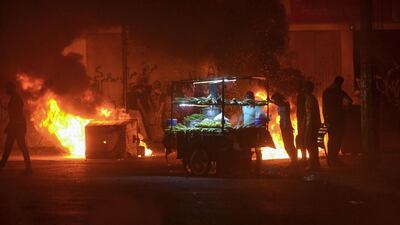
  • Lebanese anti-government protesters buy corn from a street vendor next to burning garbage bins during clashes with security forces in the northern port city of Tripoli amid fresh protests over a spiralling economic crisis. AFP
    Lebanese anti-government protesters buy corn from a street vendor next to burning garbage bins during clashes with security forces in the northern port city of Tripoli amid fresh protests over a spiralling economic crisis. AFP
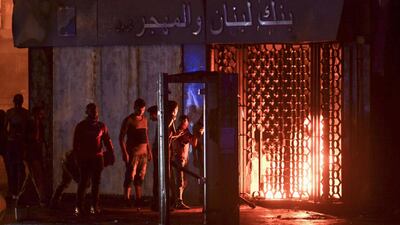
  • Lebanese anti-government protesters take shelter behind a public phone booth as a local bank's branch burns during clashes with security forces in the northern port city of Tripoli amid fresh protests over a spiralling economic crisis. AFP
    Lebanese anti-government protesters take shelter behind a public phone booth as a local bank's branch burns during clashes with security forces in the northern port city of Tripoli amid fresh protests over a spiralling economic crisis. AFP
  • Lebanese anti-government protesters take part in a symbolic funeral for the country in the central area of the capital Beirut on the third consecutive day of demonstrations over a deepening economic crisis. AFP
    Lebanese anti-government protesters take part in a symbolic funeral for the country in the central area of the capital Beirut on the third consecutive day of demonstrations over a deepening economic crisis. AFP
  • Lebanese soldiers deploy during an anti-government protest in the Bab al-Tabbaneh neighbourhood in the northern port city of Tripoli on the third day of demonstrations across the country over deepening economic crisis. AFP
    Lebanese soldiers deploy during an anti-government protest in the Bab al-Tabbaneh neighbourhood in the northern port city of Tripoli on the third day of demonstrations across the country over deepening economic crisis. AFP
  • Lebanese soldiers clash with anti-government protesters in the Bab al-Tabbaneh neighbourhood in the northern port city of Tripoli on the third day of demonstrations across the country against deepening economic crisis. AFP
    Lebanese soldiers clash with anti-government protesters in the Bab al-Tabbaneh neighbourhood in the northern port city of Tripoli on the third day of demonstrations across the country against deepening economic crisis. AFP
  • Lebanese anti-government protesters take part in a symbolic funeral for the country in the capital Beirut on June 13, 2020, the third consecutive day of demonstrations over a deepening economic crisis. AFP
    Lebanese anti-government protesters take part in a symbolic funeral for the country in the capital Beirut on June 13, 2020, the third consecutive day of demonstrations over a deepening economic crisis. AFP
  • Lebanese anti-government protesters throw rocks at soldiers amid clashes in the Bab al-Tabbaneh neighbourhood in the northern port city of Tripoli on the third consecutive day of demonstrations against deepening economic crisis. AFP
    Lebanese anti-government protesters throw rocks at soldiers amid clashes in the Bab al-Tabbaneh neighbourhood in the northern port city of Tripoli on the third consecutive day of demonstrations against deepening economic crisis. AFP
  • Lebanese soldiers deploy by a civil defence firefighting truck during clashes with anti-government protesters in the northern port city of Tripoli amid fresh demonstrations over a spiralling economic crisis. AFP
    Lebanese soldiers deploy by a civil defence firefighting truck during clashes with anti-government protesters in the northern port city of Tripoli amid fresh demonstrations over a spiralling economic crisis. AFP
  • Lebanese civil defence firefighters extinguish flames in a shop as anti-government protesters and security forces clash in the northern port city of Tripoli amid fresh demonstrations over a spiralling economic crisis. AFP
    Lebanese civil defence firefighters extinguish flames in a shop as anti-government protesters and security forces clash in the northern port city of Tripoli amid fresh demonstrations over a spiralling economic crisis. AFP
  • Lebanese soldiers with riot gear react during clashes with anti-government protesters in the northern port city of Tripoli amid fresh demonstrations over a spiralling economic crisis. AFP
    Lebanese soldiers with riot gear react during clashes with anti-government protesters in the northern port city of Tripoli amid fresh demonstrations over a spiralling economic crisis. AFP
  • Lebanese anti-government protesters block a road with burning tyres in the northern port city of Tripoli amid fresh protests over a spiralling economic crisis. AFP
    Lebanese anti-government protesters block a road with burning tyres in the northern port city of Tripoli amid fresh protests over a spiralling economic crisis. AFP
  • Lebanese anti-government protesters clash with security forces in the northern port city of Tripoli amid fresh protests over a spiralling economic crisis. AFP
    Lebanese anti-government protesters clash with security forces in the northern port city of Tripoli amid fresh protests over a spiralling economic crisis. AFP
  • Lebanese anti-government protesters buy corn from a street vendor next to burning garbage bins during clashes with security forces in the northern port city of Tripoli amid fresh protests over a spiralling economic crisis. AFP
    Lebanese anti-government protesters buy corn from a street vendor next to burning garbage bins during clashes with security forces in the northern port city of Tripoli amid fresh protests over a spiralling economic crisis. AFP
  • Lebanese anti-government protesters take shelter behind a public phone booth as a local bank's branch burns during clashes with security forces in the northern port city of Tripoli amid fresh protests over a spiralling economic crisis. AFP
    Lebanese anti-government protesters take shelter behind a public phone booth as a local bank's branch burns during clashes with security forces in the northern port city of Tripoli amid fresh protests over a spiralling economic crisis. AFP
  • Lebanese anti-government protesters take part in a symbolic funeral for the country in the central area of the capital Beirut on the third consecutive day of demonstrations over a deepening economic crisis. AFP
    Lebanese anti-government protesters take part in a symbolic funeral for the country in the central area of the capital Beirut on the third consecutive day of demonstrations over a deepening economic crisis. AFP
  • Lebanese soldiers deploy during an anti-government protest in the Bab al-Tabbaneh neighbourhood in the northern port city of Tripoli on the third day of demonstrations across the country over deepening economic crisis. AFP
    Lebanese soldiers deploy during an anti-government protest in the Bab al-Tabbaneh neighbourhood in the northern port city of Tripoli on the third day of demonstrations across the country over deepening economic crisis. AFP
  • Lebanese soldiers clash with anti-government protesters in the Bab al-Tabbaneh neighbourhood in the northern port city of Tripoli on the third day of demonstrations across the country against deepening economic crisis. AFP
    Lebanese soldiers clash with anti-government protesters in the Bab al-Tabbaneh neighbourhood in the northern port city of Tripoli on the third day of demonstrations across the country against deepening economic crisis. AFP
If the sanctions recommended are not implemented now, they are a guidepost for what Republicans may push for in the future

There is another question, however, that involves the Israeli endgame in all of this. If US sanctions continue to be tightened on a broad range of countries in the region, most of which are already highly vulnerable, it is conceivable that the outcome could be a series of collapsing social and economic orders, which would lead to much wider regional instability. Is that Israel’s objective?

Lebanon is a good example. The RSC report asks that no US taxpayer money go to financing an International Monetary Fund bailout of the country. If such aid were denied, it would represent the country’s death warrant, as Lebanon is highly dependent on imports for its food, fuel and medicine. Without hard currency to finance such imports, the country would be impoverished and could dissolve into chaos, with the repercussions having a dangerous impact on the region.

Conspiracy theorists argue that Israel would welcome a balkanised Middle East that embroils Iran and its proxies in a myriad of small wars while the Israelis reinforce themselves and annex territory in the West Bank. For now, one can only speculate about Israel’s intentions, but it’s an indication of where the region is today that not many people would readily dismiss such a scenario.

Michael Young is editor of Diwan, the blog of the Carnegie Middle East programme, in Beirut

The%20specs
%3Cp%3E%3Cstrong%3EEngine%3A%20%3C%2Fstrong%3E4.0-litre%2C%20flat%20six-cylinder%3Cbr%3E%3Cstrong%3ETransmission%3A%20%3C%2Fstrong%3Eseven-speed%20PDK%3Cbr%3E%3Cstrong%3EPower%3A%20%3C%2Fstrong%3E510hp%3Cbr%3E%3Cstrong%3ETorque%3A%20%3C%2Fstrong%3E470Nm%3Cbr%3E%3Cstrong%3EPrice%3A%20%3C%2Fstrong%3Efrom%20Dh634%2C200%3Cbr%3E%3Cstrong%3EOn%20sale%3A%20%3C%2Fstrong%3Enow%3C%2Fp%3E%0A
Pari

Produced by: Clean Slate Films (Anushka Sharma, Karnesh Sharma) & KriArj Entertainment

Director: Prosit Roy

Starring: Anushka Sharma, Parambrata Chattopadhyay, Ritabhari Chakraborty, Rajat Kapoor, Mansi Multani

Three stars

Islamophobia definition

A widely accepted definition was made by the All Party Parliamentary Group on British Muslims in 2019: “Islamophobia is rooted in racism and is a type of racism that targets expressions of Muslimness or perceived Muslimness.” It further defines it as “inciting hatred or violence against Muslims”.

Know your camel milk:
Flavour: Similar to goat’s milk, although less pungent. Vaguely sweet with a subtle, salty aftertaste.
Texture: Smooth and creamy, with a slightly thinner consistency than cow’s milk.
Use it: In your morning coffee, to add flavour to homemade ice cream and milk-heavy desserts, smoothies, spiced camel-milk hot chocolate.
Goes well with: chocolate and caramel, saffron, cardamom and cloves. Also works well with honey and dates.

Who's who in Yemen conflict

Houthis: Iran-backed rebels who occupy Sanaa and run unrecognised government

Yemeni government: Exiled government in Aden led by eight-member Presidential Leadership Council

Southern Transitional Council: Faction in Yemeni government that seeks autonomy for the south

Habrish 'rebels': Tribal-backed forces feuding with STC over control of oil in government territory

5 of the most-popular Airbnb locations in Dubai

Bobby Grudziecki, chief operating officer of Frank Porter, identifies the five most popular areas in Dubai for those looking to make the most out of their properties and the rates owners can secure:

• Dubai Marina

The Marina and Jumeirah Beach Residence are popular locations, says Mr Grudziecki, due to their closeness to the beach, restaurants and hotels.

Frank Porter’s average Airbnb rent:
One bedroom: Dh482 to Dh739 
Two bedroom: Dh627 to Dh960 
Three bedroom: Dh721 to Dh1,104

• Downtown

Within walking distance of the Dubai Mall, Burj Khalifa and the famous fountains, this location combines business and leisure.  “Sure it’s for tourists,” says Mr Grudziecki. “Though Downtown [still caters to business people] because it’s close to Dubai International Financial Centre."

Frank Porter’s average Airbnb rent:
One bedroom: Dh497 to Dh772
Two bedroom: Dh646 to Dh1,003
Three bedroom: Dh743 to Dh1,154

• City Walk

The rising star of the Dubai property market, this area is lined with pristine sidewalks, boutiques and cafes and close to the new entertainment venue Coca Cola Arena.  “Downtown and Marina are pretty much the same prices,” Mr Grudziecki says, “but City Walk is higher.”

Frank Porter’s average Airbnb rent:
One bedroom: Dh524 to Dh809 
Two bedroom: Dh682 to Dh1,052 
Three bedroom: Dh784 to Dh1,210 

• Jumeirah Lake Towers

Dubai Marina’s little brother JLT resides on the other side of Sheikh Zayed road but is still close enough to beachside outlets and attractions. The big selling point for Airbnb renters, however, is that “it’s cheaper than Dubai Marina”, Mr Grudziecki says.

Frank Porter’s average Airbnb rent:
One bedroom: Dh422 to Dh629 
Two bedroom: Dh549 to Dh818 
Three bedroom: Dh631 to Dh941

• Palm Jumeirah

Palm Jumeirah's proximity to luxury resorts is attractive, especially for big families, says Mr Grudziecki, as Airbnb renters can secure competitive rates on one of the world’s most famous tourist destinations.

Frank Porter’s average Airbnb rent:
One bedroom: Dh503 to Dh770 
Two bedroom: Dh654 to Dh1,002 
Three bedroom: Dh752 to Dh1,152 

The specs

Engine: Four electric motors, one at each wheel

Power: 579hp

Torque: 859Nm

Transmission: Single-speed automatic

Price: From Dh825,900

On sale: Now

Name: Peter Dicce

Title: Assistant dean of students and director of athletics

Favourite sport: soccer

Favourite team: Bayern Munich

Favourite player: Franz Beckenbauer

Favourite activity in Abu Dhabi: scuba diving in the Northern Emirates 


The five pillars of Islam

1. Fasting 

2. Prayer 

3. Hajj 

4. Shahada 

5. Zakat