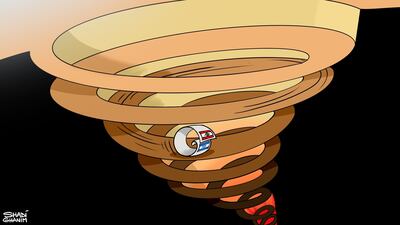
Some of Darwish's last words
"They see their tomorrows slipping out of their reach. And though it seems to them that everything outside this reality is heaven, yet they do not want to go to that heaven. They stay, because they are afflicted with hope." - Mahmoud Darwish, to attendees of the Palestine Festival of Literature, 2008
His life in brief: Born in a village near Galilee, he lived in exile for most of his life and started writing poetry after high school. He was arrested several times by Israel for what were deemed to be inciteful poems. Most of his work focused on the love and yearning for his homeland, and he was regarded the Palestinian poet of resistance. Over the course of his life, he published more than 30 poetry collections and books of prose, with his work translated into more than 20 languages. Many of his poems were set to music by Arab composers, most significantly Marcel Khalife. Darwish died on August 9, 2008 after undergoing heart surgery in the United States. He was later buried in Ramallah where a shrine was erected in his honour.
While you're here
Jamie Prentis: Greece blasts Turkey’s 'irrational' regional actions
Con Coughlin: Are Turkey's days in Nato numbered?
David Lepeska: Is Turkey about to come in from the cold?
Poland Statement
All people fleeing from Ukraine before the armed conflict are allowed to enter Poland. Our country shelters every person whose life is in danger - regardless of their nationality.
The dominant group of refugees in Poland are citizens of Ukraine, but among the people checked by the Border Guard are also citizens of the USA, Nigeria, India, Georgia and other countries.
All persons admitted to Poland are verified by the Border Guard. In relation to those who are in doubt, e.g. do not have documents, Border Guard officers apply appropriate checking procedures.
No person who has received refuge in Poland will be sent back to a country torn by war.