As a child, I loved trotting to the neighbourhood sweet shop with my grandfather. Hidden amid the labyrinthine lanes of Old Delhi, the cavernous establishment, redolent with the smell of ghee and bustling with cooks frying delicacies in gargantuan woks, held me in thrall.
My favourite part, though, was the shop's glass-fronted counter, which was lined with trays of pastel-hued barfis, syrupy gulab jamuns, rasgullas and rasmalais coated with varq, a wispy, glistening sheet of edible silver. Nose pressed against the glass, I would stare longingly at these delicacies.
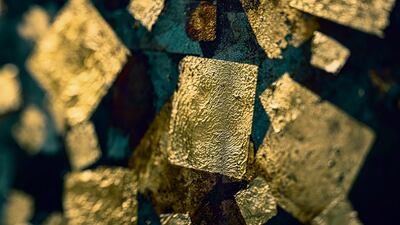
The Indian fascination with gold and silver varq goes back centuries. Chefs and confectioners have long used it to adorn their dishes, as well as items including chyawanprash, a herbal paste said to boost immunity; paan or betel leaf; mukhwaas, a mouth freshener; candied fruits; pastry; and even mocktails. Nuts are often gilded with silver varq to make them look festive. Biryanis, rich meat curries, cardamom and betel nuts are also given a magical makeover with this glistening garnish.
"Varq plays a vital role in Indian cuisine," says award-winning chef Vinod Saini of Leela Palace Hotel, New Delhi. "It adds value to any dish, taking it to the next level. It is the culinary equivalent of an airline upgrade – from economy to business class. Though edible metal doesn't alter the flavour profile of the dish, nor add any nutritional value to it, it is a surefire way to impress guests. After all, eyes eat the food first, don't they?"
Saini, who has hosted Bollywood celebrities, heads of states and royalty at the hotel’s Jamavar Indian restaurant, says even ordinary dishes such as paneer and vegetable curries can be enhanced with varq. “We often use silver varq to garnish dishes like kundan kaliya, a traditional lamb curry dish, desserts like malai kulfi, barfi, kala jam and even some of the hotel’s buffet items. For high-end events, it’s always gold varq.”
For consumption, varq has to be pure, made from sterling silver or 22K to 24K gold. It should also be "food grade", meeting stringent food security and safety standards. And, needless to say, this beautification comes at a price. About 10 sheets of gold varq (enough to decorate 10 to 15 dishes) may set the restaurant back $300 to $400. Silver varq costs about a third of the price.
No matter. Such is the appeal of varq in the Indian subcontinent that an entire restaurant has been named after it. Nestled in New Delhi's Taj Mahal Hotel is Varq, an 82-seater outlet that wows visitors with its gold-leaf coffered ceiling, set against rosewood wall panelling and an auburn tile floor. Its resplendent entrance features a pair of illuminated cylindrical glass sculptures with polished cut-glass floral details set in gold leaf.
"We reference the concept of art on a plate in our dishes," says the hotel's executive chef, Arun Sundararaj. Think modern Indian classics such as the chilled masala pot, an innovative twist on Delhi's signature chaat; varq garden green, a salad prepared with edible flowers; and the panchdhaan khichada, a dehydrated form of the traditional Indian thali, crafted with the five grains used in porridge (oats, black rice, millet, wheat and lentils) and served with six accompaniments, including tempered curd, guava curry and smoked ghee. "All anointed with gold varq, of course," says Sundararaj.
Aside from beautification, chefs say varq is functional, too. "It keeps the food warm and moist," says khansama Haji Bhoora, whose great-grandfather worked in the royal kitchens of Rampur, a north Indian city in Uttar Pradesh known for its ornate, courtly cuisine.
In royal kitchens, even the slightest break in the varq on the dish would indicate that it had been tampered with. The dish would be promptly sent back to the cook due to fear of contamination
"In royal kitchens, even the slightest break in the varq on the dish would indicate that it had been tampered with. The dish would be promptly sent back to the cook due to fear of contamination," explains Bhoora, who hosts Rampuri food pop-ups to honour his family's centuries-old gastronomic legacy.
Bhoora's repertoire includes a selection of quintessentially Rampuri recipes such as neem ke patton ka halwa, a dessert concocted from neem leaves, and kachhe gosht ki tikki, or mutton kebabs, as well as some other dishes with a provenance that dates back to the 18th century.
The popularity of varq isn't limited to India. Western chefs have also been known to dish out gold-encrusted sushi, for example, as well as burgers and pastry peppered with gold flakes. In 2016, New York's Manila Social Club created a buzz by serving a hamburger decorated with champagne frosting and a coating of 24K gold.
In Dubai, Doors Freestyle Grill offers a succulent Dh786 striploin steak that is coated in a fine sheet of gold, the Dubai International Financial Centre's Maria serves up a handmade burrata flown in from southern Italy, coated with 24K gold leaf, and the Armani Lounge treats guests to a cappuccino made from Arabica beans and topped with 23K gold.
Much of varq's appeal lies in its mystique, say food historians. In 3,000 BC, for example, Egyptians consumed gold, believing that the metal was the skin and flesh of the gods. They saw it as a "gateway to immortality", according to an essay in The Craftsmanship Initiative magazine.
"In the 16th century, Paracelsus, the 'father of toxicology', pioneered the use of minerals in medicine. During the Renaissance, European noblemen sought to impress their guests by decorating their food (bread, oysters, quail, carp) with gold leaf at banquets and weddings.
"In Renaissance Venice, gold-covered, sugared almonds were offered after a meal in the belief that gold strengthened the heart and protected against rheumatism," states the essay.
In India, the practice of eating precious metals was predominantly popularised by Mughal kings and queens, who regarded it as a status symbol. They laid out rich feasts anointed with varq to impress guests. Furthermore, the application of these edible metal sheets helped deliver clean and hygienic food by repelling any dust particles that might contaminate the dishes. The region's best craftsmen were employed by the rulers to craft these thin edible sheets.
But beyond the extravagance, does consuming gold or silver provide any nourishment to the body? The jury is still out on this one. Priti Kandhari, a nutritionist from New Delhi, says scientifically, gold is inert and doesn't break down easily to dissolve in the bloodstream. "It is thrown out of the body as a waste product and hence provides no nutritional or health benefits. Of course, you do gain bragging rights for being able to say you ate gold," she says.
Gulzari Lal, a Vedic scholar who lives in New Delhi, says the tradition of decorating treats in India with gold and silver foil originates from Ayurvedic medicinal practices. Practitioners of Ayurveda believe that gold is an aphrodisiac and that silver has antimicrobial properties.
"Gold relaxes the body and mind. People suffering from digestive problems and those of the urinary system and organs experience relief when they consume silver-charged water because silver has antibacterial, antiviral and antifungal properties. People suffering from respiratory disease such as asthma, breathlessness, heart diseases and brain diseases, find it beneficial to consume gold-charged water. This is done by keeping water in the required metal [tumbler or bowl] for a few hours or as advised by the doctor," he explains.
Given its enormous value, crafting varq can be back-breaking work. The foil is traditionally made by skilled silversmiths who pound the metal sheets by hand for days until they become 1/8,000 of a millimetre thin. These sheets are placed on the back of a piece of paper for support and peeled away immediately before application. Only then can this minuscule layer of precious metal be used to give even the humblest of dishes a makeover fit for royalty.

The%20Letter%20Writer
%3Cp%3E%3Cstrong%3EDirector%3A%3C%2Fstrong%3E%20Layla%20Kaylif%3C%2Fp%3E%0A%3Cp%3E%3Cstrong%3EStars%3A%3C%2Fstrong%3E%20Eslam%20Al%20Kawarit%2C%20Rosy%20McEwen%2C%20Muhammad%20Amir%20Nawaz%3C%2Fp%3E%0A%3Cp%3E%3Cstrong%3ERating%3A%3C%2Fstrong%3E%202%2F5%3C%2Fp%3E%0A
ABU%20DHABI%20CARD
%3Cp%3E%0D%3Cstrong%3E5pm%3A%3C%2Fstrong%3E%20Al%20Rabi%20Tower%20%E2%80%93%20Maiden%20(PA)%20Dh80%2C000%20(Turf)%201%2C400%0D%3Cbr%3E%3Cstrong%3E5.30pm%3A%3C%2Fstrong%3E%20Wathba%20Stallions%20Cup%20%E2%80%93%20Handicap%20(PA)%20Dh70%2C000%20(T)%201%2C600m%0D%3Cbr%3E%3Cstrong%3E6pm%3A%3C%2Fstrong%3E%20Abu%20Dhabi%20Championship%20%E2%80%93%20Listed%20(PA)%20Dh180%2C000%20(T)%201%2C600m%0D%3Cbr%3E%3Cstrong%3E6.30pm%3A%3C%2Fstrong%3E%20Hili%20Tower%20%E2%80%93%20Handicap%20(PA)%20Dh80%2C000%20(T)%202%2C200m%0D%3Cbr%3E%3Cstrong%3E7pm%3A%20%3C%2Fstrong%3EUAE%20Arabian%20Derby%20%E2%80%93%20Prestige%20(PA)%20Dh150%2C000%20(T)%202%2C200m%0D%3Cbr%3E%3Cstrong%3E7.30pm%3A%3C%2Fstrong%3E%20Abu%20Dhabi%20Championship%20%E2%80%93%20Listed%20(TB)%20Dh380%2C000%20(T)%202%2C200m%3C%2Fp%3E%0A
What to watch out for:
Algae, waste coffee grounds and orange peels will be used in the pavilion's walls and gangways
The hulls of three ships will be used for the roof
The hulls will painted to make the largest Italian tricolour in the country’s history
Several pillars more than 20 metres high will support the structure
Roughly 15 tonnes of steel will be used
Results
6pm: Dubai Trophy – Conditions (TB) $100,000 (Turf) 1,200m
Winner: Silent Speech, William Buick (jockey), Charlie Appleby
(trainer)
6.35pm: Jumeirah Derby Trial – Conditions (TB) $60,000 (T)
1,800m
Winner: Island Falcon, Frankie Dettori, Saeed bin Suroor
7.10pm: UAE 2000 Guineas Trial – Conditions (TB) $60,000 (Dirt)
1,400m
Winner: Rawy, Mickael Barzalona, Salem bin Ghadayer
7.45pm: Al Rashidiya – Group 2 (TB) $180,000 (T) 1,800m
Winner: Desert Fire, Hector Crouch, Saeed bin Suroor
8.20pm: Al Fahidi Fort – Group 2 (TB) $180,000 (T) 1,400m
Winner: Naval Crown, William Buick, Charlie Appleby
8.55pm: Dubawi Stakes – Group 3 (TB) $150,000 (D) 1,200m
Winner: Al Tariq, Pat Dobbs, Doug Watsons
9.30pm: Aliyah – Rated Conditions (TB) $80,000 (D) 2,000m
Winner: Dubai Icon, Patrick Cosgrave, Saeed bin Suroor
THE%20STRANGERS'%20CASE
%3Cp%3E%3Cstrong%3EDirector%3C%2Fstrong%3E%3A%20Brandt%20Andersen%3Cbr%3E%3Cstrong%3EStarring%3A%20%3C%2Fstrong%3EOmar%20Sy%2C%20Jason%20Beghe%2C%20Angeliki%20Papoulia%3Cbr%3E%3Cstrong%3ERating%3A%3C%2Fstrong%3E%204%2F5%3C%2Fp%3E%0A
Napoleon
%3Cp%3E%3Cstrong%3EDirector%3C%2Fstrong%3E%3A%20Ridley%20Scott%3Cbr%3E%3Cstrong%3EStars%3C%2Fstrong%3E%3A%20Joaquin%20Phoenix%2C%20Vanessa%20Kirby%2C%20Tahar%20Rahim%3Cbr%3E%3Cstrong%3ERating%3C%2Fstrong%3E%3A%202%2F5%3Cbr%3E%3Cbr%3E%3C%2Fp%3E%0A
THE BIO
Age: 33
Favourite quote: “If you’re going through hell, keep going” Winston Churchill
Favourite breed of dog: All of them. I can’t possibly pick a favourite.
Favourite place in the UAE: The Stray Dogs Centre in Umm Al Quwain. It sounds predictable, but it honestly is my favourite place to spend time. Surrounded by hundreds of dogs that love you - what could possibly be better than that?
Favourite colour: All the colours that dogs come in
Specs
Engine: Dual-motor all-wheel-drive electric
Range: Up to 610km
Power: 905hp
Torque: 985Nm
Price: From Dh439,000
Available: Now
Dolittle
Director: Stephen Gaghan
Stars: Robert Downey Jr, Michael Sheen
One-and-a-half out of five stars
COMPANY%20PROFILE
%3Cp%3E%3Cstrong%3EName%3A%3C%2Fstrong%3E%20SupplyVan%3Cbr%3E%3Cstrong%3EBased%3A%3C%2Fstrong%3E%20Dubai%2C%20UAE%3Cbr%3E%3Cstrong%3ELaunch%20year%3A%3C%2Fstrong%3E%202017%3Cbr%3E%3Cstrong%3ENumber%20of%20employees%3A%3C%2Fstrong%3E%2029%3Cbr%3E%3Cstrong%3ESector%3A%3C%2Fstrong%3E%20MRO%20and%20e-commerce%3Cbr%3E%3Cstrong%3EFunding%3A%3C%2Fstrong%3E%20Seed%3C%2Fp%3E%0A
SPECS
Toyota land Cruiser 2020 5.7L VXR
Engine: 5.7-litre V8
Transmission: eight-speed automatic
Power: 362hp
Torque: 530Nm
Price: Dh329,000 (base model 4.0L EXR Dh215,900)
More on Quran memorisation:
Who's who in Yemen conflict
Houthis: Iran-backed rebels who occupy Sanaa and run unrecognised government
Yemeni government: Exiled government in Aden led by eight-member Presidential Leadership Council
Southern Transitional Council: Faction in Yemeni government that seeks autonomy for the south
Habrish 'rebels': Tribal-backed forces feuding with STC over control of oil in government territory
Queen
Nicki Minaj
(Young Money/Cash Money)
Mercer, the investment consulting arm of US services company Marsh & McLennan, expects its wealth division to at least double its assets under management (AUM) in the Middle East as wealth in the region continues to grow despite economic headwinds, a company official said.
Mercer Wealth, which globally has $160 billion in AUM, plans to boost its AUM in the region to $2-$3bn in the next 2-3 years from the present $1bn, said Yasir AbuShaban, a Dubai-based principal with Mercer Wealth.
“Within the next two to three years, we are looking at reaching $2 to $3 billion as a conservative estimate and we do see an opportunity to do so,” said Mr AbuShaban.
Mercer does not directly make investments, but allocates clients’ money they have discretion to, to professional asset managers. They also provide advice to clients.
“We have buying power. We can negotiate on their (client’s) behalf with asset managers to provide them lower fees than they otherwise would have to get on their own,” he added.
Mercer Wealth’s clients include sovereign wealth funds, family offices, and insurance companies among others.
From its office in Dubai, Mercer also looks after Africa, India and Turkey, where they also see opportunity for growth.
Wealth creation in Middle East and Africa (MEA) grew 8.5 per cent to $8.1 trillion last year from $7.5tn in 2015, higher than last year’s global average of 6 per cent and the second-highest growth in a region after Asia-Pacific which grew 9.9 per cent, according to consultancy Boston Consulting Group (BCG). In the region, where wealth grew just 1.9 per cent in 2015 compared with 2014, a pickup in oil prices has helped in wealth generation.
BCG is forecasting MEA wealth will rise to $12tn by 2021, growing at an annual average of 8 per cent.
Drivers of wealth generation in the region will be split evenly between new wealth creation and growth of performance of existing assets, according to BCG.
Another general trend in the region is clients’ looking for a comprehensive approach to investing, according to Mr AbuShaban.
“Institutional investors or some of the families are seeing a slowdown in the available capital they have to invest and in that sense they are looking at optimizing the way they manage their portfolios and making sure they are not investing haphazardly and different parts of their investment are working together,” said Mr AbuShaban.
Some clients also have a higher appetite for risk, given the low interest-rate environment that does not provide enough yield for some institutional investors. These clients are keen to invest in illiquid assets, such as private equity and infrastructure.
“What we have seen is a desire for higher returns in what has been a low-return environment specifically in various fixed income or bonds,” he said.
“In this environment, we have seen a de facto increase in the risk that clients are taking in things like illiquid investments, private equity investments, infrastructure and private debt, those kind of investments were higher illiquidity results in incrementally higher returns.”
The Abu Dhabi Investment Authority, one of the largest sovereign wealth funds, said in its 2016 report that has gradually increased its exposure in direct private equity and private credit transactions, mainly in Asian markets and especially in China and India. The authority’s private equity department focused on structured equities owing to “their defensive characteristics.”
Frankenstein in Baghdad
Ahmed Saadawi
Penguin Press
MATCH INFO
What: 2006 World Cup quarter-final
When: July 1
Where: Gelsenkirchen Stadium, Gelsenkirchen, Germany
Result:
England 0 Portugal 0
(Portugal win 3-1 on penalties)
Ten tax points to be aware of in 2026
1. Domestic VAT refund amendments: request your refund within five years
If a business does not apply for the refund on time, they lose their credit.
2. E-invoicing in the UAE
Businesses should continue preparing for the implementation of e-invoicing in the UAE, with 2026 a preparation and transition period ahead of phased mandatory adoption.
3. More tax audits
Tax authorities are increasingly using data already available across multiple filings to identify audit risks.
4. More beneficial VAT and excise tax penalty regime
Tax disputes are expected to become more frequent and more structured, with clearer administrative objection and appeal processes. The UAE has adopted a new penalty regime for VAT and excise disputes, which now mirrors the penalty regime for corporate tax.
5. Greater emphasis on statutory audit
There is a greater need for the accuracy of financial statements. The International Financial Reporting Standards standards need to be strictly adhered to and, as a result, the quality of the audits will need to increase.
6. Further transfer pricing enforcement
Transfer pricing enforcement, which refers to the practice of establishing prices for internal transactions between related entities, is expected to broaden in scope. The UAE will shortly open the possibility to negotiate advance pricing agreements, or essentially rulings for transfer pricing purposes.
7. Limited time periods for audits
Recent amendments also introduce a default five-year limitation period for tax audits and assessments, subject to specific statutory exceptions. While the standard audit and assessment period is five years, this may be extended to up to 15 years in cases involving fraud or tax evasion.
8. Pillar 2 implementation
Many multinational groups will begin to feel the practical effect of the Domestic Minimum Top-Up Tax (DMTT), the UAE's implementation of the OECD’s global minimum tax under Pillar 2. While the rules apply for financial years starting on or after January 1, 2025, it is 2026 that marks the transition to an operational phase.
9. Reduced compliance obligations for imported goods and services
Businesses that apply the reverse-charge mechanism for VAT purposes in the UAE may benefit from reduced compliance obligations.
10. Substance and CbC reporting focus
Tax authorities are expected to continue strengthening the enforcement of economic substance and Country-by-Country (CbC) reporting frameworks. In the UAE, these regimes are increasingly being used as risk-assessment tools, providing tax authorities with a comprehensive view of multinational groups’ global footprints and enabling them to assess whether profits are aligned with real economic activity.
Contributed by Thomas Vanhee and Hend Rashwan, Aurifer
Lexus LX700h specs
Engine: 3.4-litre twin-turbo V6 plus supplementary electric motor
Power: 464hp at 5,200rpm
Torque: 790Nm from 2,000-3,600rpm
Transmission: 10-speed auto
Fuel consumption: 11.7L/100km
On sale: Now
Price: From Dh590,000
The specs
Common to all models unless otherwise stated
Engine: 4-cylinder 2-litre T-GDi
0-100kph: 5.3 seconds (Elantra); 5.5 seconds (Kona); 6.1 seconds (Veloster)
Power: 276hp
Torque: 392Nm
Transmission: 6-Speed Manual/ 8-Speed Dual Clutch FWD
Price: TBC
The bio
Who inspires you?
I am in awe of the remarkable women in the Arab region, both big and small, pushing boundaries and becoming role models for generations. Emily Nasrallah was a writer, journalist, teacher and women’s rights activist
How do you relax?
Yoga relaxes me and helps me relieve tension, especially now when we’re practically chained to laptops and desks. I enjoy learning more about music and the history of famous music bands and genres.
What is favourite book?
The Perks of Being a Wallflower - I think I've read it more than 7 times
What is your favourite Arabic film?
Hala2 Lawen (Translation: Where Do We Go Now?) by Nadine Labaki
What is favourite English film?
Mamma Mia
Best piece of advice to someone looking for a career at Google?
If you’re interested in a career at Google, deep dive into the different career paths and pinpoint the space you want to join. When you know your space, you’re likely to identify the skills you need to develop.