ISTANBUL // A brawl at a recent wedding in Turkey's south-east brought simmering tensions between residents and Syrian refugees to the surface.
Stones, sticks and knives were used in the melee in the city of Sanliurfa last month that saw eight people injured and 10 detained by police.
It all started when guests at the Turkish wedding accused Syrians living in buildings nearby of throwing trash on a crowd that was celebrating on the street.
The guests told Turkish media that burglaries and street violence had risen since Syrians fleeing the civil war in their country, just 50 kilometres to the south, moved into apartments in Sanliurfa.
As the crisis in Syria grinds on and international efforts to find a solution fail to make headway, the social and economic burden of the conflict on Turkey is increasing. Analysts say the fact there is no end in sight to Syria's war means that Turkey will have to absorb hundreds of thousands of Syrians into its society, a process that has barely begun.
Turkey has taken in about half a million Syrians since the uprising against Bashar Al Assad began in March 2011, and is calling for international military action to end Mr Al Assad's rule.
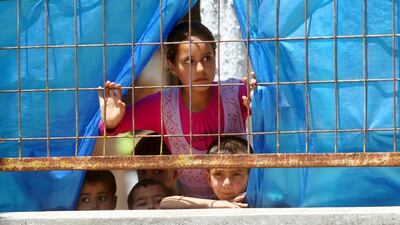
About 200,000 Syrians have found shelter in government-run refugee camps on the Turkish side of the border, while another 300,000 live outside in private homes or with relatives, according to the government.
"If a country accepts half a million people from another country, of course there will be problems," said Nihat Ali Ozcan, of the Economic Policy Research Foundation of Turkey, a think tank in Ankara.
"Many refugees thought they would return to Syria after a short stay, but it has become clear that most of them will not return for a while. Turkey will have to integrate them."
Turkey has spent about US$2 billion (Dh7.35bn) on care for the Syrian refugees, according to the government. Ankara says it will continue its open-door policy for the refugees and says any change to that policy would be inhuman.
But that policy comes with some unwanted side-effects. Mr Ozcan said wages were falling in some regions as refugees entered the job market and competed with Turkish workers.
"That leads to frictions," Mr Ozcan said.
After spending months or even years in Turkey, many Syrian refugees not living in government camps were running out of money, Mr Ozcan said. "They have no social security, no work permit, so some work illegally, some have to become beggars or criminals or even work as prostitutes to get by."
Some in Turkey question the government's open door policy. Sozcu, an opposition newspaper, said recently that the money spent on the refugees could have been used to improve the lives of students, the poor or the unemployed.
The government was forced to deny rumours that it was planning to introduce an extra tax to be able to house and feed refugees. "There will be no such additional tax burden," Cevdet Yilmaz, the minister for economic development, said.
Sedat Laciner, the rector of the Onsekiz Mart University in Canakkale in north-western Turkey, said the number of Syrians in Turkey could rise to 1 million within a year. "The situation has reached a level that is cause for alarm," Prof Laciner wrote in the Star newspaper.
"The Syrian refugee problem can affect Turkey's economic, social and even political balances in a negative way," he wrote, adding that the country was facing a challenge of integrating "people who come from a different culture".
After the wedding brawl in Sanliurfa, Turks said they felt threatened by the Syrians.
"The time has come to tell them 'stop'," a resident of the neighbourhood where the brawl took place said. "The state has to find a solution as soon as possible."
In another incident, Syrians armed with metal rods reportedly attacked police in the southern city of Gaziantep. The officers were trying to end a fight between two Syrian families in a Gaziantep park last month, according to news reports.
Mr Ozcan said that while problems in integrating Syrians in Turkey could be expected, he did not think those problems would overwhelm the country.
"Turkey took in Iranians after the revolution of 1979, Iraqis after the Gulf war in the 1990s and many people from the Caucasus when the USSR fell apart," he said.
"Because of their history, Turks are used to caring for refugees," he said, pointing out that when the republic was founded in 1923, about half the population was made up by refugees from different parts of the Ottoman Empire that collapsed in the First World War.
tseibert@thenational.ae
Turkey bears social and economic burden of Syrian war
Despite a history of hosting refugees, Turks are starting to complain about the cost of supporting half a million Syrians and blame them for crime and competition for jobs. Thomas Seibert reports
Most popular today