
Pope Francis will visit Iraq on a historic four-day trip beginning on March 5 to preach inter-faith coexistence.
Iraq is overwhelmingly Muslim but hosts several ancient Christian communities.
There are 14 officially recognised Christian sects in Iraq. Most live in Baghdad, the northern Nineveh Plains province and Iraq's self-run Kurdistan region.
These are the main Christian communities in Iraq:
- Chaldean (80 per cent)
- Syriac (10 per cent)
- Assyrian (5 per cent)
- Armenians (3 per cent)
- Arabs and smaller groups (2 per cent)
-
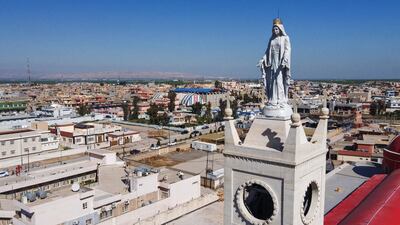
The statue of the Virgin Mary at the Syriac Catholic Church of the Immaculate Conception, or Al-Tahira Al-Kubra church, in the predominantly Christian town of Qaraqosh in Iraq. AFP -
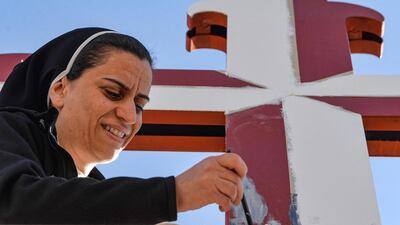
A nun adds a coat of paint to the crucifix at the Immaculate Mary Convent in Qaraqosh, in preparation for the visit of Pope Francis in March. AFP -

Policemen stand guard as maintenance work is carried out at the Church of the Immaculate Conception in Qaraqosh before the Pope's visit. EPA -

A fighter from the Nineveh Plain Protection Units, an Assyrian Christian militia, stands guard outside the Church of the Immaculate Conception in Qaraqosh. AFP -
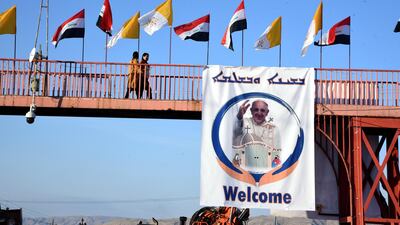
Iraqi and Vatican flags and a picture of Pope Francis in Qaraqosh, about 30 kilometres east of Mosul in northern Iraq. EPA -

A sign welcoming Pope Francis hangs outside the Syriac Catholic Church of St Thomas in Qaraqosh. AFP -
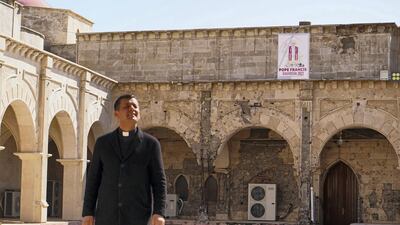
Father Ammar Yako, head of the Church of the Immaculate Conception, walks past a poster of Pope Francis days before his historic visit to Iraq. Getty -
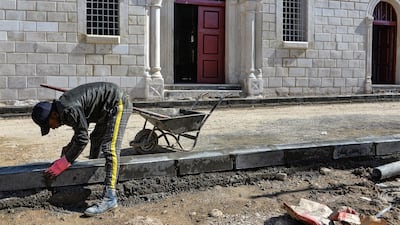
Workers prepare a path at the Church of the Immaculate Conception in Qaraqosh, Iraq. AFP -
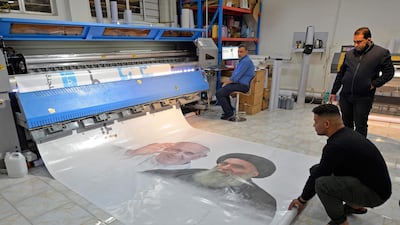
Iraqi men print a banner of Pope Francis and Shiite cleric Grand Ayatollah Ali Sistani at a factory in Najaf, before the first papal visit to Iraq. AFP -
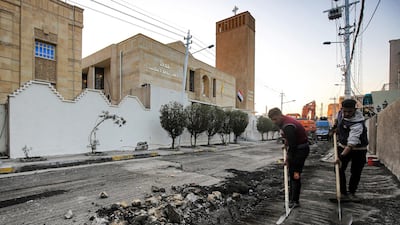
Municipal workers pave the road outside the Chaldean Catholic Church of St Joseph in preparation for the Pope's visit to Baghdad. AFP -
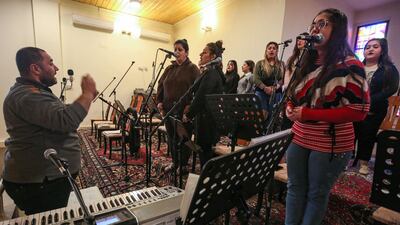
Members of a Christian choir rehearse at the Chaldean Catholic Church of St Joseph before the visit of Pope Francis. AFP -
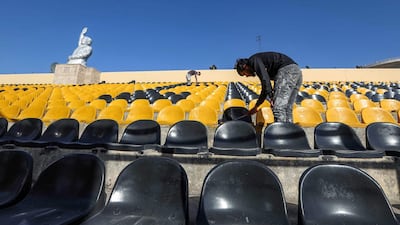
Workers prepare Franso Hariri Stadium in Erbil for the arrival of Pope Francis. AFP -
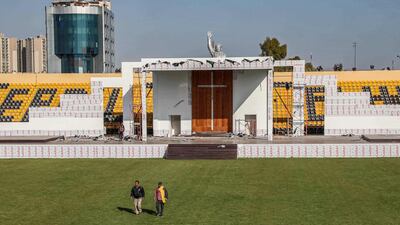
A stage has been set up at Franso Hariri Stadium in preparation for the papal visit to Iraq. AFP -
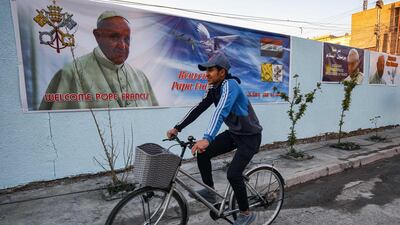
A poster of Pope Francis on the wall of the Chaldean Catholic Church of St Joseph in Baghdad. AFP -
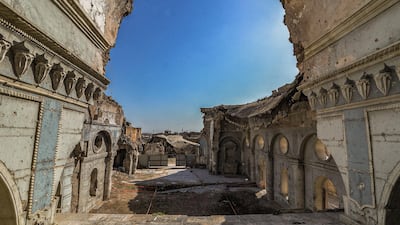
Al Tahera Syriac Catholic Church in the northern Iraqi city of Mosul, which was severely damaged by ISIS in 2017. Pope Francis is expected to pray there during his March visit. AFP -
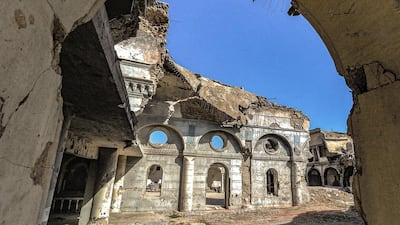
Al Tahera Syriac Catholic Church in Mosul was damaged by ISIS as the extremists were forced out of the city. AFP -
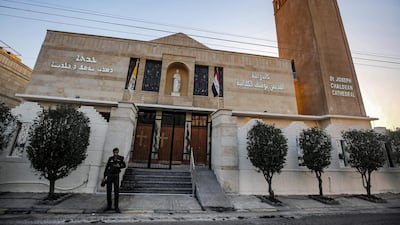
The Chaldean Catholic Church of St Joseph in Iraq's capital Baghdad. The Pope will visit the city in March. AFP -
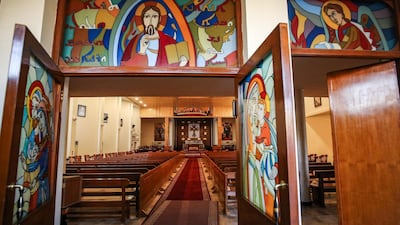
Inside the Chaldean Catholic Church of St Joseph in Baghdad. AFP -
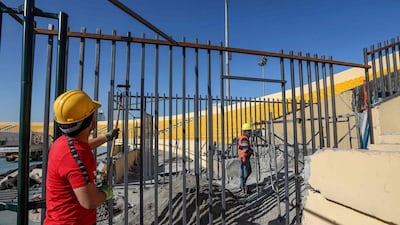
Workers at Franso Hariri Stadium in Erbil, the capital of Iraq's northern autonomous Kurdish region. The Pope will hold a Mass at the stadium in March. AFP -
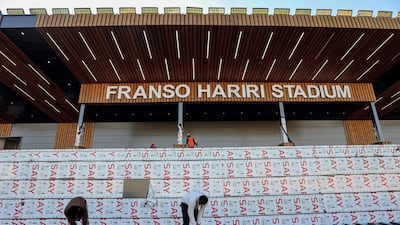
Workers finalise preparations for the Pope's visit to Franso Hariri Stadium in Erbil. AFP -
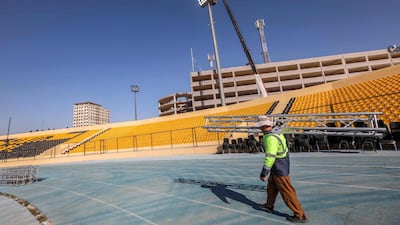
Pope Francis will hold a Mass at Franso Hariri Stadium in Erbil, the capital of Iraq's northern autonomous Kurdish region. AFP


Chaldeans
Chaldeans are the most numerous of Iraq's Christians, accounting for up to 80 per cent of the group.
The Chaldean Church is Eastern Rite, affiliated with the Roman Catholic Church but allowed to keep its traditions and rituals.
It was founded in Mesopotamia, what is now modern-day Iraq, in the first century AD.
The church is based in Baghdad and led by Cardinal Louis Raphael Sako. Most Chaldeans live in Iraq, Iran and Lebanon.
They speak a version of Aramaic, a Semitic language spoken at the time of Jesus. There are 110 Chaldean churches across Iraq.
Syriacs
Syriacs make up about 10 per cent of Iraqi Christians. They include Catholics, which are the majority, and Orthodox.
The northern towns of Qaraqosh, Bashiqa and Bartella are home to the biggest Syriac communities in the country.
The main Syriac Catholic church is based in Lebanon while the Orthodox church is based in Syria. There are 82 Syriac churches in Iraq.
Assyrians
Assyrians, including Assyrian Catholics, make up about 5 per cent of Christians in Iraq.
Most are originally from Iran and Turkey. Many of them fled to Iraq after massacres by the Ottoman army during the First World War.
Assyrians refer to the killing of their people in 1915 as a genocide, which took place about the same time as the massacre of Armenians.
There are 21 Assyrian churches in Iraq, 17 of them in Baghdad.
Armenians
About 3 per cent of Iraqi Christians are Armenian. After the genocide in 1915-1923 by the Ottoman Empire, many of them fled to Iraq.
They speak Armenian. There are 19 Armenian churches in Iraq, Orthodox and Catholic.
Arabs and smaller groups
Arab Christians make up about 2 per cent of the Iraqi Christian population.
There are also three Greek Orthodox and four Coptic Orthodox churches in Baghdad, and 57 Roman Catholic churches across the country, as well as a small number of Protestants.

